
Why Detroit Homeowners are Adding Copper Accents to Their Roofs in Grosse Ile
Homeowners across Grosse Ile are discovering that copper roofing accents offer more than just aesthetic appeal. These premium metal additions deliver unmatched durability against Michigan’s harsh weather while creating a distinctive look that transforms ordinary homes into architectural statements. The island’s unique riverfront location and historic character make copper an ideal choice for homeowners seeking both performance and prestige. Getting Your Historic Roof Restored in Indian Village the Right Way.
The combination of Detroit River humidity, seasonal temperature swings, and occasional salt spray from winter road treatments creates specific challenges for roofing materials. Copper naturally resists corrosion and develops a protective patina that actually strengthens over time. This makes it particularly well-suited for Grosse Ile’s waterfront properties where traditional materials often struggle. Metal Roofing for Ferndale Homes (Is it Actually Worth the Investment?).
Beyond durability, copper roofing accents provide exceptional value through their 50-100 year lifespan and energy efficiency benefits. The metal reflects solar heat in summer while its low thermal expansion prevents warping during freeze-thaw cycles. For Grosse Ile residents looking to protect their investment while enhancing curb appeal, copper represents a premium solution that appreciates rather than depreciates.
Understanding Copper Roofing Benefits for Grosse Ile Properties
Copper roofing offers unique advantages for Grosse Ile’s specific environmental conditions. The metal’s natural antimicrobial properties prevent moss and algae growth in the high-humidity riverfront areas. Unlike steel or aluminum, copper develops a protective oxide layer that seals the material against further corrosion, making it ideal for homes exposed to Detroit River moisture.
The thermal properties of copper provide year-round comfort benefits. During summer months, the metal reflects up to 90% of solar radiation, reducing cooling costs. In winter, copper’s excellent conductivity helps melt snow and ice, preventing dangerous ice dam formation common on Grosse Ile’s older colonial-style homes. This self-regulating temperature response means less strain on HVAC systems and more consistent indoor comfort.
Maintenance requirements for copper roofing are minimal compared to traditional materials. The natural patina that develops over 5-7 years eliminates the need for painting or sealing. Local contractors report that properly installed copper roofs on Grosse Ile properties require only occasional gutter cleaning and inspection of solder joints, making them an attractive option for seasonal residents who may not be present year-round. Why Flat Roofs in Corktown Require Specialized Drainage Solutions.
Popular Copper Accent Applications for Grosse Ile Homes
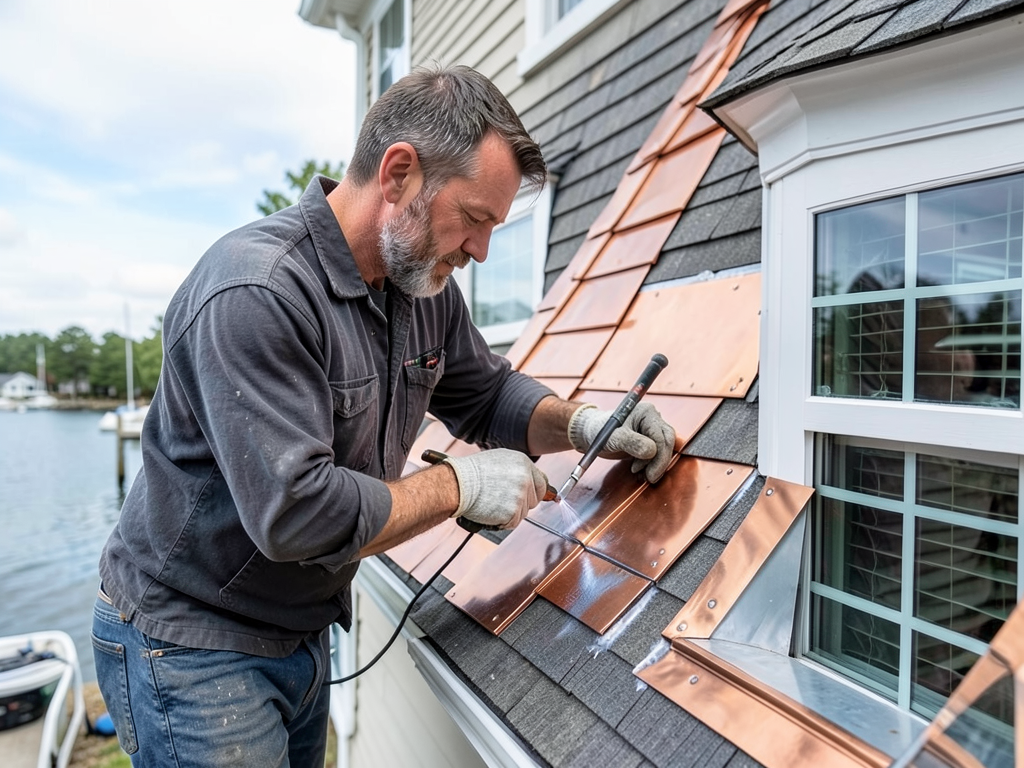
Grosse Ile homeowners typically choose copper accents for specific architectural features rather than complete roof coverage. Bay windows, dormers, and chimney flashing represent common applications where copper’s durability provides maximum benefit. The metal’s ability to form custom shapes makes it perfect for the curved rooflines found on many island Victorian and Tudor-style homes. What Royal Oak Homeowners Should Know Before Choosing a Roofing Contractor.
Copper gutters and downspouts have become increasingly popular among Grosse Ile residents. These systems handle the heavy rainfall common during Michigan spring storms while adding a distinctive bronze finish that complements traditional siding materials. The seamless construction prevents leaks at joints, and the metal’s strength resists damage from falling branches during summer thunderstorms.
Roof edge detailing represents another growing trend in Grosse Ile. Copper drip edges and fascia caps protect vulnerable roof edges from water damage while creating clean visual lines. Many homeowners pair these with copper ridge caps on asphalt shingle roofs, creating a mixed-material look that balances cost with the premium appearance of copper accents.. Read more about Choosing a Shingle Color That Increases the Resale Value of Your Northville House.
The Patination Process: What to Expect Over Time
Understanding copper’s color transformation helps Grosse Ile homeowners make informed decisions. Fresh copper displays a bright bronze color that gradually darkens to deep brown over 6-12 months. The characteristic blue-green patina typically develops within 3-5 years in Michigan’s climate, though proximity to the Detroit River can accelerate this process due to higher humidity levels.
Temperature fluctuations and salt exposure influence patina development. Homes near the river’s edge often develop their patina faster than properties further inland. The process involves multiple chemical reactions where copper oxidizes and reacts with sulfur compounds in the air. This natural weathering creates a protective layer that actually increases the metal’s resistance to further corrosion.
Homeowners should understand that patina development is unpredictable and varies by location. Factors like tree coverage, proximity to industrial areas, and even prevailing wind patterns affect the final appearance. Some Grosse Ile residents appreciate the evolving character this creates, while others prefer the more uniform look of pre-patinated copper products.
Installation Considerations for Grosse Ile’s Climate
Professional installation of copper roofing requires specific techniques to handle Michigan’s freeze-thaw cycles. Contractors must use proper underlayment materials that allow for copper’s thermal expansion while preventing moisture infiltration. The Michigan Residential Code Section R905.2.4 requires ice and water shield installation in valleys and along eaves where ice damming commonly occurs.
Soldering techniques prove critical for copper roofing longevity. Lead-free solder joints must be heated to precise temperatures to create waterproof seals that expand and contract with the metal. Poor soldering represents the most common failure point, often occurring when contractors lack experience with copper’s specific working properties. Quality installations include expansion joints every 10-15 feet to accommodate thermal movement.
Fastener selection significantly impacts copper roof performance. Stainless steel or copper fasteners prevent galvanic corrosion that occurs when dissimilar metals contact. The International Building Code IBC Section 1504.5 requires specific fastener spacing and types based on wind exposure zones. Grosse Ile’s location in Wind Zone III necessitates closer fastener spacing than many inland areas. International Building Code.
Cost Analysis: Copper vs. Traditional Materials
Copper roofing accents typically cost 3-5 times more than aluminum or steel alternatives initially. However, the 50-100 year lifespan compared to 20-30 years for conventional materials creates significant long-term value. When factoring replacement costs, maintenance expenses, and energy savings, copper often proves more economical over a typical homeowner’s occupancy period.
Energy efficiency represents a hidden benefit of copper roofing. The metal’s reflective properties can reduce cooling costs by 10-15% in summer months. Additionally, copper’s durability means fewer roof replacements over time, reducing landfill waste and the embodied energy required for manufacturing new materials. Many Grosse Ile homeowners view these environmental benefits as aligning with the island community’s conservation values.
Insurance considerations also favor copper roofing. Many carriers offer premium discounts for homes with impact-resistant roofing materials. The Class 4 impact rating of many copper products provides protection against hail damage, which costs Michigan homeowners millions annually. These savings can offset 10-15% of the initial copper installation premium over time.
Local Building Codes and Permit Requirements
Grosse Ile Township requires specific permits for roofing work, including copper installations. The Wayne County Building Department enforces the Michigan Residential Code, which mandates detailed specifications for metal roofing systems. Contractors must submit engineering calculations demonstrating compliance with snow load requirements, which can reach 35-40 pounds per square foot in the Downriver area. EPA.
Historic district properties on Grosse Ile face additional requirements. The Grosse Ile Historic District Commission reviews all exterior modifications, including roofing changes. Copper accents must complement existing architectural features, and some color variations may require approval before installation. The commission’s guidelines emphasize maintaining the island’s historic character while allowing modern performance improvements.
Fire safety regulations affect copper roofing specifications. The Michigan Fire Prevention Code requires specific underlayment materials beneath metal roofing systems. Class A fire ratings apply to most copper installations, providing the highest level of fire protection. This becomes particularly important in older Grosse Ile neighborhoods where homes sit close together on narrow lots.
Maintenance and Longevity Expectations
Copper roofing systems require minimal maintenance when properly installed. Annual inspections should check solder joints, fasteners, and flashing connections. The Detroit River’s proximity means slightly more frequent cleaning may be necessary to prevent debris accumulation that could trap moisture. Most Grosse Ile copper roofs need only professional cleaning every 5-7 years to maintain optimal performance.
Ice and snow management differs for copper versus traditional materials. The metal’s excellent conductivity helps shed snow and ice naturally, reducing the need for mechanical removal. However, copper’s smooth surface can allow snow to slide suddenly, potentially creating hazards below. Many Grosse Ile homeowners install snow guards on copper roofs to control sliding snow and ice.
Repair considerations for copper roofing require specialized knowledge. Matching patina on repair patches proves challenging, as newly installed copper will not match the aged surrounding material for several years. Some contractors use pre-patinated copper for repairs, though this typically costs 15-20% more than standard material. The key is finding contractors experienced with copper’s specific installation and repair requirements. Finding a Reliable Shingle Replacement Service in Palmer Woods.
Choosing the Right Contractor for Copper Roofing
Selecting a qualified contractor proves critical for copper roofing success. Look for companies with specific experience installing copper systems rather than general roofing contractors. Ask for portfolios showing completed copper projects, particularly those in similar Michigan climates. Verify that the contractor understands copper’s unique properties and installation requirements.
Insurance and licensing requirements become more important with premium materials. Ensure your contractor carries adequate liability coverage and workers’ compensation insurance. The specialized nature of copper roofing means fewer qualified contractors serve the Grosse Ile area, making early planning essential. Quality contractors often book 3-6 months in advance for copper projects.
Warranty considerations differ for copper versus traditional roofing. Many manufacturers offer 50-year warranties on copper roofing systems when installed by certified contractors. These warranties typically cover material defects and sometimes include labor coverage. Read warranty terms carefully, as some exclude damage from specific causes like galvanic corrosion or improper cleaning methods.
Environmental Impact and Sustainability
Copper roofing offers significant environmental benefits compared to petroleum-based alternatives. The metal is 100% recyclable, and many copper roofing products contain 50-70% recycled content. At end-of-life, copper can be fully recycled without quality degradation, unlike asphalt shingles that contribute millions of tons to landfills annually.
Energy efficiency extends beyond cooling cost savings. Copper’s high thermal mass helps regulate building temperatures, reducing heating and cooling demands. The metal’s reflective properties can lower urban heat island effects, particularly important in developed areas like Grosse Ile’s residential neighborhoods. Some studies indicate copper roofing can reduce a home’s carbon footprint by 10-15% over its lifetime.
Water runoff quality from copper roofs deserves consideration. While copper can leach into rainwater, the amounts are typically minimal and decrease significantly as the protective patina develops. Studies by the EPA indicate that properly installed copper roofing systems pose minimal risk to local water quality, especially compared to the zinc and other metals that leach from conventional roofing materials.
Copper Roofing Trends in Grosse Ile Architecture
Grosse Ile’s architectural diversity creates unique opportunities for copper roofing applications. Victorian-era homes benefit from copper’s ability to form intricate shapes for turrets and decorative elements. Colonial-style residences often feature copper bay window roofs that complement traditional white siding. Modern waterfront properties increasingly incorporate standing seam copper roofs that provide clean lines and exceptional weather resistance.
Color coordination trends show homeowners pairing copper with specific exterior palettes. Bronze-toned copper complements earth-tone siding and stone facades, while bright copper creates striking contrast against white or light-colored exteriors. The developing patina ensures the roof will harmonize with changing landscape colors through the seasons, a particularly appealing feature for Grosse Ile’s wooded lots.
Integration with other premium materials represents a growing trend. Copper pairs exceptionally well with natural stone, cedar siding, and high-end composite materials. Many Grosse Ile residents use copper accents to tie together various exterior elements, creating cohesive designs that enhance property values. This integrated approach often proves more cost-effective than all-copper installations while delivering similar visual impact.. Read more about Synthetic Cedar vs. Real Wood (Deciding Which Shake is Right for Your Bloomfield Hills Estate).
Financing Options for Premium Roofing Projects
The higher upfront cost of copper roofing often requires creative financing solutions. Many Grosse Ile homeowners use home equity lines of credit to fund premium roofing projects. Some contractors offer financing plans specifically for high-end roofing installations, spreading costs over 5-10 years while allowing immediate enjoyment of the benefits.
Energy efficiency rebates may help offset copper roofing costs. While specific copper incentives are rare, many utility companies offer rebates for cool roofing installations that reduce energy consumption. The reflective properties of copper can qualify for these programs in some jurisdictions. Additionally, some tax credits apply to premium roofing materials that improve home energy efficiency.
Insurance premium reductions can provide ongoing savings that help justify the initial investment. Many carriers offer discounts for impact-resistant roofing materials, with copper often qualifying for the highest rating. These annual savings, combined with the extended lifespan and minimal maintenance requirements, can make copper roofing more affordable than it initially appears.
Copper Roofing vs. Alternative Premium Materials
Comparing copper to other premium roofing options helps Grosse Ile homeowners make informed decisions. The table below examines key differences between copper, slate, and synthetic alternatives across important performance factors.
| Material | Initial Cost | Lifespan | Weight | Maintenance | Patina Development |
|---|---|---|---|---|---|
| Copper | $$$ | 50-100 years | Medium | Minimal | Yes |
| Slate | $$$ | 75-100 years | Heavy | Moderate | No |
| Synthetic | $$ | 40-50 years | Light | Low | No |
Copper’s unique combination of durability, aesthetics, and low maintenance makes it particularly suitable for Grosse Ile’s waterfront environment. Unlike slate, copper doesn’t require structural reinforcement for most homes. Compared to synthetic alternatives, copper develops character over time rather than maintaining a static appearance.
Performance in extreme weather conditions often determines the best material choice. Copper excels in Michigan’s freeze-thaw cycles, where slate can crack and synthetic materials may become brittle. The metal’s thermal properties also provide energy efficiency benefits that neither slate nor most synthetics can match.
Frequently Asked Questions
How long does copper roofing last in Michigan’s climate?
Properly installed copper roofing typically lasts 50-100 years in Michigan’s climate. The metal’s natural resistance to corrosion and ability to develop a protective patina makes it exceptionally durable in the freeze-thaw cycles common to Grosse Ile. Many copper roofs from the early 1900s still function perfectly today.
Will copper roofing make my home too hot in summer?
Copper actually helps keep homes cooler in summer. The metal reflects up to 90% of solar radiation and has low thermal mass, meaning it doesn’t absorb and retain heat like asphalt shingles. Many Grosse Ile homeowners report 10-15% reductions in cooling costs after installing copper roofing.
Does copper roofing require special permits in Grosse Ile?
Yes, copper roofing installations require permits from Grosse Ile Township and must comply with Wayne County building codes. Historic district properties may need additional approval from the Historic District Commission. A qualified contractor will handle permit requirements and ensure all installations meet local code requirements.
How does copper roofing handle snow and ice?
Copper’s excellent thermal conductivity helps melt snow and ice, reducing dangerous ice dam formation common on Grosse Ile homes. The smooth surface allows snow to slide off rather than accumulating. Many homeowners install snow guards to control sliding snow and prevent sudden release that could create hazards below.
Making the Right Choice for Your Grosse Ile Home
Copper roofing accents represent a significant investment that delivers exceptional value for Grosse Ile homeowners. The combination of durability, energy efficiency, and timeless beauty makes copper particularly well-suited to the island’s unique environmental conditions and architectural character. Whether you’re restoring a historic home or upgrading a newer property, copper offers benefits that conventional materials simply cannot match.
The key to successful copper roofing installation lies in choosing experienced contractors who understand the material’s specific requirements. From proper underlayment selection to precise soldering techniques, every aspect of the installation impacts long-term performance. Quality installation ensures your copper roof will provide decades of trouble-free service while enhancing your home’s value and curb appeal.
For Grosse Ile residents considering copper roofing accents, the decision ultimately comes down to balancing initial investment against long-term benefits. The material’s 50-100 year lifespan, minimal maintenance requirements, and energy efficiency advantages often justify the premium cost. As more homeowners discover these benefits, copper continues to gain popularity as the premium choice for Michigan’s most discerning property owners.
Ready to explore copper roofing options for your Grosse Ile home? Call (313) 604-2233 today to schedule your inspection and discover how copper accents can transform your property. Our experienced team understands the unique challenges of Michigan roofing and can help you make the right choice for your home and budget.
Don’t wait until the next storm reveals your roof’s vulnerabilities. Pick up the phone and call (313) 604-2233 before the next season’s weather takes its toll. Your home deserves the protection and beauty that only copper roofing can provide.
You may also find this helpful. Protecting Your Jefferson-Chalmers Roof from Constant Humidity and High Water.
{
“@context”: “https://schema.org”,
“@type”: “BlogPosting”,
“headline”: “Why Detroit Homeowners are Adding Copper Accents to Their Roofs in Grosse Ile”,
“description”: “Discover why Grosse Ile homeowners are choosing copper roofing accents for durability and timeless beauty. Learn about installation, patination, and ROI for your luxury home.”,
“wordCount”: 2735,
“datePublished”: “2026-03-30T06:05:00.000Z”,
“dateModified”: “2026-03-30T06:05:00.000Z”,
“inLanguage”: “en-US”,
“mainEntityOfPage”: {
“@type”: “WebPage”,
“@id”: “https://peakroofingdetroit.com”
},
“publisher”: {
“@type”: “LocalBusiness”,
“name”: “Peak Roofing Detroit”,
“url”: “https://peakroofingdetroit.com”
},
“author”: {
“@type”: “Organization”,
“name”: “Peak Roofing Detroit”,
“url”: “https://peakroofingdetroit.com”
},
“image”: {
“@type”: “ImageObject”,
“url”: “https://peakroofingdetroit.com/wp-content/uploads/2026/03/why-detroit-homeowners-are-adding-copper-accents-t-1.png”
}
}
{
“@context”: “https://schema.org”,
“@type”: “RoofingContractor”,
“name”: “Peak Roofing Detroit”,
“url”: “https://peakroofingdetroit.com”,
“address”: {
“@type”: “PostalAddress”,
“addressLocality”: “Detroit”
},
“areaServed”: {
“@type”: “City”,
“name”: “Detroit”
}
}
{
“@context”: “https://schema.org”,
“@type”: “FAQPage”,
“mainEntity”: [
{
“@type”: “Question”,
“name”: “How long does copper roofing last in Michigan’s climate?”,
“acceptedAnswer”: {
“@type”: “Answer”,
“text”: “Properly installed copper roofing typically lasts 50-100 years in Michigan’s climate. The metal’s natural resistance to corrosion and ability to develop a protective patina makes it exceptionally durable in the freeze-thaw cycles common to Grosse Ile. Many copper roofs from the early 1900s still function perfectly today.”
}
},
{
“@type”: “Question”,
“name”: “Will copper roofing make my home too hot in summer?”,
“acceptedAnswer”: {
“@type”: “Answer”,
“text”: “Copper actually helps keep homes cooler in summer. The metal reflects up to 90% of solar radiation and has low thermal mass, meaning it doesn’t absorb and retain heat like asphalt shingles. Many Grosse Ile homeowners report 10-15% reductions in cooling costs after installing copper roofing.”
}
},
{
“@type”: “Question”,
“name”: “Does copper roofing require special permits in Grosse Ile?”,
“acceptedAnswer”: {
“@type”: “Answer”,
“text”: “Yes, copper roofing installations require permits from Grosse Ile Township and must comply with Wayne County building codes. Historic district properties may need additional approval from the Historic District Commission. A qualified contractor will handle permit requirements and ensure all installations meet local code requirements.”
}
},
{
“@type”: “Question”,
“name”: “How does copper roofing handle snow and ice?”,
“acceptedAnswer”: {
“@type”: “Answer”,
“text”: “Copper’s excellent thermal conductivity helps melt snow and ice, reducing dangerous ice dam formation common on Grosse Ile homes. The smooth surface allows snow to slide off rather than accumulating. Many homeowners install snow guards to control sliding snow and prevent sudden release that could create hazards below.”
}
}
]
}
{
“@context”: “https://schema.org”,
“@type”: “BreadcrumbList”,
“itemListElement”: [
{
“@type”: “ListItem”,
“position”: 1,
“name”: “Home”,
“item”: “https://peakroofingdetroit.com”
},
{
“@type”: “ListItem”,
“position”: 2,
“name”: “Blog”,
“item”: “https://peakroofingdetroit.com/blog”
},
{
“@type”: “ListItem”,
“position”: 3,
“name”: “Why Detroit Homeowners are Adding Copper Accents to Their Roofs in Grosse Ile”
}
]
}
{
“@context”: “https://schema.org”,
“@type”: “Service”,
“serviceType”: “Roofing”,
“provider”: {
“@type”: “LocalBusiness”,
“name”: “Peak Roofing Detroit”,
“url”: “https://peakroofingdetroit.com”
},
“areaServed”: {
“@type”: “City”,
“name”: “Detroit”
},
“description”: “Discover why Grosse Ile homeowners are choosing copper roofing accents for durability and timeless beauty. Learn about installation, patination, and ROI for your luxury home.”
}