menu

Emergency Tarping Service in Detroit – 24/7 Storm Response When Your Roof Can't Wait

Dispatched immediately to secure your property after storm damage, our emergency tarping service protects Detroit homes and businesses from further water intrusion while you arrange permanent repairs.

Slider Image 1
Slider Image 2
Slider Image 3
Slider Image 4
Slider Image 5
Slider Image 7
Slider Image 8
Slider Image 9
Slider Image 10
Slider Image 11

Why Detroit Roofs Need Immediate Protection After Storm Damage

Detroit's weather creates perfect conditions for sudden roof emergencies. Summer thunderstorms bring 60 mph winds that tear shingles off in seconds. Winter ice dams form when temperatures fluctuate between 15°F and 35°F, forcing meltwater under compromised shingles. Fall storms drop heavy rain on roofs already weakened by freeze-thaw cycles that repeat 40 to 50 times each winter.

When your roof fails, water moves fast. A missing patch of shingles the size of a dinner plate lets in gallons during a single rainstorm. Water saturates insulation, drips through ceilings, ruins drywall, and destroys belongings. Mold starts growing within 48 hours in Detroit's humid conditions.

Every hour without emergency roof tarp installation increases damage. Water spreads from the entry point to surrounding areas. What starts as a small leak becomes structural damage affecting joists, rafters, and decking. Your insurance adjuster needs to see the original damage, not weeks of secondary water destruction.

24 hour roof tarping stops this progression immediately. A properly installed tarp creates a waterproof barrier that keeps your home dry while contractors schedule permanent repairs. Storm damage roof tarping protects your biggest investment during the most vulnerable time.

You need urgent roof tarping the moment you see daylight through your roof, water stains spreading on ceilings, or shingles scattered across your yard after severe weather. Temporary roof covering services buy you time to make informed repair decisions without panic.

Why Detroit Roofs Need Immediate Protection After Storm Damage
How Professional Emergency Tarping Protects Your Property

How Professional Emergency Tarping Protects Your Property

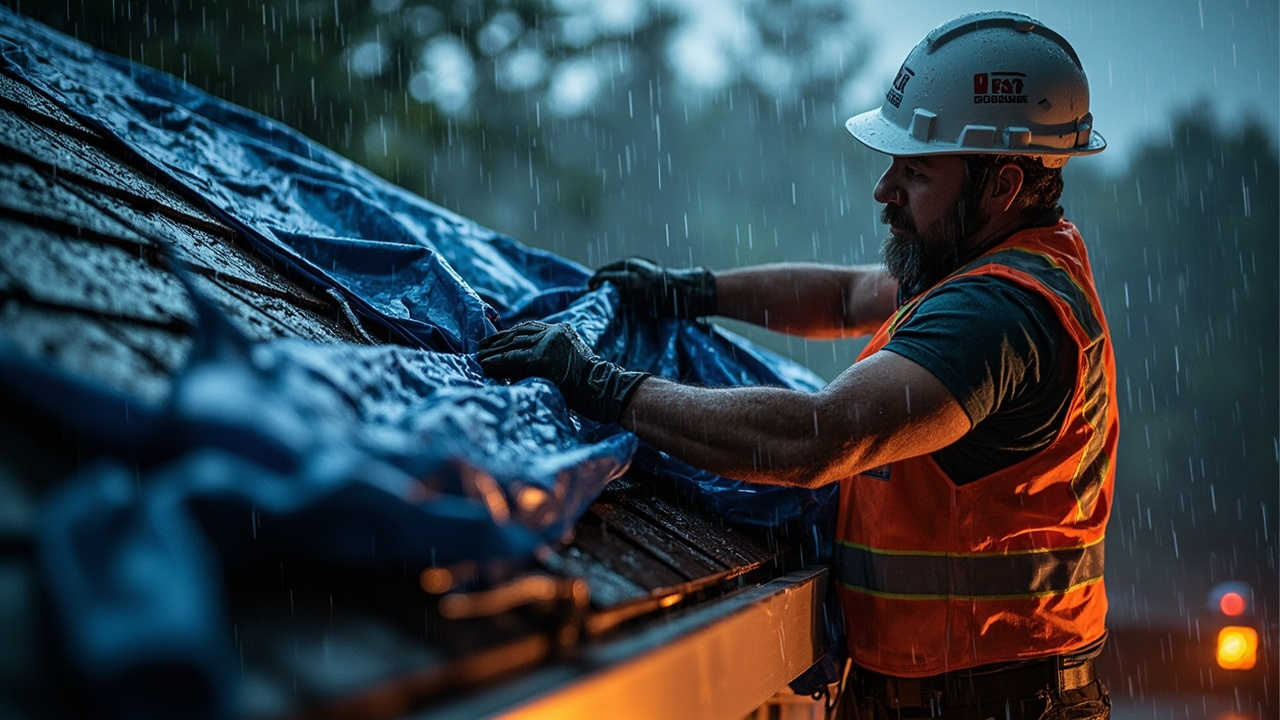
Emergency tarping requires specific materials and techniques that prevent further damage. We use heavy-duty polyethylene tarps rated for high winds, not the thin blue tarps from hardware stores that rip apart in Detroit's weather. Our tarps measure 20 to 40 feet to cover large damage areas with minimal seams where water penetrates.

The attachment method determines whether tarping works. We secure tarps using 2x4 boards screwed directly through the tarp into solid roof decking, creating anchor points every 18 inches along the perimeter. This sandwich method distributes wind load and prevents the flapping that tears tarps loose. We never use nails, which create holes and pull out under stress.

Proper installation extends the tarp past the damaged area by at least three feet in all directions. Water runs downhill, so we ensure the tarp covers from ridge to eaves with enough overlap to direct water into gutters. We seal the edges where the tarp meets undamaged roofing using additional lumber and fasteners to prevent wind from getting underneath.

The roof pitch affects technique. Detroit homes feature steep pitches between 6:12 and 9:12 on Colonial and Tudor styles common in neighborhoods like Palmer Woods and Sherwood Forest. Steep pitches require harness systems and extra anchor points to keep tarps secure during 40 mph gusts.

We inspect the entire roof during installation, documenting all damage for your insurance claim. This includes photographing torn shingles, damaged flashing around chimneys and vents, and any structural issues visible from the exterior. Thorough documentation speeds your claim and ensures nothing gets missed during permanent repairs.

What Happens When You Call for Emergency Roof Tarping

Emergency Tarping Service in Detroit – 24/7 Storm Response When Your Roof Can't Wait
01

Immediate Dispatch and Assessment

We answer your emergency call 24/7 and dispatch a crew within one hour. Our technician arrives with tarping materials, safety equipment, and a ladder truck. They perform a rapid roof assessment to determine damage extent, required tarp size, and any safety hazards like compromised decking or downed power lines. You receive an immediate verbal summary of what they found and the planned tarping approach.
02

Professional Tarp Installation

Our crew secures the damaged area using commercial-grade tarps and proper fastening techniques. We work systematically from the roof ridge downward, ensuring water flows over the tarp rather than underneath. All edges get reinforced with dimensional lumber screwed into solid decking. The crew tests the installation by checking for loose spots and confirming complete coverage extends beyond the damage zone. Installation typically takes 45 to 90 minutes depending on damage size and roof access.
03

Documentation and Next Steps

Before leaving, we photograph the tarped roof from multiple angles for your insurance documentation. You receive a written summary describing the damage, materials used, and recommendations for permanent repairs. We explain how long the tarp will hold under normal conditions and schedule a follow-up inspection within 48 hours. If you need help filing your insurance claim, we provide detailed damage reports and work directly with adjusters to expedite your claim process.

Why Detroit Property Owners Trust Peak Roofing Detroit for Emergency Tarping

Emergency roof situations require contractors who respond immediately, not companies that return calls the next business day. Peak Roofing Detroit maintains 24/7 dispatch because storm damage happens at 2 AM on Sunday just as often as Tuesday afternoon. Our crews stay on standby during severe weather warnings, positioned to respond the moment Detroit gets hit with damaging winds or hail.

We know Detroit's housing stock. The city's older neighborhoods feature original roofs on homes built between 1920 and 1960, with roof decking that may be spaced sheathing rather than solid plywood. This affects how we anchor tarps to ensure they hold without causing additional damage. Newer subdivisions in areas near the Detroit River have different considerations related to wind exposure and architectural shingle systems that fail differently than three-tab shingles.

Detroit's building codes require specific approaches to temporary roof covering that protect both the property and neighboring homes. Improperly secured tarps become projectiles in high winds, damaging other properties and creating liability. Our installation methods exceed code minimums because we understand the consequences of tarp failure during secondary storms.

We work directly with every major insurance carrier operating in Wayne County. Insurance companies trust our documentation because we provide detailed damage assessments with measurements, photographs, and material specifications they need to process claims. This familiarity speeds your claim approval and reduces the back-and-forth that delays permanent repairs.

Our emergency tarping service includes follow-up monitoring. Detroit weather changes rapidly, and tarps installed during dry conditions face different stresses when temperatures drop or wind patterns shift. We check tarped roofs after subsequent weather events to ensure protection remains intact until permanent repairs begin.

What to Expect During Emergency Roof Tarping Service

Response Time and Availability

We dispatch emergency tarping crews 24 hours a day, seven days a week, including holidays. You speak with a live person who takes your information and immediately contacts the nearest available crew. Most Detroit locations receive service within 60 to 90 minutes of your call during normal conditions. During major storm events affecting multiple properties, we triage based on severity, prioritizing active leaks and structural hazards. You receive continuous updates on crew arrival time and can track their location as they travel to your property. We never ask you to wait until morning when water damage compounds every hour.

On-Site Damage Assessment

Our technician performs a complete roof inspection before installing tarps, identifying all damaged areas visible from the exterior. This includes checking for compromised flashing, damaged valleys, torn shingles, and any structural concerns that affect tarp installation safety. We use moisture meters to detect hidden water intrusion through ceilings and attics, helping you understand the full scope of damage. The assessment includes measurements of the damaged area, notes on roofing material type and condition, and photographs from multiple angles. You receive a verbal explanation of findings in plain language, not technical jargon, so you understand exactly what happened and why tarping is necessary.

Quality of Protection Provided

Professional emergency tarping creates a watertight seal that withstands Detroit weather conditions for weeks or months if needed. Our installations use 6-mil or thicker polyethylene tarps with UV resistance to prevent degradation from sun exposure. The sandwich board method we employ distributes stress across the entire perimeter, preventing the fastener pullout common with inadequate techniques. Properly installed tarps protect through rain, snow, and wind events up to 50 mph without requiring adjustment. The tarp extends your roof's weather protection while you arrange permanent repairs, schedule inspections, and work through insurance processes without rushing into poor contractor decisions under pressure.

Follow-Up and Transition to Permanent Repairs

Emergency tarping buys you time, but it remains a temporary solution requiring transition to permanent repairs. We schedule a detailed roof inspection within three business days to assess damage that was not visible during emergency tarping. This inspection provides accurate repair estimates and helps you make informed decisions about patching versus full replacement. We coordinate with your insurance adjuster, providing access to the tarped roof and detailed documentation supporting your claim. When you approve permanent repairs, we schedule work and remove the tarp only when new materials are on-site and weather permits completion. This prevents any gap in protection between temporary and permanent solutions.

Frequently Asked Questions

You Have Questions,
We Have Answers

How much does it cost to emergency tarp a roof? +

Emergency tarping costs vary based on roof size, damage extent, and access difficulty. Most Detroit homeowners pay between a few hundred to over a thousand dollars for immediate coverage. Steep roofs or multi-story homes cost more due to safety equipment needs. Many insurers cover emergency tarping as part of storm damage claims, so document everything with photos before calling. Get tarping done fast to prevent interior water damage, which costs far more than the tarp itself. Ask your roofer for an itemized estimate and confirm they'll work directly with your insurance adjuster.

Where can I get a free tarp for my roof? +

Some Detroit emergency management programs or nonprofits distribute free tarps after major storms, but availability is limited and requires proof of need. Contact the City of Detroit's emergency services or local disaster relief organizations. However, free tarps come without professional installation. Improper tarping leads to wind blow-off, water pooling, and secondary damage. Your homeowner's insurance covers emergency tarping costs after storms, so file a claim immediately. Professional installation protects your home and documents damage properly for insurance. Do not wait for free tarps when active leaks threaten your property.

How much does insurance pay for tarping? +

Most insurance policies cover emergency tarping under loss mitigation or emergency repairs. Insurers pay reasonable costs to prevent further damage after covered events like storms or fallen trees. Detroit homeowners should document the damage immediately with photos and call both their roofer and insurance agent. Keep all receipts. Tarping costs are separate from your deductible in many policies. Your adjuster will verify the tarping was necessary and costs were reasonable. Professional roofers provide detailed invoices that satisfy insurance requirements. File your claim fast to avoid disputes about damage timelines.

Who do I call to check my roof for leaks? +

Call a licensed roofing contractor who specializes in leak detection and emergency repairs in Detroit. Professional roofers inspect shingles, flashing, valleys, and penetrations where leaks start. They use moisture meters and infrared cameras to find hidden water intrusion. Do not wait if you see ceiling stains, dripping, or water pooling. Detroit's freeze-thaw cycles make small leaks worse fast. A qualified roofer will assess damage, recommend tarping if needed, and provide a repair estimate. Get multiple inspections if the leak source is unclear. Fast diagnosis prevents mold and structural rot.

How to pay for a roof when you can't afford it? +

If you cannot afford a roof replacement, explore these options. File an insurance claim if storm damage caused the failure. Many Detroit roofers offer financing plans or payment schedules for large repairs. Check if you qualify for home repair assistance through Detroit's housing programs or nonprofit organizations. Some contractors work directly with lenders who specialize in home improvement loans. For emergencies, prioritize tarping and temporary repairs to stop active damage while you arrange financing. Get multiple estimates and ask about partial repairs that extend roof life without full replacement.

How much to put a roof on a 2000 sq ft house? +

Roof replacement costs depend on materials, roof complexity, and contractor rates. Asphalt shingles are most common in Detroit and cost less than metal or tile. A 2000 square foot home usually has 2200 to 2400 square feet of roof surface due to pitch and overhangs. Costs increase if you have multiple layers to remove, damaged decking, or complex angles. Get at least three written estimates from licensed Detroit roofers. Ask about material warranties and workmanship guarantees. Insurance may cover replacement if storm damage or age-related failure meets policy terms.

How old may a roof be before insurance claims it's too old? +

Most insurers flag roofs over 20 years old for coverage restrictions. Some carriers require inspection after 15 years or deny claims if your roof exceeds 25 years. Detroit's harsh winters and ice damming accelerate roof aging, so asphalt shingles rarely last their rated lifespan here. Insurers may only pay depreciated value for old roofs rather than full replacement cost. Check your policy for roof age limits before filing claims. If your roof is aging out, consider proactive replacement to maintain full coverage. Newer roofs also qualify for insurance discounts.

What can I use instead of tarping my roof? +

Emergency tarping is the fastest, most effective temporary fix for roof damage. Alternatives include rigid plywood boards secured over small holes, roof sealants for minor leaks, or waterproof membranes for flat roofs. These work only for limited damage in accessible areas. Detroit's heavy rains and snow loads make tarping superior for storm damage. Do not use plastic sheeting without proper anchoring. It tears in wind and traps moisture. Tarping buys you time to schedule permanent repairs without risking interior damage. Skip makeshift fixes and call a professional roofer immediately.

Does homeowners insurance help with roof repairs? +

Homeowners insurance covers roof repairs if damage resulted from covered perils like storms, fire, or falling objects. Wear and tear, poor maintenance, or age-related deterioration are excluded. Detroit homeowners must file claims promptly after storms and document all damage with photos. Your policy may cover emergency tarping, temporary repairs, and full replacement if damage is severe. Deductibles apply. Insurers inspect damage before approving claims, so professional documentation from your roofer helps. Read your policy's roof coverage terms and understand depreciation clauses for older roofs.

How much should an asphalt roof on a 500 sq ft house cost? +

A 500 square foot roof is small, typical for a garage, addition, or shed. Asphalt shingle installation costs depend on accessibility, pitch, and existing damage. Small roofs sometimes cost more per square foot due to minimum service charges and setup time. Detroit roofers may charge flat minimums for projects under 1000 square feet. Get written estimates and confirm the quote includes tear-off, disposal, new decking if needed, and starter shingles. Small emergency repairs cost less than full replacement. Ask if tarping or patching can extend the roof's life temporarily.

How Detroit's Freeze-Thaw Cycles Make Emergency Tarping Critical

Detroit experiences an average of 45 freeze-thaw cycles each winter, creating unique challenges for damaged roofs. When temperatures swing from below freezing at night to above freezing during the day, water trapped in roof damage expands and contracts repeatedly. This cycle turns small tears into large openings and separates flashing from roof decking. Ice dams form along eaves when heat escapes through damaged areas, melting snow that refreezes at the roof edge and backs water under shingles. Emergency tarping breaks this destructive cycle by preventing water infiltration that would otherwise freeze, expand, and worsen the original storm damage throughout winter months.

Detroit's older housing stock in neighborhoods like Rosedale Park, Grandmont, and Indian Village features original roof decking and framing that requires experienced assessment during emergency situations. We understand how these homes were built and what underlying conditions might complicate tarping installations. Our familiarity with local building practices dating back to the 1920s ensures we anchor tarps properly without damaging historic architectural elements or compromising structural integrity. This local expertise matters when protecting Detroit's diverse housing types, from brick Tudors to Craftsman bungalows, each requiring different approaches to temporary weather protection during roof emergencies.
Roofing Services in The Detroit Area

Our local headquarters are strategically located to efficiently serve all of Detroit and the surrounding areas. We invite you to view our service region and location on the map. As a trusted local contractor, we are never far from your neighborhood and are committed to providing quick, reliable, and convenient service wherever you are within the metropolitan area.

Address:
Peak Roofing Detroit, 19549 Gilmore St, Reseda, CA, 91335

Additional Services We Offer

Our news updates

Latest Articles & News from The Blogs

Choosing the Right Roof Color for a Brick Ranch in Warren Selecting the right roof color for your brick ranch…

Choosing the Right Roof Color for a Brick Ranch in Warren

Choosing the Right Roof Color for a Brick Ranch in Warren Selecting the right roof color for your brick ranch…

Why "Cheap" Roofing Quotes Often End Up Costing Detroiters Double in the Long Run

Why “Cheap” Roofing Quotes Often End Up Costing Detroiters Double in the Long Run Detroit homeowners searching for the lowest…

How the Humidity from Lake St. Clair Affects the Lifespan of Your Harrison Township Roof

How the Humidity from Lake St. Clair Affects the Lifespan of Your Harrison Township Roof \n\n The constant moisture and…

Contact Us

Storm damage gets worse every hour you wait. Call (313) 604-2233 immediately for 24/7 emergency roof tarping. Our crew dispatches within the hour to stop water intrusion and protect your property while you arrange permanent repairs.