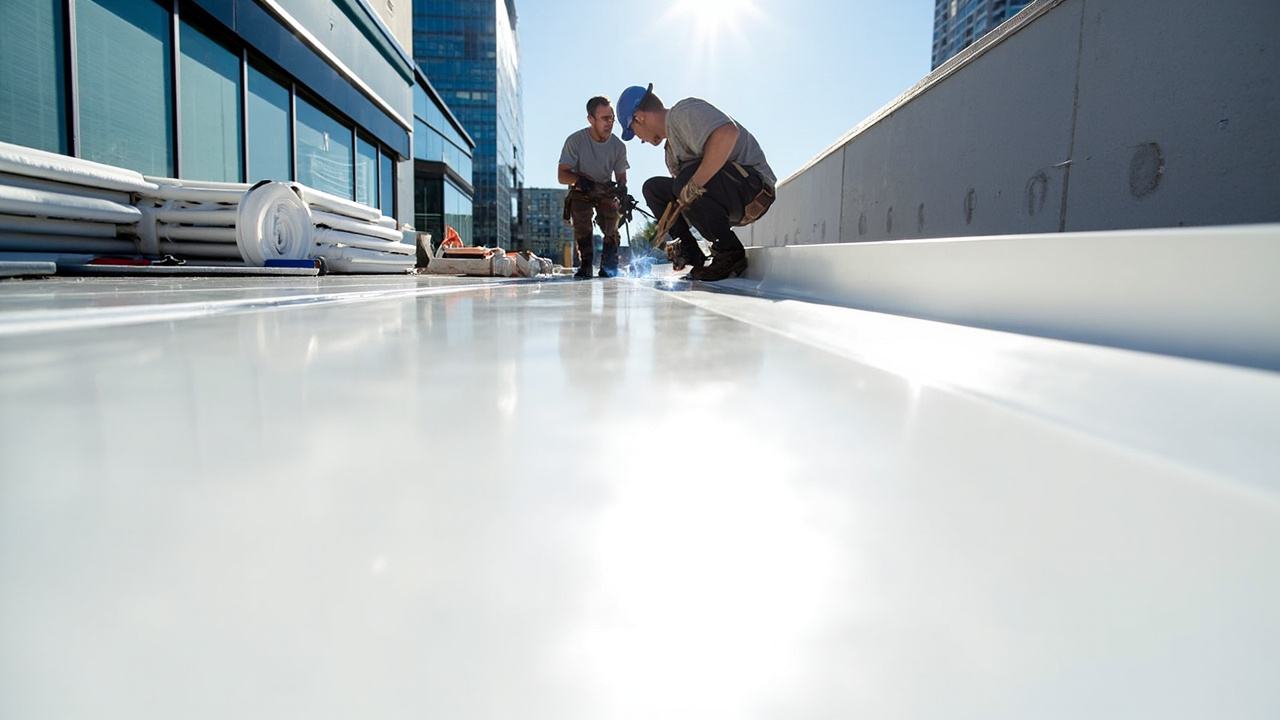

Detroit's freeze-thaw cycle ranks among the most aggressive in the United States, with temperature swings from 10 below zero in January to 95 degrees in July. This 105-degree annual range causes roofing membranes to expand and contract continuously, stressing seams and fasteners. Add the chemical exposure from Detroit's manufacturing base, particularly in areas near the I-94 Industrial Corridor and the Dearborn steel plants, and standard roofing materials degrade within five to seven years. PVC membrane installation solves both problems. The material remains flexible at negative 20 degrees, resists chemical attack from airborne pollutants, and forms monolithic seams that eliminate the thermal movement failures common to mechanically seamed systems. Detroit's commercial buildings require this level of durability to avoid constant repairs.
Detroit operates under the Michigan Building Code with local amendments enforced by the Buildings, Safety Engineering and Environmental Department. Commercial PVC roofing system installation must meet fire rating requirements, wind uplift specifications based on building height and exposure, and energy code standards for insulation R-values. Peak Roofing Detroit maintains relationships with local inspectors and understands the permit process for commercial reroofing projects. We handle all code compliance documentation, coordinate inspections, and ensure your project passes final review without delays. Local expertise matters when your building operations depend on a watertight roof and your insurance policy requires code-compliant installation. We know Detroit's requirements and deliver accordingly.