menu

Mold & Algae Stain Removal in Detroit – Restoring Your Roof Before Organic Growth Causes Permanent Damage

Professional roof fungus cleaning and shingle algae treatment that removes black streaks, protects your investment, and stops organic stains from shortening your roof's lifespan across Metro Detroit.

Slider Image 1
Slider Image 2
Slider Image 3
Slider Image 4
Slider Image 5
Slider Image 7
Slider Image 8
Slider Image 9
Slider Image 10
Slider Image 11

Why Dark Streaks and Green Stains Keep Coming Back on Detroit Roofs

You notice dark vertical streaks running down your shingles. Green patches spreading near the north-facing slope. Black discoloration that makes your roof look 20 years older than it is.

This is not dirt. This is Gloeocapsa magma, a cyanobacteria that feeds on the limestone filler in asphalt shingles. Detroit's humid summers and freeze-thaw cycles create the perfect breeding ground. The algae spores travel on wind currents from neighboring roofs, landing on damp shingles and multiplying within weeks.

Once algae colonizes your roof, it holds moisture against the shingle surface. This accelerates granule loss and weakens the asphalt mat underneath. You end up with premature aging, higher cooling costs because dark stains absorb more heat, and a home that looks neglected from the curb.

Roof mildew removal is not cosmetic. Left untreated, algae stains become roof fungus colonies. Moss begins growing in the gaps between shingles. Water infiltration follows. The cycle accelerates each year.

Detroit's older neighborhoods, like Indian Village and Palmer Woods, have mature tree canopies that keep roofs shaded and damp longer. These conditions speed up organic growth. Homes near the Detroit River or along the canal systems in Grosse Pointe deal with higher humidity levels year-round.

Removing black streaks on roof surfaces stops the decay process before it requires a full replacement. The stains you see today represent thousands of dollars in potential damage if ignored for another season.

Why Dark Streaks and Green Stains Keep Coming Back on Detroit Roofs
How We Remove Algae Without Damaging Your Shingles

How We Remove Algae Without Damaging Your Shingles

Most homeowners try pressure washing. This strips granules off the shingles, voids your warranty, and creates leak points. The algae comes back within months because the spores are still embedded in the shingle surface.

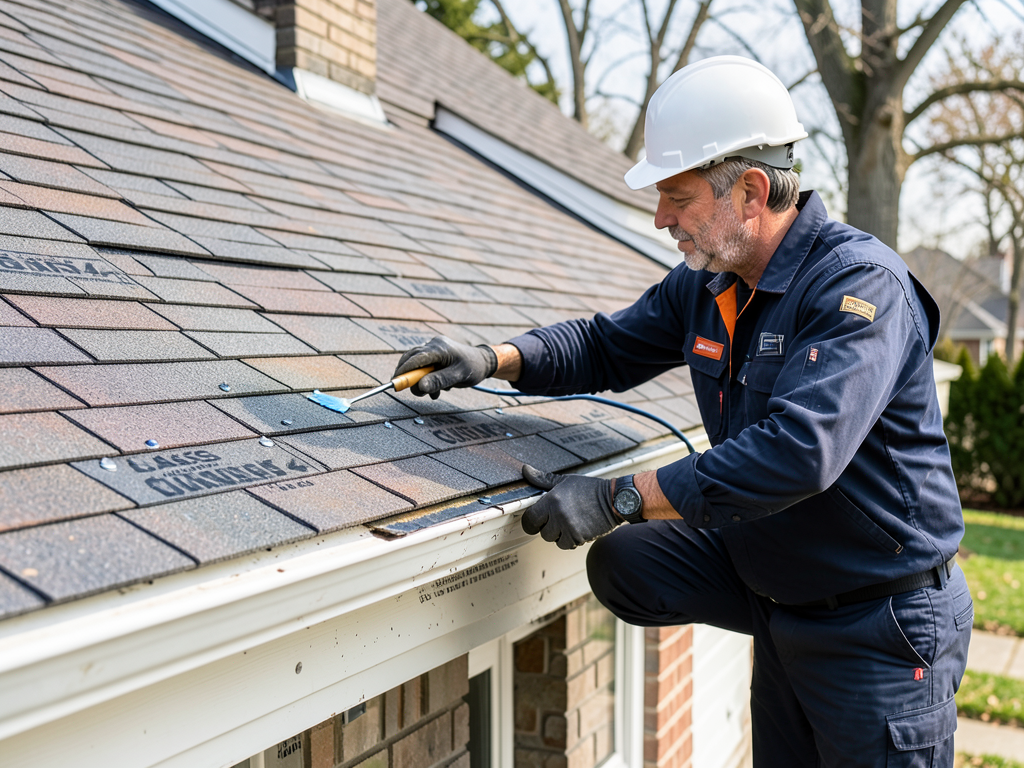
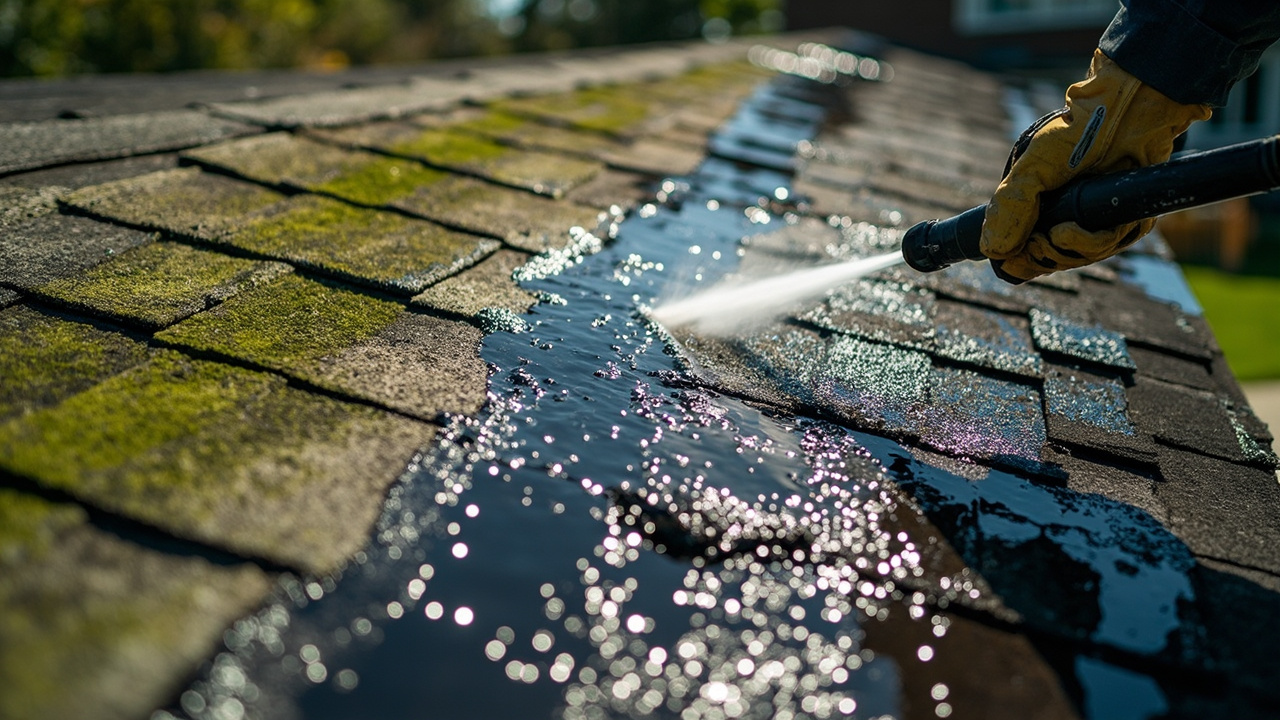
Peak Roofing Detroit uses a low-pressure soft wash system with EPA-approved biocides designed for shingle algae treatment. We apply a cleaning solution that kills the algae at the root, breaking down the biofilm without mechanical abrasion.

The process starts with a roof inspection to identify any existing damage or vulnerable areas. We check for loose flashing, cracked shingles, or compromised valleys where water might penetrate during cleaning. We protect your landscaping, gutters, and downspouts with tarps and diversion systems.

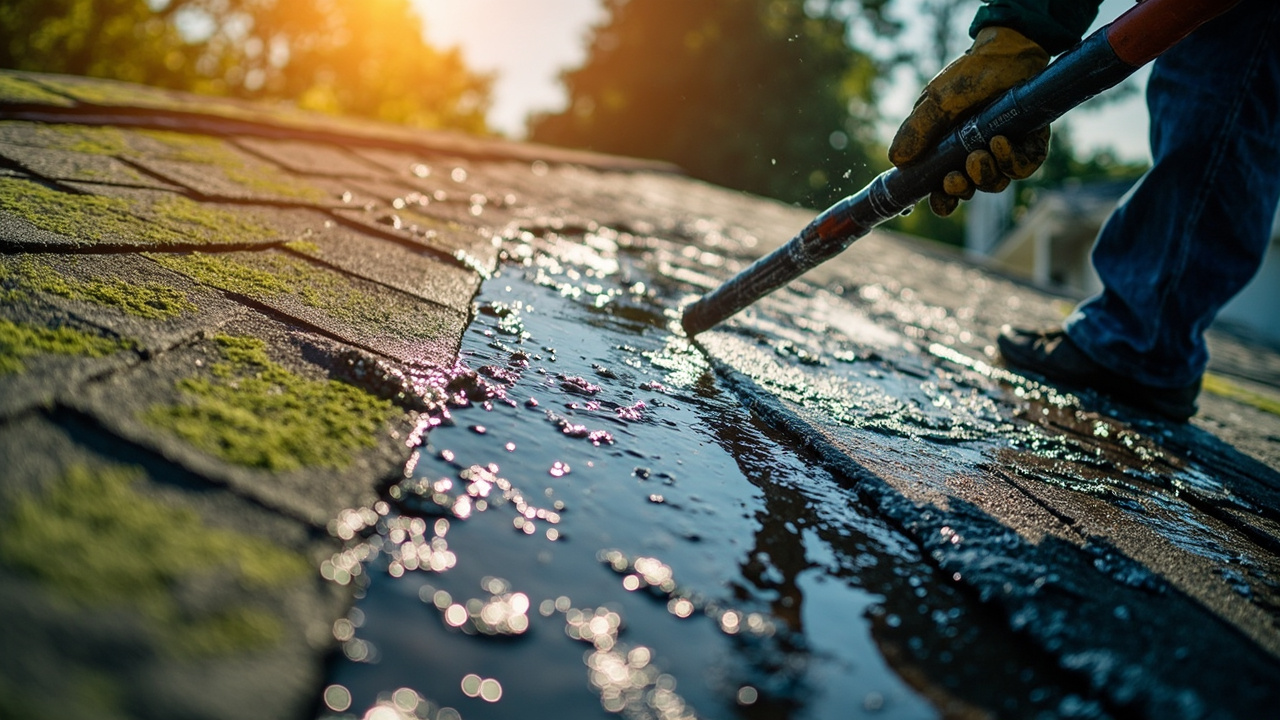
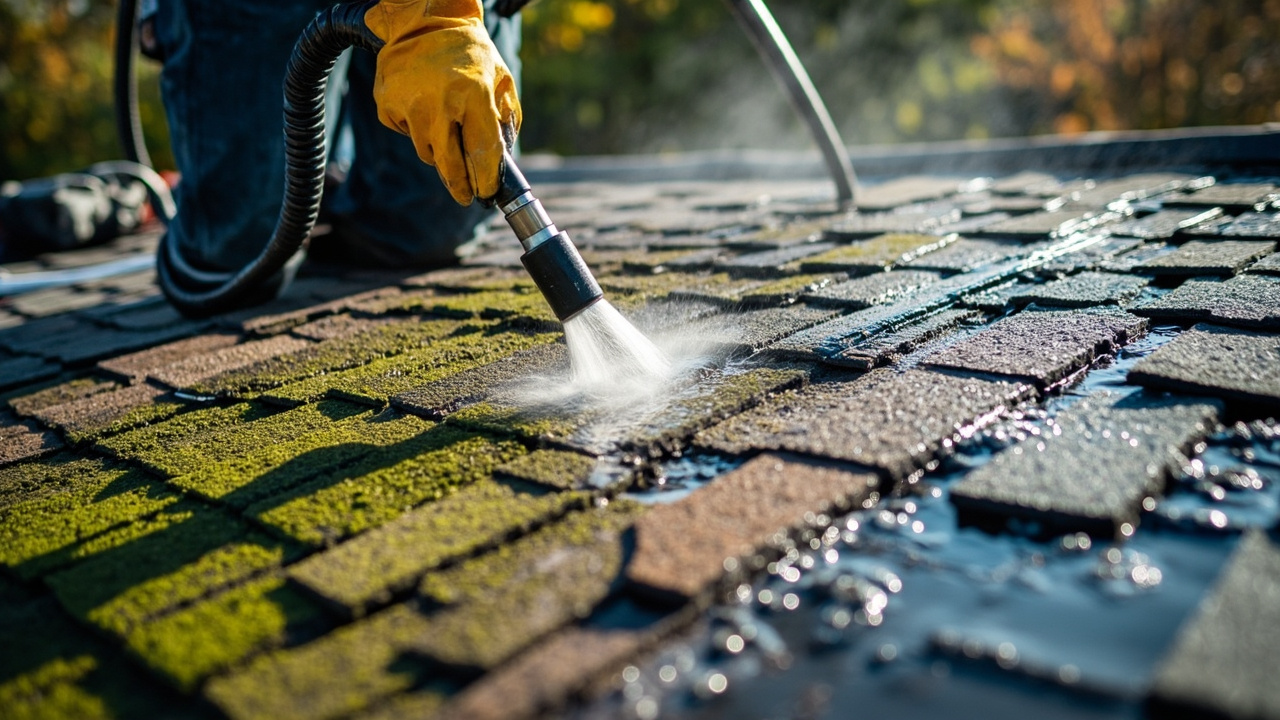
We apply the treatment from the ridge down, allowing it to dwell for 15 to 20 minutes. The solution penetrates the shingle surface, killing algae spores and loosening the organic stains. We then rinse with controlled water pressure, no higher than 500 PSI, which is less force than a garden hose at full blast.

For severe moss or lichen infestations, we manually remove the bulk growth with non-abrasive tools before applying the treatment. This prevents large chunks from clogging your gutters and ensures complete penetration of the cleaning solution.

After cleaning, we apply a zinc or copper-based prevention treatment along the ridge line. When it rains, trace amounts of metal ions wash down the roof, creating an environment where algae cannot colonize. This extends the clean appearance for years, not months.

We clear all debris from gutters and downspouts, ensuring proper drainage. Standing water in gutters accelerates re-growth.

What Happens During Your Roof Cleaning Appointment

Mold & Algae Stain Removal in Detroit – Restoring Your Roof Before Organic Growth Causes Permanent Damage
01

Roof Surface Assessment

We begin with a detailed inspection of your roof's condition, documenting existing damage, algae coverage, and vulnerable areas like valleys and flashing. This allows us to adjust our approach for your specific shingle type and infestation level. We identify any repairs needed before cleaning to prevent water intrusion. You receive photos and a clear explanation of what we find before any work begins.
02

Soft Wash Application

We protect your property, then apply our biocide solution using low-pressure equipment that will not damage shingles or strip granules. The treatment kills algae spores, breaks down biofilm, and loosens organic stains without mechanical force. We work systematically from ridge to eave, ensuring complete coverage. The solution dwells on the surface long enough to penetrate deeply but not so long that it risks your landscaping or painted surfaces below.
03

Rinse and Protection

We rinse the roof with controlled water pressure, removing dead algae and loosened stains. All debris is cleared from gutters and downspouts to restore proper drainage. We apply a zinc or copper-based inhibitor along the ridge to prevent re-colonization. You get a clean roof that looks years newer, protected against future algae growth, and documented proof of the transformation with before-and-after photos for your records.

Why Detroit Homeowners Trust Peak Roofing for Algae Removal

Roof fungus cleaning requires understanding the specific algae species common to Southeast Michigan and the shingle types used in Detroit-area construction. We have cleaned roofs in every neighborhood from Midtown to Dearborn Heights, and we know how lake-effect weather patterns from Lake St. Clair affect algae growth rates.

Many national chains use high-pressure systems that void shingle warranties. We follow the Asphalt Roofing Manufacturers Association guidelines for soft washing, which protects your investment and maintains your warranty coverage.

Detroit's housing stock includes everything from 1920s bungalows with original slate to modern builds with architectural shingles. Each material requires a different approach. We adjust our cleaning solutions and techniques based on your roof's age, composition, and condition. We do not use a one-size-fits-all method.

We are familiar with Detroit's building codes and the common roof designs in historic districts like Boston-Edison and Sherwood Forest. These neighborhoods have strict exterior maintenance standards. Our cleaning process preserves the character of your home while meeting those requirements.

Our crews are trained on fall protection and ladder safety. We carry liability insurance that covers your property during the cleaning process. You do not need to worry about damage to your siding, windows, or landscaping.

We have relationships with local suppliers, so we can source replacement shingles that match your existing roof if we discover damage during inspection. This saves you the headache of coordinating multiple contractors.

You get transparent pricing before we start. No upselling. No hidden fees. We explain what we found, what we recommend, and why. You make the final call.

What You Can Expect From Start to Finish

Same-Week Scheduling Available

We schedule your roof cleaning within days, not weeks. Most residential jobs take three to five hours depending on roof size and algae severity. We work around your schedule and provide a specific arrival window. Weather delays happen, especially during Detroit's unpredictable spring and fall seasons. We monitor forecasts closely and reschedule proactively if rain is likely. You are not left wondering when we will show up.

Thorough Pre-Cleaning Inspection

Before we spray a single drop of cleaning solution, we walk your entire roof. We look for damaged shingles, failing flashing, and clogged gutters that could complicate the cleaning process. We document everything with photos and review our findings with you. If we spot a problem, we explain the risk and offer solutions. You decide whether to address repairs before cleaning or proceed as-is. We do not surprise you with problems halfway through the job.

Visible Transformation in One Visit

Your roof looks noticeably cleaner the moment we finish rinsing. Black streaks disappear. Green patches are gone. The shingles return to their original color. You see the full result immediately, not over the course of weeks. We take before-and-after photos from the same angles so you can see the transformation. Most homeowners are shocked at how much younger their roof looks once the organic stains are removed.

Long-Term Prevention Included

We apply a preventative treatment after cleaning that inhibits algae re-growth for multiple years. This is not a separate upsell. It is part of the service. We also provide maintenance recommendations tailored to your roof's exposure and tree coverage. If you have overhanging branches that keep your roof damp, we tell you. If your gutters need more frequent cleaning to prevent moisture buildup, we explain why. You get actionable advice that extends the life of your roof.

Frequently Asked Questions

You Have Questions,
We Have Answers

Can algae stains be removed? +

Yes, algae stains can be removed from most exterior surfaces. Algae forms a biofilm that discolors shingles, siding, and concrete. In Detroit, our humid summers create ideal conditions for algae growth. Professional removal involves specialized biocide treatments that kill algae spores at the root, then low-pressure washing to lift staining without damaging surfaces. DIY bleach solutions offer temporary results but often miss embedded spores. The key is addressing both the stain and the living organism. Proper removal prevents regrowth and protects your property value, especially important in Detroit's older neighborhoods where moisture accumulation is common.

Can active mold stains be removed? +

Active mold stains require immediate professional attention. The stain itself can often be removed, but active mold means you have an ongoing moisture problem. In Detroit homes, basements and attics frequently harbor active mold due to poor ventilation and freeze-thaw cycles. Surface cleaning alone does not solve the issue. You need containment, HEPA filtration, antimicrobial treatment, and moisture remediation. The staining on drywall or wood may require replacement if penetration is deep. Never just paint over active mold. Address the source, kill the colonies, then remove affected materials. Your health depends on proper remediation, not cosmetic fixes.

What is the best algae mold remover? +

For exterior algae on roofing and siding, sodium hypochlorite solutions work best when applied by professionals who understand dilution ratios and dwell time. In Detroit, where freezing winters stress roofing materials, harsh scrubbing causes more damage than the algae itself. Commercial products containing copper sulfate or zinc strips offer prevention but limited removal power. The most effective approach combines biocide application with controlled soft washing. Avoid pressure washing, which strips granules from shingles. For surfaces around Detroit's brick homes, quaternary ammonium compounds prevent regrowth. Professional-grade treatments outperform retail products because concentration and application method matter significantly.

Can mold leave permanent stains? +

Mold can leave permanent stains on porous materials. Drywall, unsealed wood, fabric, and grout absorb mold deeply. Even after killing the organism, dark staining often remains embedded in the material structure. Detroit's older homes with plaster walls face this issue frequently. Non-porous surfaces like tile, glass, and metal clean more completely. The permanence depends on how long mold grew undisturbed and material porosity. If you catch mold early, surface cleaning works. Wait months, and you face replacement costs. Staining that persists after proper remediation usually requires sealing primers or material removal. Prevention through moisture control remains your best defense.

Does white vinegar remove algae stains? +

White vinegar removes light algae stains from hard surfaces but has limitations. Its acetic acid kills some algae strains and lifts surface discoloration. For Detroit homeowners dealing with patio furniture or small deck areas, vinegar offers a non-toxic option. However, it does not penetrate porous materials effectively and requires repeated applications. On roofing or siding, vinegar lacks the strength for heavy infestations common after Detroit's humid summers. It also does not prevent regrowth. Use vinegar for maintenance cleaning on small areas, but understand it will not solve significant algae problems. Professional biocides target algae biology more effectively.

What is the hardest stain to remove from clothes? +

This question relates to fabric care, not structural mold removal. The hardest clothing stains typically include red wine, blood, grease, and ink because they bond with fabric fibers chemically. Mold on fabric creates similar challenges, penetrating cotton and linen deeply. In Detroit's damp basements, stored clothing often develops mildew staining. Pre-treatment with oxygen bleach, hot water washing, and sun drying work best. However, structural mold staining on building materials requires different approaches than laundry. If you face mold on walls, insulation, or wood framing, fabric stain removal techniques will not apply. Focus on moisture elimination and material remediation.

What is the best mold stain remover? +

The best mold stain remover depends on your surface material. For non-porous surfaces like tile and glass, hydrogen peroxide or diluted bleach solutions work effectively. Detroit homeowners with basement mold on concrete benefit from TSP cleaners before sealing. For wood surfaces, oxalic acid removes dark staining without damaging grain. Drywall and fabric rarely respond to any cleaner once deeply stained. Professional remediation teams use encapsulants that seal remaining discoloration after mold death. Retail products claiming mold stain removal often just bleach the surface temporarily. Real remediation requires killing mold first, removing porous materials if needed, then treating residual staining appropriately.

Will OxiClean remove mold stains? +

OxiClean can remove some mold stains from fabrics and hard surfaces because its oxygen-based bleaching lifts organic discoloration. For Detroit homeowners dealing with mildew on outdoor cushions or shower curtains, OxiClean offers moderate success. However, it does not kill mold, only lightens staining. On structural materials like drywall or wood framing, OxiClean provides cosmetic improvement at best. It will not address the underlying moisture problem causing mold growth. Use OxiClean for washable items and light surface staining. For active mold or deep staining on building materials, you need antimicrobial treatments and possible material replacement, not laundry products.

Will magic eraser remove mold stains? +

Magic erasers remove surface mold stains from non-porous materials through abrasion, not chemical action. These melamine foam sponges physically scrub away discoloration from tile, glass, and painted surfaces. Detroit homeowners use them successfully on bathroom grout and window sills. However, scrubbing does not kill mold spores. You risk spreading contamination and creating surface scratches. Magic erasers fail completely on porous materials like drywall and wood where mold penetrates deeply. They offer quick cosmetic fixes for minor surface staining but should never replace proper mold remediation. Kill the mold first with appropriate biocides, then clean residual staining if needed.

Which kills mold better, bleach or vinegar? +

Bleach kills mold faster on non-porous surfaces, but vinegar penetrates porous materials better. Bleach provides immediate surface kill and whitening, making it effective on tile, glass, and metal. However, it does not soak into wood or drywall where mold roots deep. In Detroit basements with concrete block walls, bleach works well. Vinegar's acidity penetrates porous surfaces but requires longer contact time and repeated applications. Neither product addresses the moisture source causing mold. Professional remediation uses EPA-registered fungicides stronger than both household options. For small surface mold, use bleach. For porous materials, replace them rather than relying on either cleaner.

How Detroit's Humid Summers and Tree Canopies Accelerate Roof Algae Growth

Detroit's summer humidity regularly exceeds 70 percent, creating ideal conditions for Gloeocapsa magma to thrive on asphalt shingles. The city's mature neighborhoods have dense tree canopies that block sunlight and trap moisture on roof surfaces. North-facing slopes stay damp longer, which speeds up algae colonization. Homes near the Detroit River, along the canals in Grosse Pointe, or near Rouge Park deal with even higher moisture levels. This is why roof mildew removal and shingle algae treatment are not optional maintenance in Metro Detroit. Organic growth shortens roof lifespans by trapping moisture against the shingle surface, accelerating granule loss and asphalt degradation.

Peak Roofing Detroit understands the specific challenges Southeast Michigan weather creates for residential roofing. We have worked in every Detroit neighborhood and know which areas experience faster algae growth due to proximity to water or heavy tree cover. We follow manufacturer guidelines for soft washing to protect your warranty and comply with local building standards in historic districts. Our crews are trained on Michigan-specific roofing materials and the algae species common to this region. Choosing a local contractor means you get someone who understands your roof's environment and knows how to protect it long-term.
Roofing Services in The Detroit Area

Our local headquarters are strategically located to efficiently serve all of Detroit and the surrounding areas. We invite you to view our service region and location on the map. As a trusted local contractor, we are never far from your neighborhood and are committed to providing quick, reliable, and convenient service wherever you are within the metropolitan area.

Address:
Peak Roofing Detroit, 19549 Gilmore St, Reseda, CA, 91335

Additional Services We Offer

Our news updates

Latest Articles & News from The Blogs

Why You See Dark Lines on Your LaSalle Gardens Ceiling (Is it a Leak or Ghosting?) Those dark streaks on…

Why You See Dark Lines on Your LaSalle Gardens Ceiling (Is it a Leak or Ghosting?)

Why You See Dark Lines on Your LaSalle Gardens Ceiling (Is it a Leak or Ghosting?) Those dark streaks on…

Restoring the Hidden Box Gutters on a Classic Virginia Park Four-Square

Restoring the Hidden Box Gutters on a Classic Virginia Park Four-Square Box gutters are the hidden lifelines of Detroit’s historic…

How a New Roof Affects Your Homeowners Insurance Premium in Clinton Township

How a New Roof Affects Your Homeowners Insurance Premium in Clinton Township A new roof in Clinton Township can immediately…

Contact Us

Dark streaks are not just cosmetic. They are eating away at your shingles right now. Call Peak Roofing Detroit at (313) 604-2233 to schedule your roof cleaning this week. We serve all of Metro Detroit with transparent pricing and same-week availability.