
Restoring the Complex Roof Lines and Deep Valleys of a Woodbridge Victorian
The intricate roof lines of a Woodbridge Victorian are a hallmark of Detroit’s architectural heritage, but they also present unique challenges that require specialized expertise. These homes, built between 1880 and 1920, feature steep pitches, multiple intersecting planes, and ornate detailing that demand careful restoration rather than simple replacement. The deep valleys between gables and turrets channel Michigan’s heavy snow and rain directly onto vulnerable flashing points, making proper repair critical for long-term protection. Detroit Historic District Commission.
Woodbridge’s historic district status means any roofing work must comply with Detroit Historic District Commission guidelines, requiring authentic materials like natural slate or lead-coated copper. The neighborhood’s proximity to the Detroit River creates additional moisture challenges, while the area’s mature tree canopy contributes to organic growth on aging surfaces. Understanding these local factors is essential for preserving both the structural integrity and historic character of these Victorian treasures. Getting Your Historic Roof Restored in Indian Village the Right Way.
Common Failure Points in Victorian Roof Architecture
Victorian homes in Woodbridge typically suffer from three critical failure points: deteriorated slate tiles, compromised flashing at valleys and dormers, and failing box gutters. The freeze-thaw cycles common to Detroit’s climate cause slate to crack and separate from its underlayment, while copper flashing develops pinholes from prolonged exposure to moisture and debris. Box gutters, often lined with outdated materials, trap water against the fascia and soffit, leading to rot and structural damage.. Read more about What to Do if You Suspect Your Old Detroit Roof Contains Asbestos.
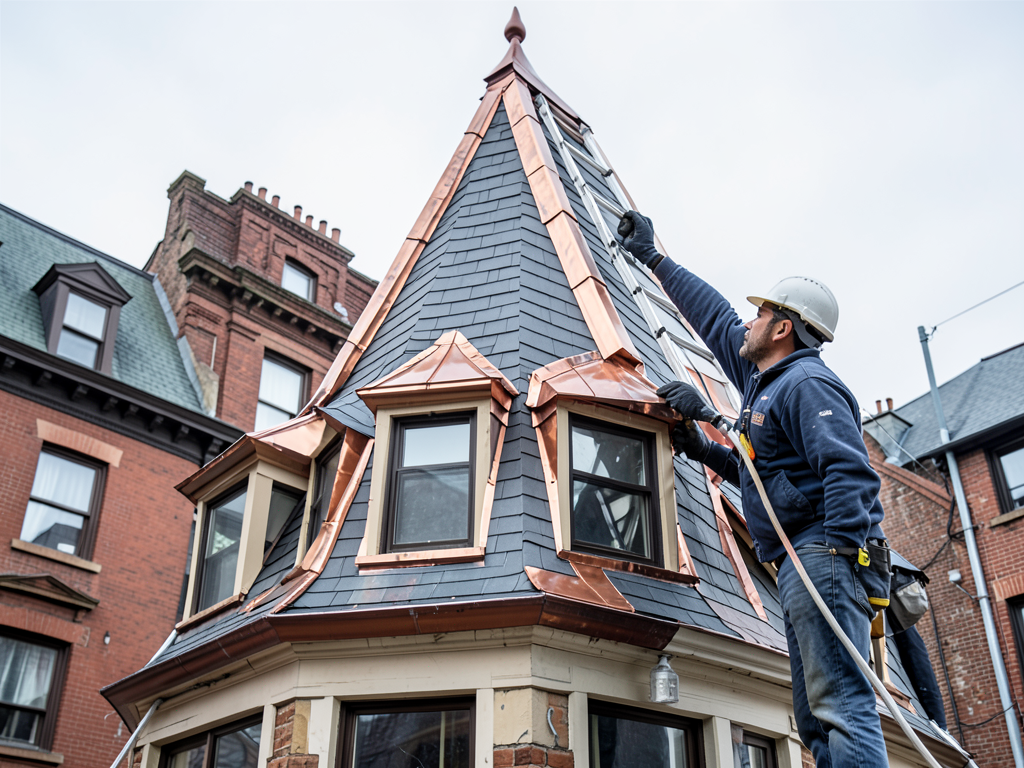
The architectural complexity of these homes creates additional vulnerabilities. Turrets with conical roofs concentrate water flow onto a single point, while decorative cresting can obstruct proper drainage. Many Woodbridge Victorians feature original cedar shake underlayment beneath slate, which becomes compressed and ineffective over decades. The weight of accumulated snow on these steep pitches can exceed the original design specifications, particularly in homes where attic insulation has been upgraded without reinforcing the roof structure. Why Flat Roofs in Corktown Require Specialized Drainage Solutions.
Call (313) 604-2233 today to schedule your inspection. Our team specializes in diagnosing these complex failure patterns before they lead to interior damage.
Detroit Historic District Commission Compliance Requirements
Working on a roof in Woodbridge requires navigating the Detroit Historic District Commission approval process. The HDC maintains strict guidelines for material authenticity, requiring natural slate with minimum 3/16-inch thickness and copper flashing with specific lead content ratios. Replacement tiles must match the original in size, thickness, and color variation, which often means sourcing from specialized reclamation yards or European quarries.. Read more about Why Detroit Homeowners are Adding Copper Accents to Their Roofs in Grosse Ile.
The commission also regulates the restoration of decorative elements like finials, cresting, and ornate dormer windows. These features must be repaired rather than replaced when possible, using techniques like silver brazing for copper elements or epoxy consolidation for deteriorated wood. The HDC permit process typically takes 30-45 days and requires detailed drawings showing material specifications and installation methods that comply with Michigan Residential Code Chapter 15 for roofing. Michigan State Historic Preservation Office.
Local contractors familiar with HDC requirements understand the importance of documenting existing conditions before work begins. This includes photographing original materials, measuring roof pitch variations, and identifying any previous unauthorized modifications that could complicate the approval process. The commission particularly scrutinizes changes to roofline profiles or the addition of modern ventilation systems that could alter the home’s historic appearance.
Specialized Materials for Victorian Roof Restoration
Natural slate remains the gold standard for Victorian roof restoration in Woodbridge, offering a 75-100 year lifespan when properly installed. The material’s density and low water absorption rate make it ideal for Detroit’s climate, resisting the freeze-thaw damage that destroys asphalt shingles. High-quality slate comes in varying thicknesses from 3/16 to 1/2 inch, with the thickest tiles reserved for high-stress areas like valleys and eaves.
Copper flashing provides superior longevity compared to modern alternatives, developing a protective patina that prevents corrosion. The material’s malleability allows for custom fitting around complex architectural features, while its thermal expansion properties accommodate the movement of aging structures. Lead-coated copper offers an alternative for homeowners seeking the durability of copper with a darker initial appearance that more closely matches aged materials. What Royal Oak Homeowners Should Know Before Choosing a Roofing Contractor.
For box gutter restoration, modern EPDM liners provide a waterproof barrier while maintaining the original profile. These liners, when properly installed over reinforced wood substrates, can extend the life of historic gutter systems by 30-40 years. The key lies in creating adequate slope for drainage while preserving the decorative elements that characterize Victorian architecture.
Diagnostic Testing for Victorian Roof Assessment
Before beginning any restoration work, a thorough diagnostic assessment identifies hidden damage that could compromise the repair. Moisture meters detect water infiltration in decking and underlayment, while infrared thermography reveals heat loss patterns that indicate insulation gaps or air leaks. These tools help determine whether the existing roof structure can support the weight of new materials or requires reinforcement.
The screwdriver test remains one of the most reliable diagnostic methods for assessing wood deterioration. By probing fascia boards, soffits, and decking at multiple points, technicians can identify soft spots indicating rot or insect damage. This hands-on approach reveals the extent of structural compromise that might not be visible from the surface, particularly in areas where water has been trapped for years. Finding a Reliable Shingle Replacement Service in Palmer Woods.
Core sampling provides definitive data about the condition of existing materials. Extracting small sections of slate, underlayment, and decking allows for laboratory analysis of material composition and deterioration patterns. This testing helps determine whether selective replacement or complete roof removal offers the most cost-effective solution for long-term preservation.. Read more about Everything You Need to Know About Getting a Roofing Permit in the City of Detroit.
Valley Restoration Techniques for Complex Roof Lines
The deep valleys characteristic of Victorian architecture require specialized restoration techniques to prevent water infiltration. Traditional woven valley construction, where shingles alternate across the valley center, provides superior water shedding compared to modern open valley methods. This technique requires precise cutting and overlapping of materials to create a seamless water barrier.
Copper valley flashing installation involves creating custom-formed pieces that follow the exact contours of the roof planes. The flashing must extend at least 12 inches onto each plane and be secured with copper nails to prevent galvanic corrosion. Ice and water shield underlayment provides an additional moisture barrier, particularly important in Detroit’s climate where ice damming can force water under traditional felt paper.
Proper valley restoration also addresses the underlying structure. Rotted decking must be replaced with pressure-treated lumber of the same thickness to maintain roof pitch consistency. The replacement process requires careful attention to existing nailing patterns and the integration of new materials with original construction methods to ensure structural integrity.
Turret and Dormer Repair Considerations
Turrets present unique challenges due to their conical shape and concentrated water flow. The transition from vertical wall to roof surface requires custom-fabricated flashing that accommodates both the curve of the turret and the pitch of the main roof. Traditional lead flashing provides the necessary flexibility while offering superior weather resistance compared to modern alternatives.
Dormer windows, common in Queen Anne and Italianate Victorians, create additional leak points at the junction of vertical walls and sloped roofs. Proper repair involves removing all existing flashing and underlayment to assess the condition of the wall substrate. New flashing must extend up the wall at least 8 inches and overlap the roofing material by a minimum of 6 inches to prevent wind-driven rain infiltration. Metal Roofing for Ferndale Homes (Is it Actually Worth the Investment?).
The decorative elements surrounding dormers and turrets often require specialized carpentry skills. Turned posts, brackets, and gingerbread detailing must be carefully removed, repaired, and reinstalled to maintain the home’s historic character. This process frequently reveals hidden damage to the underlying structure that requires attention before roofing work can proceed.. Read more about Why Your Roof is Leaking Around the Dormer Windows of Your Novi Home.
Box Gutter Restoration and Maintenance
Box gutters, integral to Victorian architecture, require specialized restoration to address their inherent design flaws. These built-in gutters trap debris and hold water against wooden structures, creating ideal conditions for rot and insect infestation. Modern restoration involves lining the existing gutter with EPDM rubber or reinforced PVC, creating a waterproof barrier while maintaining the original profile.
Proper box gutter restoration begins with complete removal of old materials down to the original wood substrate. Any rotted wood must be replaced with pressure-treated lumber, and the entire structure must be reinforced to handle the weight of water and debris. The new liner installation requires precise folding and sealing at corners and end caps to prevent leaks.
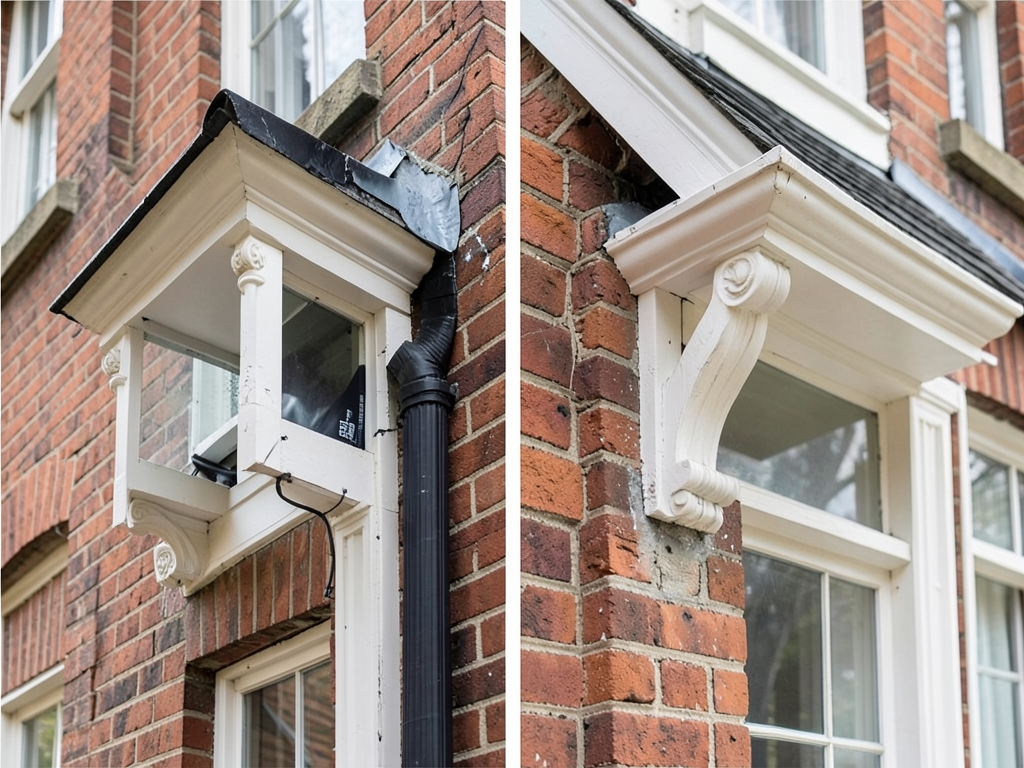
Downspout integration presents another challenge in box gutter restoration. Original Victorian homes often featured decorative leader heads and ornamental downspouts that must be preserved or replicated. Modern drainage requirements may necessitate larger downspouts than originally installed, requiring careful integration to maintain the home’s historic appearance while improving functionality.
Cost Factors in Victorian Roof Restoration
Victorian roof restoration in Woodbridge typically costs 40-60% more than standard asphalt shingle replacement due to the specialized materials and craftsmanship required. Natural slate installation runs $15-25 per square foot, while copper flashing and decorative elements can add another $8-12 per square foot. The total cost for a complete restoration on a typical Woodbridge Victorian ranges from $45,000 to $85,000.
Labor costs account for approximately 60% of the total project cost, reflecting the specialized skills required for historic restoration. Experienced craftsmen familiar with Victorian architecture command premium rates, but their expertise prevents costly mistakes that could damage irreplaceable materials or violate HDC guidelines. The time required for proper restoration often extends 2-3 times longer than standard roofing projects.
Material salvage and reuse can offset some costs, particularly for homeowners willing to invest time in sourcing matching slate or copper elements from architectural salvage yards. However, the availability of period-appropriate materials continues to decline, making early planning essential for budget management. Some homeowners opt for phased restoration, addressing the most critical areas first while planning for complete replacement within a 3-5 year timeframe.
Energy Efficiency Upgrades for Historic Roofs
Modern energy efficiency improvements can be integrated into Victorian roof restoration without compromising historic integrity. Ice and water shield underlayment provides superior moisture protection while improving thermal performance. The shield’s self-sealing properties around nails create an additional barrier against air infiltration, reducing heating costs by 10-15% in many cases.
Ventilation improvements address a common issue in historic homes where original construction lacked adequate airflow. Ridge vents, when properly integrated into the roofline, provide continuous ventilation without altering the home’s appearance. Soffit vents, often hidden behind decorative fascia, allow cool air intake that works with the ridge vent to create natural convection currents.
Solar panel integration presents unique challenges for Victorian homes in historic districts. While the HDC generally prohibits visible roof-mounted panels on primary facades, panels can often be installed on rear-facing slopes or in locations where they remain hidden from street view. Some homeowners opt for solar shingles that more closely match traditional roofing materials while providing renewable energy benefits.
Maintenance Schedule for Restored Victorian Roofs
A comprehensive maintenance schedule extends the life of a restored Victorian roof and prevents costly emergency repairs. Biannual inspections in spring and fall identify potential issues before they escalate into major problems. These inspections should include gutter cleaning, flashing examination, and assessment of any visible damage from seasonal weather events.
Annual maintenance tasks include clearing debris from valleys and around chimneys, checking sealant integrity at all roof penetrations, and inspecting attic spaces for signs of moisture infiltration. The freeze-thaw cycles characteristic of Detroit’s climate can cause previously sound materials to shift or crack, making early detection critical for preventing water damage.
Long-term maintenance planning should account for the different lifespans of various roofing components. While natural slate can last 75-100 years, copper flashing typically requires replacement after 50 years, and sealants need renewal every 5-7 years. Creating a 20-year maintenance schedule helps homeowners budget for future repairs and ensures the continued protection of their historic investment.
Finding Qualified Victorian Roofing Contractors
Selecting a contractor for Victorian roof restoration requires careful vetting beyond standard licensing and insurance. Look for companies with specific experience in historic preservation, demonstrated by a portfolio of completed Victorian projects and references from satisfied homeowners. Membership in preservation organizations or certification from historic restoration programs indicates a commitment to maintaining architectural integrity.
Ask potential contractors about their familiarity with HDC requirements and their process for obtaining necessary permits. A qualified contractor should be able to explain the approval process, provide examples of successful applications, and demonstrate understanding of material specifications required by the commission. They should also carry liability insurance that specifically covers historic properties.
Request detailed proposals that outline the restoration approach, material specifications, and timeline for completion. The proposal should address how the contractor plans to protect existing landscaping and historic features during the restoration process. A reputable contractor will also provide documentation of worker safety training and environmental protection measures, particularly important when working with older materials that may contain lead paint or asbestos.
Insurance Considerations for Historic Homes
Historic homes in Woodbridge often require specialized insurance coverage that accounts for the higher replacement costs associated with authentic restoration. Standard homeowners policies may not provide adequate coverage for custom-milled woodwork, hand-crafted details, or period-appropriate materials. Insurance companies familiar with historic properties can provide guidance on appropriate coverage levels and may offer premium discounts for certified restoration work.
Documentation plays a crucial role in insurance claims for historic homes. Before beginning restoration work, document existing conditions with detailed photographs and written descriptions. This documentation proves invaluable if damage occurs during the restoration process or if partial damage requires matching materials that may no longer be readily available.
Some insurance companies offer restoration-specific riders that cover the additional costs of maintaining historic accuracy. These riders typically require inspection by a qualified historic preservation specialist and may mandate the use of specific contractors or materials. While these policies cost more than standard coverage, they provide essential protection for the significant investment represented by a Victorian roof restoration.
Preserving Detroit’s Architectural Heritage
Victorian roof restoration in Woodbridge represents more than property maintenance; it’s an investment in Detroit’s architectural heritage. These homes tell the story of the city’s growth during the late 19th and early 20th centuries, reflecting the prosperity and craftsmanship of that era. Proper restoration ensures these architectural treasures survive for future generations while maintaining the character that makes Woodbridge a desirable historic district.
The restoration process itself often reveals fascinating details about a home’s history. Original construction techniques, material choices, and even builder’s marks provide insights into the craftsmanship and resources available during the home’s construction. Some homeowners discover that their restoration project uncovers previously hidden architectural features or validates historical anecdotes about their property.
Community involvement enhances the restoration process. Woodbridge residents often share information about successful restoration approaches, reliable material suppliers, and contractors with proven track records in the neighborhood. This collective knowledge base helps maintain consistent quality standards throughout the historic district while fostering a sense of shared responsibility for preserving Detroit’s architectural legacy.
Pick up the phone and call (313) 604-2233 before the next storm hits. Our Victorian roof restoration specialists are ready to protect your historic home with the craftsmanship it deserves.
Frequently Asked Questions
How long does a Victorian roof restoration typically take?
A complete Victorian roof restoration in Woodbridge typically requires 4-6 weeks for a standard home, though complex projects with extensive turret or dormer work may extend to 8-10 weeks. Weather conditions, HDC approval timelines, and material availability can affect the schedule.
Can I use synthetic slate instead of natural slate?
While synthetic slate offers cost savings of 40-50%, the Detroit Historic District Commission generally requires natural slate for visible roof areas to maintain historic authenticity. Synthetic materials may be approved for less visible sections or when natural slate is unavailable in matching colors.
What permits are required for Victorian roof restoration?
Roof restoration in Woodbridge requires approval from the Detroit Historic District Commission, which typically takes 30-45 days. Additionally, permits from the Buildings, Safety Engineering and Environmental Department are required for structural modifications or when replacing more than 30% of the roof area.
How do I know if my Victorian roof needs restoration versus replacement?
Diagnostic testing can determine whether selective restoration or complete replacement is necessary. Signs that restoration may suffice include localized damage confined to specific areas, sound underlayment, and structurally sound decking. Widespread deterioration, multiple leak points, or compromised structural elements typically indicate the need for replacement.
Are there financial assistance programs for historic home restoration?
Several programs may provide financial assistance for Victorian home restoration in Detroit. The Michigan State Historic Preservation Office offers tax credits for certified rehabilitation work, while some local organizations provide low-interest loans for historic preservation. The HDC can provide information about current availability and eligibility requirements.
{
“@context”: “https://schema.org”,
“@type”: “BlogPosting”,
“headline”: “Restoring the Complex Roof Lines and Deep Valleys of a Woodbridge Victorian”,
“description”: “Expert Victorian roof restoration in Detroit’s Woodbridge. Specialized slate, copper, and HDC-compliant repairs for historic homes. Call (313) 604-2233.”,
“wordCount”: 2792,
“datePublished”: “2026-03-22T09:47:00.000Z”,
“dateModified”: “2026-03-22T09:47:00.000Z”,
“inLanguage”: “en-US”,
“mainEntityOfPage”: {
“@type”: “WebPage”,
“@id”: “https://peakroofingdetroit.com”
},
“publisher”: {
“@type”: “LocalBusiness”,
“name”: “Peak Roofing Detroit”,
“url”: “https://peakroofingdetroit.com”
},
“author”: {
“@type”: “Organization”,
“name”: “Peak Roofing Detroit”,
“url”: “https://peakroofingdetroit.com”
},
“image”: {
“@type”: “ImageObject”,
“url”: “https://peakroofingdetroit.com/wp-content/uploads/2026/03/restoring-the-complex-roof-lines-and-deep-valleys-1.png”
}
}
{
“@context”: “https://schema.org”,
“@type”: “RoofingContractor”,
“name”: “Peak Roofing Detroit”,
“url”: “https://peakroofingdetroit.com”,
“address”: {
“@type”: “PostalAddress”,
“addressLocality”: “Detroit”
},
“areaServed”: {
“@type”: “City”,
“name”: “Detroit”
}
}
{
“@context”: “https://schema.org”,
“@type”: “FAQPage”,
“mainEntity”: [
{
“@type”: “Question”,
“name”: “How long does a Victorian roof restoration typically take?”,
“acceptedAnswer”: {
“@type”: “Answer”,
“text”: “A complete Victorian roof restoration in Woodbridge typically requires 4-6 weeks for a standard home, though complex projects with extensive turret or dormer work may extend to 8-10 weeks. Weather conditions, HDC approval timelines, and material availability can affect the schedule.”
}
},
{
“@type”: “Question”,
“name”: “Can I use synthetic slate instead of natural slate?”,
“acceptedAnswer”: {
“@type”: “Answer”,
“text”: “While synthetic slate offers cost savings of 40-50%, the Detroit Historic District Commission generally requires natural slate for visible roof areas to maintain historic authenticity. Synthetic materials may be approved for less visible sections or when natural slate is unavailable in matching colors.”
}
},
{
“@type”: “Question”,
“name”: “What permits are required for Victorian roof restoration?”,
“acceptedAnswer”: {
“@type”: “Answer”,
“text”: “Roof restoration in Woodbridge requires approval from the Detroit Historic District Commission, which typically takes 30-45 days. Additionally, permits from the Buildings, Safety Engineering and Environmental Department are required for structural modifications or when replacing more than 30% of the roof area.”
}
},
{
“@type”: “Question”,
“name”: “How do I know if my Victorian roof needs restoration versus replacement?”,
“acceptedAnswer”: {
“@type”: “Answer”,
“text”: “Diagnostic testing can determine whether selective restoration or complete replacement is necessary. Signs that restoration may suffice include localized damage confined to specific areas, sound underlayment, and structurally sound decking. Widespread deterioration, multiple leak points, or compromised structural elements typically indicate the need for replacement.”
}
},
{
“@type”: “Question”,
“name”: “Are there financial assistance programs for historic home restoration?”,
“acceptedAnswer”: {
“@type”: “Answer”,
“text”: “Several programs may provide financial assistance for Victorian home restoration in Detroit. The Michigan State Historic Preservation Office offers tax credits for certified rehabilitation work, while some local organizations provide low-interest loans for historic preservation. The HDC can provide information about current availability and eligibility requirements.”
}
}
]
}
{
“@context”: “https://schema.org”,
“@type”: “BreadcrumbList”,
“itemListElement”: [
{
“@type”: “ListItem”,
“position”: 1,
“name”: “Home”,
“item”: “https://peakroofingdetroit.com”
},
{
“@type”: “ListItem”,
“position”: 2,
“name”: “Blog”,
“item”: “https://peakroofingdetroit.com/blog”
},
{
“@type”: “ListItem”,
“position”: 3,
“name”: “Restoring the Complex Roof Lines and Deep Valleys of a Woodbridge Victorian”
}
]
}
{
“@context”: “https://schema.org”,
“@type”: “Service”,
“serviceType”: “Roofing”,
“provider”: {
“@type”: “LocalBusiness”,
“name”: “Peak Roofing Detroit”,
“url”: “https://peakroofingdetroit.com”
},
“areaServed”: {
“@type”: “City”,
“name”: “Detroit”
},
“description”: “Expert Victorian roof restoration in Detroit’s Woodbridge. Specialized slate, copper, and HDC-compliant repairs for historic homes. Call (313) 604-2233.”
}