
Why Your Rosedale Park Chimney is the Most Likely Source of Your Roof Leak
Your chimney might be the culprit behind that persistent roof leak in your Rosedale Park home. The freeze-thaw cycles that batter Detroit every winter cause chimney flashing to crack and separate from your roof. When snow melts and refreezes around your chimney, water seeps into these tiny gaps and works its way under your shingles. This is especially common in Rosedale Park’s older brick homes built before modern waterproofing standards. EPA Region 5.
Chimney flashing is the metal barrier where your chimney meets the roof. In Detroit’s climate, this junction takes a beating. The mortar joints between bricks absorb water during thaws, then expand when temperatures drop below freezing. This expansion pushes against the flashing, causing it to bend, crack, or pull away from both the chimney and roof deck. Once that seal breaks, water follows the path of least resistance straight into your attic. Metal Roofing for Ferndale Homes (Is it Actually Worth the Investment?).
The problem gets worse because many Rosedale Park homes have chimneys built with soft brick or older mortar mixes that hold moisture longer. When that moisture freezes, it creates internal pressure that can pop flashing right off the chimney. You might notice water stains on your ceiling near the chimney, or see actual dripping during heavy rain or snow melt. These are your chimney’s distress signals.
Another factor specific to Rosedale Park is the neighborhood’s mix of architectural styles. Tudor Revival homes with their steep roof pitches create faster water flow over chimney areas. Colonial Revival homes often have multiple chimneys with complex flashing requirements. Both styles are common here and both face the same Detroit weather challenges that accelerate flashing failure.
According to the Michigan Residential Code Section R903.2, chimney flashing must extend up the chimney wall at least 4 inches and overlap the roof covering by at least 4 inches. Many older homes in Rosedale Park were built before these standards existed, leaving them vulnerable to water intrusion. Even homes built to code can fail when decades of Michigan weather take their toll. Michigan Building Code Council.
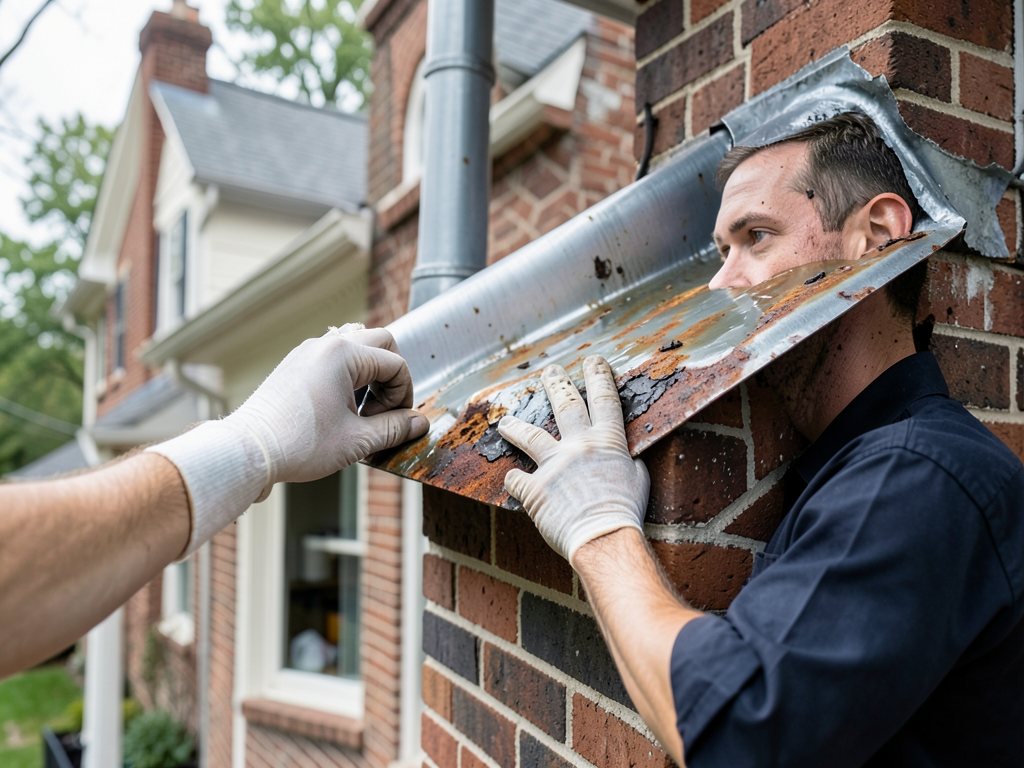
The good news is that chimney flashing failure leaves specific diagnostic clues. A trained technician can spot the early warning signs before major damage occurs. We look for rusted flashing edges, separated sealant joints, and mortar deterioration around the chimney base. These signs tell us exactly where water is getting in and how to fix it properly. Getting Your Historic Roof Restored in Indian Village the Right Way.
If you’re seeing ceiling stains near your chimney or hearing water drip during storms, your flashing needs immediate attention. Detroit’s next freeze-thaw cycle could make the problem much worse, potentially damaging your roof deck and attic insulation. The longer you wait, the more expensive the repair becomes.
Common Signs of Chimney Flashing Leaks in Detroit Homes
Water damage from failing chimney flashing shows up in specific patterns that homeowners in Rosedale Park should recognize. The most obvious sign is water stains on your ceiling, typically appearing as brown or yellow discoloration directly below the chimney. These stains often have a circular or oval shape and may grow larger after heavy snow melt or prolonged rain. What Royal Oak Homeowners Should Know Before Choosing a Roofing Contractor.
Another telltale sign is efflorescence on your chimney’s exterior. This white, chalky substance appears when water moves through brick and mortar, carrying dissolved salts to the surface. While efflorescence itself isn’t harmful, it indicates moisture is moving through your chimney structure. In Detroit’s climate, this moisture often finds its way inside when temperatures drop.
You might also notice damp or musty odors in rooms near the chimney, especially after rain or snow melt. This smell comes from moisture that’s already penetrated your attic space and is now affecting your indoor air quality. In some cases, you may even see visible mold growth on ceiling drywall near the chimney area.
During heavy weather, listen for dripping sounds in your attic or upper floors. Water dripping from a chimney leak often sounds different from other roof leaks because it typically comes from a concentrated area rather than spreading across the roof deck. This concentrated flow can quickly saturate insulation and create water pockets in your ceiling.
Exterior signs include rusted or missing flashing pieces visible from the ground. Look for metal that’s turned orange or brown, or sections that appear to be pulling away from the chimney. You might also see gaps between the flashing and chimney where mortar has deteriorated. These gaps can be as small as 1/8 inch but still allow significant water intrusion.. Read more about Deciding Between an Insurance Claim or Paying Out of Pocket for Small Roof Repairs.
Ice dam formation around your chimney during winter is another strong indicator of flashing problems. When heat escapes through your chimney, it melts surrounding snow. If the flashing isn’t properly sealed, this melted water can refreeze and create ice dams that force water under your shingles. You’ll see icicles hanging from the chimney area or ice buildup on the roof below.
Interior wall damage near your fireplace is also common. Water traveling down the chimney structure can cause drywall to bubble, paint to peel, or wallpaper to separate from the wall. This damage often appears on the wall opposite your fireplace, indicating water is moving through the chimney’s interior structure.
Fireplace draft problems can also signal chimney leaks. When water enters your chimney system, it can create negative pressure that affects how well your fireplace draws. You might notice smoke backing up into your room or difficulty getting a fire started, especially on windy, rainy days when water is actively entering through flashing gaps.. Read more about EPDM vs TPO — Which Flat Roof System Actually Holds Up Best in Michigan Weather?.
The age of your home matters too. Homes in Rosedale Park built before 1980 likely have original flashing that’s reached the end of its service life. Even if you haven’t noticed active leaks, preventative replacement of 40+ year old flashing can prevent costly water damage to your roof structure and interior finishes.
Our Detroit Chimney Repair Process
Our chimney repair process starts with a comprehensive inspection that goes beyond just looking at the flashing. We examine your entire chimney structure, from the crown to the foundation, to identify all potential water entry points. This inspection includes checking mortar joints, chimney cap condition, and the roof deck around the chimney for existing water damage.
We use moisture meters to detect hidden water infiltration in your attic and roof deck. These readings help us determine how long the leak has been active and whether structural repairs are needed beyond just flashing replacement. We also inspect your attic insulation, as wet insulation loses its effectiveness and can promote mold growth.
The removal process begins by carefully detaching the old flashing without damaging surrounding shingles. We cut away rusted or deteriorated sections and clean the chimney and roof surfaces thoroughly. This preparation step is crucial because any debris or old sealant left behind can compromise the new flashing installation.
For the new flashing installation, we typically use galvanized steel or copper depending on your home’s architecture and budget. Copper offers superior longevity but costs more upfront. We install step flashing along the chimney sides, counter flashing into the mortar joints, and apron flashing across the bottom. Each piece overlaps correctly to create a water-shedding system.. Read more about Repairing the Sagging Front Porch Roof on Your Grandmont Rosedale Home.
The counter flashing is embedded into the chimney mortar joints at least 1.5 inches deep. This creates a mechanical bond that’s much stronger than surface-mounted flashing. We then seal these joints with high-quality polyurethane sealant that remains flexible through Detroit’s temperature swings, unlike older butyl or silicone products.
After installing the metal flashing components, we apply a waterproofing membrane around the entire chimney base. This self-adhering membrane extends at least 12 inches beyond the flashing on all sides, creating an additional barrier against water intrusion. This extra step is particularly important in Rosedale Park where heavy snow accumulation can overwhelm standard flashing systems. Spray Foam Roofing.
We finish by installing new shingles around the repaired area, matching your existing roof’s color and style as closely as possible. The goal is a repair that looks like it was part of the original construction, not an obvious patch job. We also clean up thoroughly, removing all debris and inspecting our work from multiple angles to ensure proper water shedding.
Before considering the job complete, we test the repair using a garden hose to simulate heavy rain. We check for any signs of water penetration and verify that all seams and joints are properly sealed. This testing process helps us catch any issues before they become problems in your attic.
We provide a detailed report of our findings, including photos of the damage before and after repair. This documentation is valuable for insurance purposes and helps you understand exactly what was done and why. We also offer maintenance recommendations to extend the life of your new flashing installation. Finding a Reliable Shingle Replacement Service in Palmer Woods.
Why Detroit Weather is Harsh on Chimney Flashing
Detroit’s climate creates unique challenges for chimney flashing that homeowners in milder regions don’t face. Our freeze-thaw cycles are particularly brutal on roofing materials. When temperatures fluctuate above and below freezing, any water trapped in or around your chimney expands and contracts repeatedly. This movement stresses flashing joints and can crack even high-quality sealants within a single winter season.
Snow accumulation around chimneys creates another problem specific to our area. As heat rises through your chimney, it melts surrounding snow. This meltwater can pool against your flashing and, if there are any gaps, seep underneath. When nighttime temperatures drop, this water freezes and expands, widening any existing gaps. This cycle repeats throughout winter, progressively worsening flashing integrity.
Detroit’s humidity levels also affect flashing longevity. Summer humidity causes metal flashing to expand slightly, while winter cold makes it contract. These seasonal size changes stress the connections between flashing pieces and between flashing and other roofing materials. Over years, this constant movement can cause metal fatigue and joint failure.
Wind patterns in our region add another layer of stress. Strong winds coming off Lake St. Clair can drive rain horizontally against your chimney. If your flashing isn’t properly overlapped or sealed, wind-driven rain can penetrate even small gaps. The wind also creates uplift forces that can lift poorly secured flashing away from the roof surface.
Ice dam formation is a major concern for Detroit homeowners. When heat escapes through your chimney, it creates melt patterns that feed ice dam growth. These ice dams can be several feet thick and exert tremendous pressure on flashing. The weight alone can bend or break flashing, and the melting ice finds any available path into your home.
Our region’s heavy snowfall also means your chimney flashing must handle significant snow loads. Wet, heavy snow can weigh hundreds of pounds on your roof. This weight creates downward pressure that can cause flashing to bow or separate from the chimney. When the snow eventually melts, water follows these separation paths directly into your home.
Temperature extremes in Detroit accelerate material degradation. Summer temperatures can exceed 90 degrees, causing roofing materials to become soft and flexible. Winter temperatures can drop below zero, making materials brittle. Flashing must withstand both extremes without losing its shape or sealing properties. Most standard flashing materials struggle with this wide temperature range.
Acid rain in our industrial region also affects flashing longevity. Pollutants in the air combine with rainwater to create mildly acidic precipitation. Over time, this acid rain can corrode metal flashing, especially at joints and seams where protective coatings may be compromised. Copper flashing resists this corrosion better than steel, but comes at a higher initial cost.
The freeze-thaw effect on mortar joints around your chimney creates a compounding problem. As mortar expands and contracts, it can push flashing outward or create gaps where water can enter. Once water gets behind the flashing, it accelerates deterioration of both the flashing and the mortar, creating a cycle of increasing damage.
Materials We Use for Chimney Flashing Repair
We offer several flashing material options, each with specific advantages for Detroit’s climate. Galvanized steel is our most economical choice, offering good durability at a reasonable price point. The zinc coating provides corrosion resistance, though it typically lasts 15-20 years in our harsh climate before showing signs of wear.
Aluminum flashing is another option we frequently recommend. It’s lighter than steel and naturally corrosion-resistant without requiring a coating. Aluminum won’t rust and handles temperature changes well, making it suitable for Detroit’s freeze-thaw cycles. However, it’s softer than steel and can dent more easily from hail or falling ice.
Copper flashing represents the premium choice for homeowners who want maximum longevity. Copper develops a protective patina over time that actually increases its weather resistance. In Detroit’s climate, copper flashing can last 50+ years with minimal maintenance. The initial cost is higher, but the long-term value often justifies the investment, especially for historic homes in Rosedale Park.
Stainless steel offers another high-end option with excellent corrosion resistance. It’s stronger than aluminum and more affordable than copper, making it a good middle-ground choice. Stainless steel flashing handles Detroit’s temperature extremes well and maintains its structural integrity through years of freeze-thaw cycles.
We also use specialized rubberized flashing products for certain applications. These materials remain flexible in extreme cold and resist UV damage in summer heat. They’re particularly useful for complex flashing shapes or areas where metal flashing might be difficult to install. The flexibility helps them maintain a seal even as your home settles or shifts slightly over time.
The sealant we use is just as important as the flashing material itself. We exclusively use polyurethane sealants for flashing repairs because they maintain flexibility across a wide temperature range and provide superior adhesion to both metal and masonry surfaces. Unlike silicone sealants that can become brittle in cold weather, polyurethane remains pliable through Detroit’s temperature extremes.
For chimney crickets (small roof structures that divert water around chimneys), we use the same material as your main flashing to ensure compatibility. A properly sized cricket is essential for chimneys wider than 30 inches, as it prevents water from pooling behind the chimney during heavy rain or snow melt.
We also consider the color and finish of flashing materials to match your home’s aesthetic. While functionality is our primary concern, we understand that flashing on a prominent chimney affects your home’s appearance. We offer various finishes that can complement your roof and exterior colors while providing the necessary weather protection.
Underlayment choices matter too. We always install self-adhering waterproof underlayment beneath new flashing. This rubberized asphalt membrane creates a secondary water barrier that protects your roof deck even if the primary flashing fails. This extra layer of protection is particularly valuable in Detroit’s climate where flashing failure can have serious consequences.
Our material selection process considers your home’s specific needs, your budget, and the surrounding environment. We’ll recommend the best combination of materials to provide reliable protection against Detroit’s challenging weather conditions while fitting your financial parameters.
Service Areas and Neighborhoods We Serve
We proudly serve Rosedale Park and the surrounding Detroit neighborhoods where historic homes and challenging weather create unique roofing needs. Our service area extends throughout northwest Detroit, including Brightmoor, Old Redford, and Grandmont-Rosedale. These communities share similar architectural styles and weather exposure patterns that affect chimney flashing performance.
In Rosedale Park specifically, we understand the neighborhood’s mix of Tudor Revival, Colonial Revival, and Craftsman homes. Each style presents different flashing challenges, from the steep roof pitches common on Tudors to the multiple chimney configurations found on larger Colonial homes. We’ve repaired hundreds of chimneys in Rosedale Park’s 48204 and 48239 zip codes.
Our northwest Detroit service area also includes the University District and Palmer Woods, where larger historic homes often have complex chimney systems requiring specialized flashing techniques. These neighborhoods feature many homes built in the 1920s and 1930s, meaning their original flashing is likely nearing the end of its useful life.
We regularly work in Grandmont-Rosedale, where the neighborhood’s elevation changes create unique drainage patterns around chimneys. Homes on higher ground must handle faster water runoff, while those in lower areas face potential ponding issues. Both scenarios require properly installed flashing to prevent water intrusion.
Our service extends to Brightmoor and Old Redford, where post-World War II homes often have simpler chimney designs but still face Detroit’s harsh weather challenges. These neighborhoods benefit from modern flashing materials that weren’t available when many homes were originally built.
We also serve the surrounding suburbs including Dearborn Heights, Livonia, and Redford Township. While these areas have different architectural styles, they face the same freeze-thaw cycles and heavy snowfall that make proper chimney flashing essential for preventing roof leaks.
For commercial properties in Detroit’s industrial corridors, we provide specialized flashing services for larger chimneys and rooftop equipment. Warehouses and manufacturing facilities in areas like the I-96 corridor require heavy-duty flashing systems that can handle both weather exposure and industrial pollutants.
Whether you’re in the heart of Rosedale Park or in the surrounding communities, we bring the same commitment to quality and understanding of local weather patterns to every chimney flashing repair. Our goal is to provide solutions that protect your home or business from Detroit’s challenging climate for years to come.
Frequently Asked Questions
How long does chimney flashing repair take?
Most chimney flashing repairs in Detroit can be completed in one day, weather permitting. The actual installation typically takes 4-6 hours, but we allow extra time for proper inspection, testing, and cleanup. Complex repairs or those requiring custom-fabricated flashing may take two days.
Can I repair chimney flashing myself?
While DIY flashing repair might seem cost-effective, it often leads to bigger problems. Proper flashing installation requires specific tools, materials, and knowledge of local building codes. Incorrect installation can void your roof warranty and create water damage that costs far more to repair than professional installation would have cost.
How much does chimney flashing repair cost in Detroit?
Repair costs vary based on the extent of damage, materials used, and chimney complexity. Simple repairs might start around $500, while complete flashing replacement on complex chimneys can exceed $2,000. We provide detailed estimates after our inspection so you know exactly what to expect.
Will my homeowner’s insurance cover flashing repair?
Standard homeowner’s insurance typically doesn’t cover flashing repair since it’s considered maintenance. However, if the damage resulted from a covered peril like a fallen tree or windstorm, your policy might cover the repair. We can help document damage for insurance claims when applicable.
How long should new chimney flashing last?
Quality flashing installation should last 20-30 years in Detroit’s climate, though copper flashing can last 50+ years. The actual lifespan depends on material quality, installation technique, and exposure to severe weather. Regular inspections can identify potential problems before they cause leaks.
What’s the difference between step flashing and counter flashing?
Step flashing consists of individual L-shaped pieces that integrate with your shingles and extend up the chimney sides. Counter flashing is embedded into the chimney mortar joints and folds down over the step flashing. Together, they create a two-layer barrier that channels water away from the chimney-roof junction.
Should I replace my entire roof if I’m replacing flashing?
Not necessarily. If your roof is relatively new and in good condition, you can replace just the flashing. However, if your roof is over 15 years old or shows signs of wear, it might be more cost-effective to replace both simultaneously. We’ll assess your roof’s condition and provide honest recommendations.
How can I prevent future flashing problems?
Regular maintenance is key. Have your chimney and flashing inspected annually, especially after severe weather. Keep your chimney crown in good repair, as cracks there can allow water to reach the flashing. Also, ensure proper attic ventilation to prevent ice dam formation that stresses your flashing.
Do you offer emergency flashing repair services?
Yes, we provide emergency repair services for active leaks that are causing interior damage. We can install temporary protective measures to stop water intrusion and schedule permanent repairs as soon as weather permits. Call us anytime at (313) 604-2233 for emergency assistance.
What causes flashing to fail prematurely?
Several factors can cause early flashing failure: poor initial installation, use of inferior materials, severe weather exposure, ice dam formation, and building settling. In Detroit, freeze-thaw cycles are the most common cause of premature flashing failure, as they create expansion and contraction that breaks seals over time.
- Check for Water Stains
Look for brown or yellow discoloration on ceilings near your chimney. These stains often indicate water penetration through damaged flashing.
- Inspect Exterior Flashing
From ground level, examine flashing for rust, missing pieces, or gaps between the flashing and chimney. Use binoculars for a closer look at higher areas.
- Examine Mortar Joints
Check the mortar around your chimney for cracks or deterioration. Damaged mortar can allow water to reach the flashing and compromise its seal.
- Look for Efflorescence
White, chalky deposits on your chimney exterior indicate moisture movement through masonry, often signaling potential flashing problems.
- Check for Interior Odors
Musty or damp smells near your fireplace or in rooms adjacent to the chimney can indicate water intrusion from flashing failure.
Call (313) 604-2233 Today to Schedule Your Inspection
Don’t wait for that small leak to become a major water damage problem. Detroit’s next freeze-thaw cycle could make your chimney flashing issues much worse. Our experienced technicians can identify the exact source of your leak and provide a permanent solution that protects your home from our harsh Michigan weather.
We offer free inspections to Rosedale Park homeowners who suspect chimney flashing problems. Our team will examine your entire chimney system, identify any issues, and provide a detailed estimate for repairs. We use only high-quality materials designed to withstand Detroit’s climate and back our work with a satisfaction guarantee.
Pick up the phone and call (313) 604-2233 before the next storm hits. A quick inspection now could save you thousands in water damage repairs later. We’re ready to help protect your home with professional chimney flashing repair that lasts.
Remember, in Rosedale Park’s older homes, chimney flashing is often the weakest link in your roof’s defense against water. Don’t let that weakness compromise your entire home. Call us today and let our experts provide the protection your home deserves.
You may also find this helpful. How to Safely Remove Green Moss and Algae from Your Huntington Woods Roof.
You may also find this helpful. What to Do Immediately When a Tree Falls on Your Roof in Warren.
{
“@context”: “https://schema.org”,
“@type”: “BlogPosting”,
“headline”: “Why Your Rosedale Park Chimney is the Most Likely Source of Your Roof Leak”,
“description”: “Is your Rosedale Park chimney causing roof leaks? Learn how Detroit’s freeze-thaw cycles damage flashing and how Peak Roofing can fix it fast.”,
“wordCount”: 3721,
“datePublished”: “2026-03-08T11:12:00.000Z”,
“dateModified”: “2026-03-08T11:12:00.000Z”,
“inLanguage”: “en-US”,
“mainEntityOfPage”: {
“@type”: “WebPage”,
“@id”: “https://peakroofingdetroit.com”
},
“publisher”: {
“@type”: “LocalBusiness”,
“name”: “Peak Roofing Detroit”,
“url”: “https://peakroofingdetroit.com”
},
“author”: {
“@type”: “Organization”,
“name”: “Peak Roofing Detroit”,
“url”: “https://peakroofingdetroit.com”
},
“image”: {
“@type”: “ImageObject”,
“url”: “https://peakroofingdetroit.com/wp-content/uploads/2026/03/why-your-rosedale-park-chimney-is-the-most-likely-1.png”
}
}
{
“@context”: “https://schema.org”,
“@type”: “RoofingContractor”,
“name”: “Peak Roofing Detroit”,
“url”: “https://peakroofingdetroit.com”,
“address”: {
“@type”: “PostalAddress”,
“addressLocality”: “Detroit”
},
“areaServed”: {
“@type”: “City”,
“name”: “Detroit”
}
}
{
“@context”: “https://schema.org”,
“@type”: “FAQPage”,
“mainEntity”: [
{
“@type”: “Question”,
“name”: “How long does chimney flashing repair take?”,
“acceptedAnswer”: {
“@type”: “Answer”,
“text”: “Most chimney flashing repairs in Detroit can be completed in one day, weather permitting. The actual installation typically takes 4-6 hours, but we allow extra time for proper inspection, testing, and cleanup. Complex repairs or those requiring custom-fabricated flashing may take two days.”
}
},
{
“@type”: “Question”,
“name”: “Can I repair chimney flashing myself?”,
“acceptedAnswer”: {
“@type”: “Answer”,
“text”: “While DIY flashing repair might seem cost-effective, it often leads to bigger problems. Proper flashing installation requires specific tools, materials, and knowledge of local building codes. Incorrect installation can void your roof warranty and create water damage that costs far more to repair than professional installation would have cost.”
}
},
{
“@type”: “Question”,
“name”: “How much does chimney flashing repair cost in Detroit?”,
“acceptedAnswer”: {
“@type”: “Answer”,
“text”: “Repair costs vary based on the extent of damage, materials used, and chimney complexity. Simple repairs might start around $500, while complete flashing replacement on complex chimneys can exceed $2,000. We provide detailed estimates after our inspection so you know exactly what to expect.”
}
},
{
“@type”: “Question”,
“name”: “Will my homeowner’s insurance cover flashing repair?”,
“acceptedAnswer”: {
“@type”: “Answer”,
“text”: “Standard homeowner’s insurance typically doesn’t cover flashing repair since it’s considered maintenance. However, if the damage resulted from a covered peril like a fallen tree or windstorm, your policy might cover the repair. We can help document damage for insurance claims when applicable.”
}
},
{
“@type”: “Question”,
“name”: “How long should new chimney flashing last?”,
“acceptedAnswer”: {
“@type”: “Answer”,
“text”: “Quality flashing installation should last 20-30 years in Detroit’s climate, though copper flashing can last 50+ years. The actual lifespan depends on material quality, installation technique, and exposure to severe weather. Regular inspections can identify potential problems before they cause leaks.”
}
},
{
“@type”: “Question”,
“name”: “What’s the difference between step flashing and counter flashing?”,
“acceptedAnswer”: {
“@type”: “Answer”,
“text”: “Step flashing consists of individual L-shaped pieces that integrate with your shingles and extend up the chimney sides. Counter flashing is embedded into the chimney mortar joints and folds down over the step flashing. Together, they create a two-layer barrier that channels water away from the chimney-roof junction.”
}
},
{
“@type”: “Question”,
“name”: “Should I replace my entire roof if I’m replacing flashing?”,
“acceptedAnswer”: {
“@type”: “Answer”,
“text”: “Not necessarily. If your roof is relatively new and in good condition, you can replace just the flashing. However, if your roof is over 15 years old or shows signs of wear, it might be more cost-effective to replace both simultaneously. We’ll assess your roof’s condition and provide honest recommendations.”
}
},
{
“@type”: “Question”,
“name”: “How can I prevent future flashing problems?”,
“acceptedAnswer”: {
“@type”: “Answer”,
“text”: “Regular maintenance is key. Have your chimney and flashing inspected annually, especially after severe weather. Keep your chimney crown in good repair, as cracks there can allow water to reach the flashing. Also, ensure proper attic ventilation to prevent ice dam formation that stresses your flashing.”
}
},
{
“@type”: “Question”,
“name”: “Do you offer emergency flashing repair services?”,
“acceptedAnswer”: {
“@type”: “Answer”,
“text”: “Yes, we provide emergency repair services for active leaks that are causing interior damage. We can install temporary protective measures to stop water intrusion and schedule permanent repairs as soon as weather permits. Call us anytime at (313) 604-2233 for emergency assistance.”
}
},
{
“@type”: “Question”,
“name”: “What causes flashing to fail prematurely?”,
“acceptedAnswer”: {
“@type”: “Answer”,
“text”: “Several factors can cause early flashing failure: poor initial installation, use of inferior materials, severe weather exposure, ice dam formation, and building settling. In Detroit, freeze-thaw cycles are the most common cause of premature flashing failure, as they create expansion and contraction that breaks seals over time.”
}
}
]
}
{
“@context”: “https://schema.org”,
“@type”: “HowTo”,
“name”: “How to Identify Chimney Flashing Problems”,
“step”: [
{
“@type”: “HowToStep”,
“position”: 1,
“name”: “Check for Water Stains”,
“text”: “Look for brown or yellow discoloration on ceilings near your chimney. These stains often indicate water penetration through damaged flashing.”
},
{
“@type”: “HowToStep”,
“position”: 2,
“name”: “Inspect Exterior Flashing”,
“text”: “From ground level, examine flashing for rust, missing pieces, or gaps between the flashing and chimney. Use binoculars for a closer look at higher areas.”
},
{
“@type”: “HowToStep”,
“position”: 3,
“name”: “Examine Mortar Joints”,
“text”: “Check the mortar around your chimney for cracks or deterioration. Damaged mortar can allow water to reach the flashing and compromise its seal.”
},
{
“@type”: “HowToStep”,
“position”: 4,
“name”: “Look for Efflorescence”,
“text”: “White, chalky deposits on your chimney exterior indicate moisture movement through masonry, often signaling potential flashing problems.”
},
{
“@type”: “HowToStep”,
“position”: 5,
“name”: “Check for Interior Odors”,
“text”: “Musty or damp smells near your fireplace or in rooms adjacent to the chimney can indicate water intrusion from flashing failure.”
}
],
“image”: “https://peakroofingdetroit.com/wp-content/uploads/2026/03/why-your-rosedale-park-chimney-is-the-most-likely-1.png”
}
{
“@context”: “https://schema.org”,
“@type”: “BreadcrumbList”,
“itemListElement”: [
{
“@type”: “ListItem”,
“position”: 1,
“name”: “Home”,
“item”: “https://peakroofingdetroit.com”
},
{
“@type”: “ListItem”,
“position”: 2,
“name”: “Blog”,
“item”: “https://peakroofingdetroit.com/blog”
},
{
“@type”: “ListItem”,
“position”: 3,
“name”: “Why Your Rosedale Park Chimney is the Most Likely Source of Your Roof Leak”
}
]
}
{
“@context”: “https://schema.org”,
“@type”: “Service”,
“serviceType”: “Roofing”,
“provider”: {
“@type”: “LocalBusiness”,
“name”: “Peak Roofing Detroit”,
“url”: “https://peakroofingdetroit.com”
},
“areaServed”: {
“@type”: “City”,
“name”: “Detroit”
},
“description”: “Is your Rosedale Park chimney causing roof leaks? Learn how Detroit’s freeze-thaw cycles damage flashing and how Peak Roofing can fix it fast.”
}