
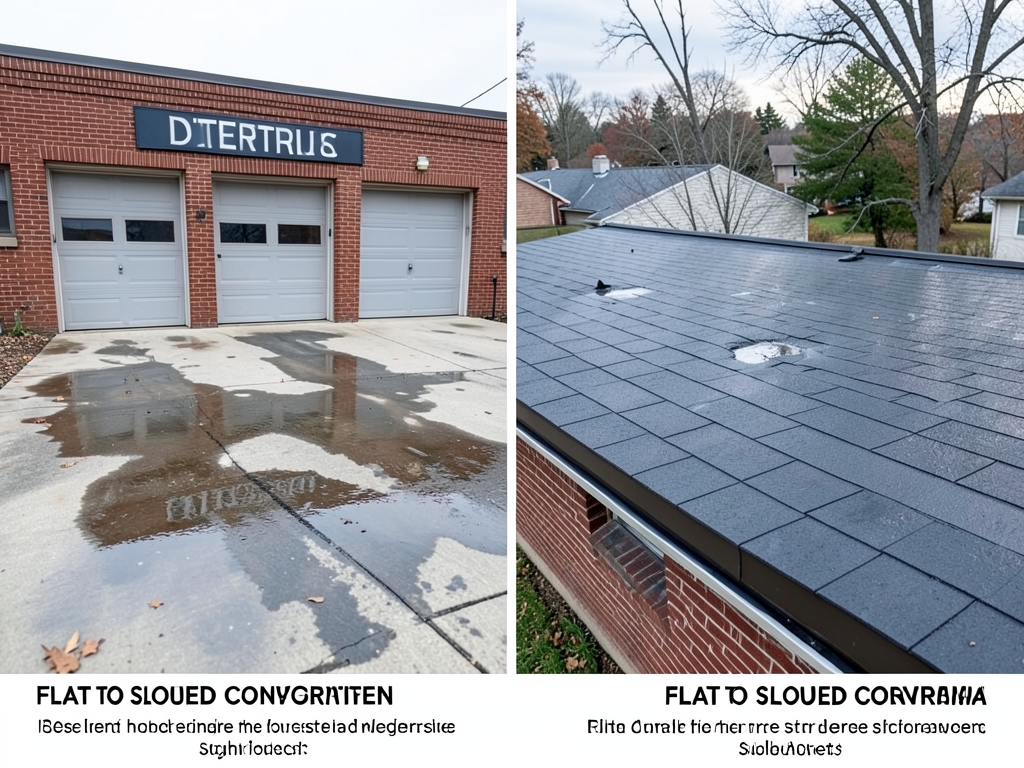
Converting Your Flat Garage Roof to a Sloped One to Stop Standing Water
Standing water on your Detroit garage roof is more than a nuisance. It’s a structural threat. In Michigan’s freeze-thaw climate, ponding water expands when it freezes, pushing against your roof membrane and causing cracks that lead to leaks. Converting a flat garage roof to a sloped one eliminates this problem by creating positive drainage that moves water off the surface before it can pool. Michigan Residential Code.
This conversion is a significant structural change that requires engineering analysis, building permits, and careful planning. But for Detroit homeowners dealing with chronic leaks or planning to use their garage space differently, the benefits often outweigh the complexity. Detroit BSEED Department.
Why Detroit Homeowners Choose Roof Conversion
Detroit’s climate creates unique challenges for flat roofs. Our winters bring heavy snow loads that sit on flat surfaces, and our freeze-thaw cycles cause ice damming that standard flat roof membranes cannot handle. The problem compounds when you factor in Detroit’s aging housing stock, where many garages were built before modern drainage requirements existed. Why Flat Roofs in Corktown Require Specialized Drainage Solutions.
Homeowners in neighborhoods like Grosse Pointe Park and Royal Oak often discover that their flat garage roofs were originally designed as temporary structures. The original builders never intended them to last 30 years. When water starts pooling after every rain, the structural integrity of the entire building becomes compromised. What Royal Oak Homeowners Should Know Before Choosing a Roofing Contractor.
The conversion process addresses these Michigan-specific pain points by creating a roof system that works with our climate rather than against it. A properly pitched roof sheds snow, prevents ice dam formation, and eliminates the standing water that causes most flat roof failures in the Detroit area.. Read more about Why Most Detroit Commercial Roofs Fail (And How an NDL Warranty Protects Your Investment).
Structural Feasibility and Engineering
Before any work begins, a structural engineer must evaluate your existing garage walls and foundation. This is non-negotiable in Detroit, where many garages were built with 2×4 studs on 24-inch centers rather than the current 16-inch standard. The existing structure may not support the additional weight of a new roof system plus snow load.. Read more about How Much Extra Weight Can Your Roseville Garage Roof Safely Support?.
The engineer will check your load-bearing walls for signs of deflection or cracking. They’ll measure the existing foundation depth, which in older Detroit homes often sits on clay soil that expands and contracts with moisture changes. This soil movement can cause foundation walls to bow inward over time, creating structural instability.
During the site inspection, the engineer uses a moisture meter to test the existing roof deck for rot. They’ll also check the condition of the existing rafters or trusses. In many Detroit garages built before 1970, the original lumber shows signs of termite damage or dry rot that compromises structural integrity.
The Conversion Process: From Joists to Trusses
The conversion follows a specific sequence that cannot be rushed. First, the existing roof surface must be completely removed down to the deck. This often reveals hidden damage to the underlying structure that must be repaired before proceeding.
Once the deck is exposed, the team installs new trusses or rafters at the desired pitch. For Detroit garages, a minimum 4:12 pitch is recommended to handle snow loads, though many homeowners opt for 6:12 or 8:12 for better aesthetics and drainage. The trusses are engineered to meet Michigan’s snow load requirements of 20-30 pounds per square foot depending on your location.
After the structural frame is in place, a new plywood deck is installed. This deck must be properly spaced and fastened to handle wind uplift in our area. The team then applies underlayment, ice and water shield at the eaves, and finally the roofing material. Most Detroit homeowners choose architectural asphalt shingles for their balance of cost and durability, though metal roofing is gaining popularity for its snow-shedding properties. Metal Roofing for Ferndale Homes (Is it Actually Worth the Investment?).
Detroit Building Permits and Michigan Codes
Converting a flat roof to a pitched roof in Detroit requires permits from the Buildings, Safety Engineering and Environmental Department (BSEED). The permit process ensures your conversion meets the Michigan Residential Code and local zoning requirements.
The permit application requires detailed structural drawings stamped by a licensed Michigan engineer. These drawings must show load calculations, material specifications, and how the new roof connects to existing walls. Detroit inspectors will verify that your conversion maintains proper setbacks from property lines and does not create new drainage issues for neighboring properties.
Under Michigan Residential Code Section R301.3, your new roof must be designed to handle the specific snow load for your area. Detroit and surrounding Wayne County typically require roofs to support 20-30 pounds per square foot of snow load. Your engineer must certify that your new structure meets or exceeds these requirements.
Cost Analysis for Detroit Metro Area
Converting a flat garage roof to a sloped one in Detroit typically costs between $8,000 and $15,000 for a standard two-car garage. The wide range reflects variables like roof size, desired pitch, material choices, and whether structural repairs are needed.
The following table breaks down typical cost components for a Detroit-area conversion:
| Component | Cost Range | Percentage of Total |
|---|---|---|
| Structural Engineering | $800 – $1,500 | 5-10% |
| Demolition and Removal | $1,000 – $2,500 | 8-15% |
| New Trusses/Rafters | $2,500 – $4,000 | 20-25% |
| Plywood Decking | $800 – $1,500 | 6-10% |
| Roofing Materials | $2,000 – $3,500 | 15-20% |
| Permits and Inspections | $500 – $1,000 | 4-7% |
| Contingency (unexpected repairs) | $800 – $1,500 | 5-10% |
Insulation and Energy Efficiency (R-Value)
When you convert from a flat to a pitched roof, you gain the opportunity to improve your garage’s energy efficiency. Flat roofs typically use rigid insulation boards, but a pitched roof allows for attic space with blown-in insulation.
According to Michigan’s energy code, attics in Zone 5 should have R-49 insulation. This translates to about 14-16 inches of blown fiberglass or cellulose. The increased insulation helps regulate temperatures in your garage, which is especially important if you use the space as a workshop or plan to finish it later.
Proper ventilation is equally important. Your new pitched roof should include soffit vents at the eaves and a ridge vent along the peak. This creates airflow that prevents moisture buildup and extends the life of your roofing materials. In Detroit’s humid summers, good ventilation prevents the growth of mold and mildew in your attic space.
Material Choices for Detroit’s Climate
Choosing the right roofing material for your converted garage roof in Detroit requires balancing durability, cost, and climate performance. Architectural asphalt shingles remain the most popular choice for their affordability and 25-30 year lifespan. They handle Michigan’s temperature swings well and come in colors that complement most home styles.
Metal roofing is gaining traction in Detroit for its superior snow-shedding ability. The smooth surface allows snow to slide off rather than accumulate, reducing stress on your structure. While metal costs 50-100% more than asphalt upfront, it lasts 40-70 years and often qualifies for insurance discounts.
For historic homes in neighborhoods like Indian Village or Palmer Woods, synthetic slate offers the look of natural slate without the weight. At 1/3 the weight of real slate, it doesn’t require additional structural reinforcement. It handles freeze-thaw cycles exceptionally well and comes with 50-year warranties. Getting Your Historic Roof Restored in Indian Village the Right Way.
Drainage and Gutter System Redesign
Your new sloped roof changes how water moves around your property. The existing gutter system likely needs modification to handle the increased water volume from a pitched surface. Where a flat roof might have minimal drainage, your new roof will channel significant water to specific points.
Detroit’s combined sewer system means that all roof runoff eventually flows into the same pipes that handle wastewater. During heavy rains, this can overwhelm the system and cause backups. Your gutter redesign should include oversized downspouts and extensions that carry water at least 6 feet from your foundation.
Consider installing rain barrels or a small French drain system to manage runoff sustainably. Some Detroit neighborhoods now offer rebates for rainwater harvesting systems that reduce strain on the city’s aging infrastructure.
Timeline and What to Expect
A typical garage roof conversion in Detroit takes 2-3 weeks from start to finish. The first week involves engineering assessment, permit acquisition, and demolition. Week two focuses on structural work and framing. The final week covers decking, roofing, and finishing touches.
Weather can impact your timeline significantly. Detroit’s spring and fall offer the best conditions, while winter work requires special precautions for materials and worker safety. Summer humidity can slow certain installation steps, particularly those involving adhesives or sealants.
During construction, you’ll need to keep your garage empty and accessible. The noise level is moderate but continuous during framing and roofing days. Your contractor should provide a detailed schedule so you know when to expect the loudest work.
Financing Options for Detroit Homeowners
Several financing options exist for Detroit homeowners undertaking this type of project. Michigan Saves, a non-profit organization, offers low-interest home improvement loans specifically for energy-efficient upgrades. While a roof conversion doesn’t automatically qualify, adding insulation to meet R-49 standards can make your project eligible.
Many Detroit-area credit unions offer home improvement loans with competitive rates for projects that increase property value. Some contractors also partner with financing companies that offer 12-18 month same-as-cash plans for qualified homeowners.
Check with your insurance company about potential discounts for impact-resistant roofing materials or upgrades that reduce ice dam formation. These discounts can offset some of the initial investment over time.
Common Mistakes to Avoid
The biggest mistake homeowners make is skipping the structural engineering assessment. Detroit’s older garages often have hidden damage that becomes apparent only after demolition begins. This can double your timeline and budget if not planned for upfront.
Another common error is choosing the wrong pitch. A pitch that’s too shallow won’t adequately shed snow, while one that’s too steep can create wind uplift problems. Your engineer should recommend a pitch between 4:12 and 6:12 for most Detroit applications.
Don’t underestimate the importance of proper flashing. The transition between your new roof and existing walls is vulnerable to leaks if not detailed correctly. Use ice and water shield along all eaves and in valleys where snow can accumulate.
ROI and Property Value Impact
Converting your flat garage roof to a sloped one typically returns 65-75% of the investment when you sell your home. The exact return depends on your neighborhood and the quality of the work. In desirable Detroit areas like Sherwood Forest or Boston-Edison, the return can be higher due to the improved curb appeal.
The real value often comes from preventing future damage. A leaking garage can cause foundation problems, mold growth, and damage to stored belongings. By eliminating the source of leaks, you avoid these costly repairs down the road.
Energy efficiency improvements also add value. A properly insulated and ventilated attic space can reduce heating and cooling costs by 10-15%, which appeals to energy-conscious buyers in today’s market.
Finding the Right Contractor in Detroit
Not all roofing contractors have experience with structural conversions. Look for companies that employ or partner with structural engineers and have specific experience with garage conversions in Detroit’s climate.
Ask potential contractors about their experience with Detroit’s building codes and permit process. A contractor who has successfully navigated BSEED requirements will save you time and prevent costly mistakes. Request references from homeowners who had similar projects completed in the last 12-24 months.
Verify that your contractor carries both general liability and workers’ compensation insurance. Michigan law requires workers’ comp for any project over $20,000, and you don’t want to be liable if someone is injured on your property.
Frequently Asked Questions
How long does a garage roof conversion take in Detroit?
A typical conversion takes 2-3 weeks, depending on weather conditions and whether structural repairs are needed. Spring and fall offer the most reliable weather for this type of work. Finding a Reliable Shingle Replacement Service in Palmer Woods.
Do I need permits to convert my flat garage roof in Detroit?
Yes, you need permits from Detroit’s BSEED department. The permit process ensures your conversion meets Michigan Residential Code requirements for snow load and structural integrity.
Can my existing garage structure support a new pitched roof?
Many older Detroit garages need structural reinforcement before conversion. A structural engineer must evaluate your existing walls, foundation, and roof deck to determine what upgrades are necessary.
What’s the best roofing material for Detroit’s climate?
Architectural asphalt shingles offer the best balance of cost and durability for most Detroit homeowners. Metal roofing provides superior snow shedding but costs more upfront.
Ready to Stop Dealing with Standing Water?
Standing water on your garage roof is a problem that only gets worse with time. Detroit’s freeze-thaw cycles will continue to damage your structure until you address the root cause. A properly engineered roof conversion eliminates ponding water and gives you a maintenance-free roof system designed for Michigan’s climate.
The first step is a professional assessment to determine if your garage can support the conversion. Our team includes structural engineers who understand Detroit’s unique building challenges. We’ll evaluate your current structure, design a solution that meets all code requirements, and provide a detailed timeline and budget.
Call (313) 604-2233 today to schedule your inspection. Don’t wait for the next heavy rain or snowfall to cause more damage. Our team is ready to help you convert your flat garage roof to a sloped system that works with Detroit’s climate, not against it.
Pick up the phone and call (313) 604-2233 before the next storm hits. Standing water won’t fix itself, but we can fix it for you with a properly engineered roof conversion that eliminates drainage problems permanently.
{
“@context”: “https://schema.org”,
“@type”: “BlogPosting”,
“headline”: “Converting Your Flat Garage Roof to a Sloped One to Stop Standing Water”,
“description”: “Stop water damage in Detroit with a sloped garage roof conversion. Learn costs, permits, and structural requirements for Michigan homes.”,
“wordCount”: 2280,
“datePublished”: “2026-05-08T11:11:00.000Z”,
“dateModified”: “2026-05-08T11:11:00.000Z”,
“inLanguage”: “en-US”,
“mainEntityOfPage”: {
“@type”: “WebPage”,
“@id”: “https://peakroofingdetroit.com”
},
“publisher”: {
“@type”: “LocalBusiness”,
“name”: “Peak Roofing Detroit”,
“url”: “https://peakroofingdetroit.com”
},
“author”: {
“@type”: “Organization”,
“name”: “Peak Roofing Detroit”,
“url”: “https://peakroofingdetroit.com”
},
“image”: {
“@type”: “ImageObject”,
“url”: “https://peakroofingdetroit.com/wp-content/uploads/2026/03/converting-your-flat-garage-roof-to-a-sloped-one-t-1.png”
}
}
{
“@context”: “https://schema.org”,
“@type”: “RoofingContractor”,
“name”: “Peak Roofing Detroit”,
“url”: “https://peakroofingdetroit.com”,
“address”: {
“@type”: “PostalAddress”,
“addressLocality”: “Detroit”
},
“areaServed”: {
“@type”: “City”,
“name”: “Detroit”
}
}
{
“@context”: “https://schema.org”,
“@type”: “FAQPage”,
“mainEntity”: [
{
“@type”: “Question”,
“name”: “How long does a garage roof conversion take in Detroit?”,
“acceptedAnswer”: {
“@type”: “Answer”,
“text”: “A typical conversion takes 2-3 weeks, depending on weather conditions and whether structural repairs are needed. Spring and fall offer the most reliable weather for this type of work. Finding a Reliable Shingle Replacement Service in Palmer Woods.”
}
},
{
“@type”: “Question”,
“name”: “Do I need permits to convert my flat garage roof in Detroit?”,
“acceptedAnswer”: {
“@type”: “Answer”,
“text”: “Yes, you need permits from Detroit’s BSEED department. The permit process ensures your conversion meets Michigan Residential Code requirements for snow load and structural integrity.”
}
},
{
“@type”: “Question”,
“name”: “Can my existing garage structure support a new pitched roof?”,
“acceptedAnswer”: {
“@type”: “Answer”,
“text”: “Many older Detroit garages need structural reinforcement before conversion. A structural engineer must evaluate your existing walls, foundation, and roof deck to determine what upgrades are necessary.”
}
},
{
“@type”: “Question”,
“name”: “What’s the best roofing material for Detroit’s climate?”,
“acceptedAnswer”: {
“@type”: “Answer”,
“text”: “Architectural asphalt shingles offer the best balance of cost and durability for most Detroit homeowners. Metal roofing provides superior snow shedding but costs more upfront.”
}
},
{
“@type”: “Question”,
“name”: “Ready to Stop Dealing with Standing Water?”,
“acceptedAnswer”: {
“@type”: “Answer”,
“text”: “Standing water on your garage roof is a problem that only gets worse with time. Detroit’s freeze-thaw cycles will continue to damage your structure until you address the root cause. A properly engineered roof conversion eliminates ponding water and gives you a maintenance-free roof system designed for Michigan’s climate.”
}
}
]
}
{
“@context”: “https://schema.org”,
“@type”: “BreadcrumbList”,
“itemListElement”: [
{
“@type”: “ListItem”,
“position”: 1,
“name”: “Home”,
“item”: “https://peakroofingdetroit.com”
},
{
“@type”: “ListItem”,
“position”: 2,
“name”: “Blog”,
“item”: “https://peakroofingdetroit.com/blog”
},
{
“@type”: “ListItem”,
“position”: 3,
“name”: “Converting Your Flat Garage Roof to a Sloped One to Stop Standing Water”
}
]
}
{
“@context”: “https://schema.org”,
“@type”: “Service”,
“serviceType”: “Roofing”,
“provider”: {
“@type”: “LocalBusiness”,
“name”: “Peak Roofing Detroit”,
“url”: “https://peakroofingdetroit.com”
},
“areaServed”: {
“@type”: “City”,
“name”: “Detroit”
},
“description”: “Stop water damage in Detroit with a sloped garage roof conversion. Learn costs, permits, and structural requirements for Michigan homes.”
}