
How to Tell if Your Roof Leak is Actually a Plumbing or HVAC Issue
If you see water dripping from your ceiling in Detroit, your first thought is probably a roof leak. But here’s the truth: many ceiling stains and drips come from plumbing pipes, HVAC condensation, or even attic condensation. Figuring out the source before calling a contractor can save you hundreds of dollars and days of confusion. Roofing Detroit.
Detroit’s freeze-thaw cycles, heavy snow loads, and aging housing stock create the perfect storm for misdiagnosed leaks. A roofer might find nothing wrong, while a plumber could miss the real culprit. This guide walks you through a step-by-step diagnostic process to identify whether you’re dealing with a roof, plumbing, or HVAC issue.. Read more about Why Most Detroit Commercial Roofs Fail (And How an NDL Warranty Protects Your Investment).
The Quick Test: Timing and Weather
Start by observing when the leak happens. This is your first diagnostic clue.
- Only during rain: Points to a roof or flashing issue. Check if the leak worsens as the storm continues.
- Constant drip, rain or shine: Likely a plumbing supply line or drain pipe. The water source is pressurized and doesn’t care about weather.
- Only when HVAC runs: Could be a clogged condensate drain line or cracked drain pan.
- Only during winter thaws: Classic sign of ice damming in Detroit. Snow melts, backs up under shingles, then refreezes.
Detroit averages 31 inches of snow annually. When that snow sits on your roof and then a warm spell hits, the melt can find its way through even small roof vulnerabilities. If your leak appears during the first warm day after a snowstorm, ice dams are a strong suspect.
Visual Clues: Color, Smell, and Consistency
Water tells a story if you know how to read it. The appearance of the leak can narrow down the source dramatically.
| Water Type | Color/Texture | Common Source |
|---|---|---|
| Roof leak | Tea-colored, dirty, may contain shingle granules | Roofing material deterioration |
| Plumbing supply line | Clear, cold, pressurized flow | Broken pipe or fitting |
| Plumbing drain line | Brown, soapy, may smell of waste | Leaking P-trap or waste pipe |
| HVAC condensate | Clear, slightly warm, may have dust | Clogged drain line or cracked pan |
Roof water picks up dirt, algae, and asphalt as it travels through the attic. It often leaves brown or yellow stains on drywall. Plumbing water from supply lines is usually crystal clear. Drain line water may have a distinct odor. HVAC condensate is clear but can carry dust or microbial growth if the drain line is clogged.
Location Matters: Where is the Spot?
The leak’s location relative to your home’s systems is a major clue.
- Directly below a bathroom or kitchen: High probability of plumbing. Check supply lines to toilets, sinks, and dishwashers. Drain pipes can also sweat in Detroit’s humid summers, creating condensation that drips.
- Near a chimney or vent pipe: Roof flashing failure is common. The rubber boot around vent pipes cracks within 7-10 years in Michigan’s UV exposure.
- Center of room, away from walls: Could be HVAC. Air handlers in attics often sit over living spaces. A cracked secondary drain pan will drip right through the ceiling.
- Along exterior wall: Ice damming or clogged gutters forcing water under shingles. Detroit’s Lake St. Clair winds drive rain up under eaves.
The Attic Inspection (The ‘Smoking Gun’)
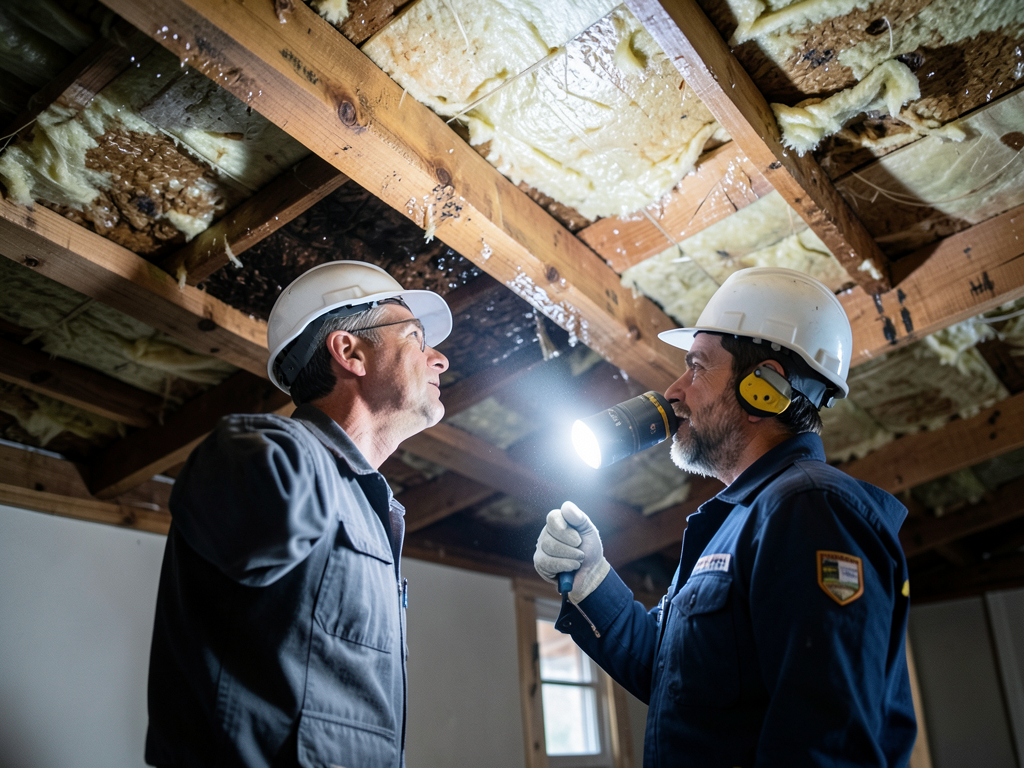
If you can safely access your attic, this inspection can confirm the source. Bring a flashlight and be mindful of nails and insulation.
- Check for wet spots on rafters or decking: Roof leaks show as wet wood directly above the ceiling stain. The water travels down rafters, so the entry point may be several feet away.
- Look for plumbing lines: Copper or PEX pipes near the stain? Feel them for moisture. A supply line leak will often spray or drip steadily.
- Inspect HVAC equipment: If an air handler or furnace is in the attic, check the condensate drain pan and lines. A rusted pan or clogged drain will show signs of overflow.
- Touch the insulation: Roof leaks saturate insulation, making it heavy and matted. Plumbing leaks may only wet a small area. HVAC overflow often pools on top of insulation.
Detroit homes built before 1980 often have minimal attic ventilation. This traps moisture, leading to condensation that mimics a roof leak. If the entire underside of the roof deck feels uniformly damp, attic humidity is likely the issue.
Common ‘Hidden’ Culprits in Michigan Homes
Beyond the obvious, several Michigan-specific factors cause misdiagnosed leaks. Michigan Residential Code.
Ice Dams
Detroit’s winter climate creates ice dams when snow on the roof melts from heat loss, then refreezes at the colder eaves. This ice buildup forces water under shingles. The Michigan Residential Code (MRC) Section R806 requires ice and water shield extending at least 24 inches inside the exterior wall line on low-slope roofs, but many older homes lack this protection. Why Flat Roofs in Corktown Require Specialized Drainage Solutions.
Attic Condensation
High summer humidity and poor ventilation cause moisture to condense on the underside of the roof deck. This ‘sweating’ can drip onto ceilings, especially in homes with uninsulated HVAC ducts running through the attic. The water appears clear and may come and go with humidity levels.
HVAC Secondary Drain Pan Failures
Most attic HVAC units have a primary condensate drain and a secondary overflow pan with a separate drain line. If the primary clogs (common in Detroit due to algae growth in our humid summers), the secondary pan catches the overflow. If that pan is cracked or its drain is clogged, water spills into the living space. EPA mold guidelines.
Pipe Boots and Flashing
The rubber seal around plumbing vent pipes (pipe boots) deteriorates faster than shingles. In Detroit’s freeze-thaw cycles, these boots can crack within a decade. Similarly, step flashing along roof-wall intersections fails when ice gets behind it. Both allow roof water to enter.. Read more about The Real Reason Your Roof Flashing is Leaking Around the Chimney.
When to Call a Detroit Professional
DIY diagnosis has limits. Call a professional if you see any of these signs:
- Sagging drywall or ceiling: Indicates significant water weight. Risk of collapse.
- Active electrical hazard: Water near light fixtures or outlets. Turn off power and call immediately.
- Visible mold growth: Mold can begin within 24-48 hours of water exposure. Health risk increases with exposure time.
- Multiple leaks appearing: Could indicate widespread roof failure or a burst pipe.
- Water continues after shutting off main supply: Confirms it’s not a plumbing supply line.
For Detroit homes, timing matters. Winter ice dams require immediate action to prevent interior damage. Summer HVAC leaks can often wait 24 hours if the system can be safely shut off. Roof leaks during rain need temporary tarping to prevent further damage.. Read more about Why You Might Need a Roof Cricket to Stop Leaks Behind Your Large Chimney.
Who to Call First: A Diagnostic Flowchart
Before picking up the phone, run through this decision tree:
- Is it raining?
- Yes: Go to 2.
- No: Go to 3.
- Is the leak near a plumbing fixture?
- Yes: Call a plumber first. They can pressure-test pipes.
- No: Call a roofer for inspection. They can check flashing and boots.
- Does your HVAC run when the leak occurs?
- Yes: Call an HVAC technician. They can clear drain lines and check pans.
- No: Check attic for condensation or call a roofer if near exterior.
Many Detroit contractors offer free inspections. A roofer can identify if the issue is roofing-related; if not, they’ll recommend the right specialist. This approach minimizes your out-of-pocket costs. Metal Roofing for Ferndale Homes (Is it Actually Worth the Investment?).
Cost Comparison: What Repairs Typically Run in Metro Detroit
While costs vary, here’s a general range for common repairs in the Detroit area:
| Issue | Typical Cost Range | Urgency Level |
|---|---|---|
| Replace pipe boot | $300-$600 | Medium |
| Ice dam steaming | $300-$800 per hour | High (winter only) |
| Clear HVAC drain line | $150-$300 | Low |
| Repair roof flashing | $400-$1,000 | Medium |
| Replace section of pipe | $500-$1,500 | High if active leak |
Emergency tarping to stop active roof leaks typically costs $200-$500 but prevents thousands in interior damage. Many Detroit roofers offer this service 24/7 during storm season.. Read more about How to Spot Roof Damage from Your Driveway Without Climbing a Ladder.
Preventing Future Misdiagnosis
Once the immediate issue is resolved, consider these preventive steps:
- Annual roof inspection: Detroit’s weather is brutal on roofing materials. A yearly check can catch boot cracks or flashing issues before leaks develop.
- HVAC maintenance: Twice-yearly service includes cleaning condensate lines and checking drain pans. This prevents summer overflow leaks.
- Plumbing pressure test: If your home is over 30 years old, consider a pressure test to identify weak spots in supply lines before they fail.
- Attic ventilation assessment: Proper soffit and ridge vents prevent condensation. The MRC requires 1 square foot of net free ventilation area per 150 square feet of attic space.
Detroit’s combination of humidity, temperature swings, and precipitation creates unique challenges. A proactive approach saves money and prevents the stress of unexpected water damage.
Conclusion
Not every ceiling stain means your roof needs replacing. By understanding the timing, appearance, and location of your leak, you can narrow down whether you’re dealing with a roof, plumbing, or HVAC issue. Detroit’s climate adds complexity, but the diagnostic steps in this guide give you a clear path forward.
Remember: if you’re unsure or see signs of structural damage, don’t wait. Water damage compounds quickly. Call a professional who can accurately diagnose and fix the problem before it gets worse.
Frequently Asked Questions
Can a roof leak only happen when it’s not raining?
Yes. Plumbing supply line leaks or HVAC condensate issues can drip regardless of weather. If the leak is constant, it’s likely from a pressurized water source or condensation.
How can I tell if my ice dam is causing the leak?
Ice dams typically cause leaks during sunny winter days or warm spells when snow melts and backs up under shingles. You might see large icicles or ice buildup in gutters. The leak often appears near exterior walls.
Should I call a roofer or plumber first?
Start with the contractor most likely based on your leak’s characteristics. If it’s during rain near a bathroom, a roofer can inspect first. If it’s constant and clear, a plumber should test the pipes. Many offer free inspections to help diagnose.
Call (313) 604-2233 for Professional Leak Diagnosis
Don’t let water damage destroy your home’s interior. Our Detroit-based team specializes in accurate leak diagnosis, whether it’s your roof, plumbing, or HVAC system causing the problem. We offer 24/7 emergency service and free inspections to identify the true source before any repair work begins.
Pick up the phone and call (313) 604-2233 today to schedule your inspection. We’ll find the leak fast and recommend the right solution the first time.
You may also find this helpful. How to Choose a Commercial Roofing Contractor for Your Property in the Milwaukee Junction District.
You may also find this helpful. The Real Pros and Cons of Choosing a National Roofing Franchise for Your Westland Home.
You may also find this helpful. Why Heavy Traffic on Gratiot Might Be Vibrating Your Eastpointe Roof Flashing Loose.
You may also find this helpful. Deciding if Your Harper Woods Starter Home Needs a Quick Patch or a Total Re-Roof.
{
“@context”: “https://schema.org”,
“@type”: “BlogPosting”,
“headline”: “How to Tell if Your Roof Leak is Actually a Plumbing or HVAC Issue”,
“description”: “Is your ceiling leaking? Find out if it’s a roof problem or plumbing/HVAC issue. Detroit homeowners: learn the diagnostic steps before calling the wrong contractor.”,
“wordCount”: 1746,
“datePublished”: “2026-05-06T15:59:00.000Z”,
“dateModified”: “2026-05-06T15:59:00.000Z”,
“inLanguage”: “en-US”,
“mainEntityOfPage”: {
“@type”: “WebPage”,
“@id”: “https://peakroofingdetroit.com”
},
“publisher”: {
“@type”: “LocalBusiness”,
“name”: “Peak Roofing Detroit”,
“url”: “https://peakroofingdetroit.com”
},
“author”: {
“@type”: “Organization”,
“name”: “Peak Roofing Detroit”,
“url”: “https://peakroofingdetroit.com”
},
“image”: {
“@type”: “ImageObject”,
“url”: “https://peakroofingdetroit.com/wp-content/uploads/2026/03/how-to-tell-if-your-roof-leak-is-actually-a-plumbi-1.png”
}
}
{
“@context”: “https://schema.org”,
“@type”: “RoofingContractor”,
“name”: “Peak Roofing Detroit”,
“url”: “https://peakroofingdetroit.com”,
“address”: {
“@type”: “PostalAddress”,
“addressLocality”: “Detroit”
},
“areaServed”: {
“@type”: “City”,
“name”: “Detroit”
}
}
{
“@context”: “https://schema.org”,
“@type”: “FAQPage”,
“mainEntity”: [
{
“@type”: “Question”,
“name”: “Location Matters: Where is the Spot?”,
“acceptedAnswer”: {
“@type”: “Answer”,
“text”: “The leak’s location relative to your home’s systems is a major clue.”
}
},
{
“@type”: “Question”,
“name”: “Can a roof leak only happen when it’s not raining?”,
“acceptedAnswer”: {
“@type”: “Answer”,
“text”: “Yes. Plumbing supply line leaks or HVAC condensate issues can drip regardless of weather. If the leak is constant, it’s likely from a pressurized water source or condensation.”
}
},
{
“@type”: “Question”,
“name”: “How can I tell if my ice dam is causing the leak?”,
“acceptedAnswer”: {
“@type”: “Answer”,
“text”: “Ice dams typically cause leaks during sunny winter days or warm spells when snow melts and backs up under shingles. You might see large icicles or ice buildup in gutters. The leak often appears near exterior walls.”
}
},
{
“@type”: “Question”,
“name”: “Should I call a roofer or plumber first?”,
“acceptedAnswer”: {
“@type”: “Answer”,
“text”: “Start with the contractor most likely based on your leak’s characteristics. If it’s during rain near a bathroom, a roofer can inspect first. If it’s constant and clear, a plumber should test the pipes. Many offer free inspections to help diagnose.”
}
}
]
}
{
“@context”: “https://schema.org”,
“@type”: “BreadcrumbList”,
“itemListElement”: [
{
“@type”: “ListItem”,
“position”: 1,
“name”: “Home”,
“item”: “https://peakroofingdetroit.com”
},
{
“@type”: “ListItem”,
“position”: 2,
“name”: “Blog”,
“item”: “https://peakroofingdetroit.com/blog”
},
{
“@type”: “ListItem”,
“position”: 3,
“name”: “How to Tell if Your Roof Leak is Actually a Plumbing or HVAC Issue”
}
]
}
{
“@context”: “https://schema.org”,
“@type”: “Service”,
“serviceType”: “Roofing”,
“provider”: {
“@type”: “LocalBusiness”,
“name”: “Peak Roofing Detroit”,
“url”: “https://peakroofingdetroit.com”
},
“areaServed”: {
“@type”: “City”,
“name”: “Detroit”
},
“description”: “Is your ceiling leaking? Find out if it’s a roof problem or plumbing/HVAC issue. Detroit homeowners: learn the diagnostic steps before calling the wrong contractor.”
}