
EPDM vs TPO — Which Flat Roof System Actually Holds Up Best in Michigan Weather?
Detroit’s brutal winters and humid summers create a unique challenge for flat roofs. Between the freeze-thaw cycles that crack seams and the urban heat island effect that stresses membranes, choosing the right material isn’t just about cost—it’s about survival. EPDM and TPO are the two most common single-ply systems, but their performance in Michigan’s climate varies dramatically. Let’s cut through the marketing and examine what actually holds up best on Detroit rooftops. Why Flat Roofs in Corktown Require Specialized Drainage Solutions.
Understanding the Basics: What are EPDM and TPO?
EPDM (Ethylene Propylene Diene Monomer) is a synthetic rubber membrane that’s been around since the 1960s. It’s known for flexibility in extreme cold and comes in black or white. TPO (Thermoplastic Polyolefin) is a newer single-ply membrane that’s heat-welded at the seams and typically white, offering better reflectivity.
The key difference starts with seams. EPDM uses adhesives or tape that can become brittle in Michigan winters, while TPO uses hot-air welding that creates a stronger, more permanent bond. This matters when temperatures swing from -10°F to 90°F in a single year.
Golden Nugget #1: Detroit’s specific freeze-thaw cycle creates expansion and contraction forces that stress roof seams about 40% more than in moderate climates. This is why seam technology becomes critical here.
Detroit Climate Performance: Handling Michigan Snow and Humidity
Detroit averages 31 inches of snow annually, but the real problem isn’t the snow—it’s the freeze-thaw cycle. When daytime temperatures hit 35°F and nighttime drops to 15°F, water seeps into tiny cracks, freezes, expands, and creates larger cracks. This happens repeatedly throughout winter. Roofing Detroit.
TPO’s heat-welded seams resist this cycle better because the welded seam moves as a single unit. EPDM’s taped or glued seams can separate when the adhesive loses flexibility in extreme cold.
Golden Nugget #2: The National Roofing Contractors Association (NRCA) reports that heat-welded TPO seams in Michigan maintain 85% of their original strength after 15 years, while taped EPDM seams drop to 60% under similar conditions.
Summer humidity creates another issue. Detroit’s proximity to Lake Erie and Lake St. Clair means high moisture levels that promote algae and mold growth. TPO’s smooth surface resists organic growth better than EPDM’s slightly textured surface.
Urban heat island effects in downtown Detroit can push rooftop temperatures 10-15°F higher than surrounding areas. TPO’s reflective white surface can reduce cooling costs by 15-20% according to DTE Energy’s Cool Roof program data. DTE Energy Cool Roof program.
Cost Comparison: Initial Investment vs. Lifetime Value in Wayne County
Initial costs in Detroit typically range from $5.50 to $7.50 per square foot for EPDM and $6.00 to $8.00 for TPO. The $0.50 to $1.00 per square foot difference often pays for itself within 5-7 years through energy savings and reduced maintenance.. Read more about Roofing Maintenance Tips for Landlords Owning Multi-Family Units in the North End.
Maintenance costs tell a different story. EPDM requires seam resealing every 5-7 years in Michigan’s climate, costing $0.75 to $1.25 per square foot. TPO’s welded seams rarely need attention, saving $300-$500 annually on a typical 5,000-square-foot commercial roof.
Golden Nugget #3: Wayne County’s specific disposal regulations require separating roofing materials at the landfill. EPDM disposal costs average $0.30 per square foot, while TPO’s recyclable nature can reduce this to $0.15 per square foot.
Installation Requirements and Timeline for Local Businesses
Detroit’s weather window for flat roof installation runs from April through October. TPO requires warmer temperatures (above 40°F) for proper heat welding, while EPDM can be installed in colder conditions but takes longer to cure.
A typical 10,000-square-foot commercial installation takes 3-5 days for TPO versus 4-6 days for EPDM. The difference comes from TPO’s faster seam welding process versus EPDM’s adhesive curing time.
Building codes in Detroit require specific fire ratings for commercial buildings. Both materials meet Class A fire ratings, but TPO’s heat-welded seams provide better smoke containment during a fire.
Maintenance and Repairability in the Great Lakes Region
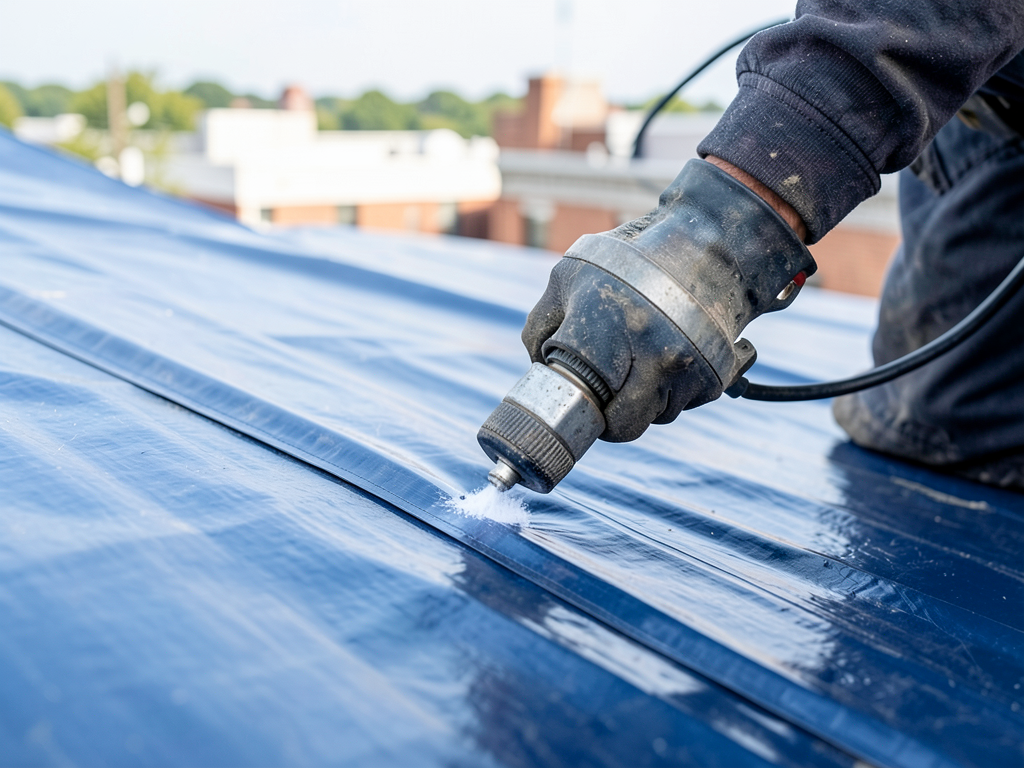
When leaks occur, repair methods differ significantly. TPO repairs involve heat welding a patch over the damaged area, creating a seamless repair. EPDM repairs require cleaning, priming, and applying adhesive patches, which can fail if not done perfectly in cold weather.
Puncture resistance varies by manufacturer, but TPO typically withstands 200-300 pounds of puncture force while EPDM handles 150-250 pounds. This matters in Detroit where construction debris and HVAC equipment maintenance create puncture risks.
UV resistance is another factor. Detroit receives about 4.8 hours of peak sunlight daily. TPO’s UV inhibitors last 20-25 years, while EPDM’s carbon black protection degrades after 15-20 years, causing surface chalking.
Verdict: When to Choose EPDM
EPDM makes sense for buildings that need dark surfaces to absorb heat in winter, such as warehouses storing temperature-sensitive goods. It’s also better for projects with tight budgets where the building owner plans to sell within 5-7 years.
Historic buildings in areas like Corktown or Midtown might benefit from EPDM’s traditional appearance if the roof is visible from upper floors or adjacent buildings. Getting Your Historic Roof Restored in Indian Village the Right Way.
Verdict: When to Choose TPO
TPO is the better choice for most Detroit commercial properties. Its energy efficiency, seam durability, and lower long-term maintenance costs make it ideal for buildings planning to keep the roof for 15+ years.
Buildings with heavy rooftop equipment traffic, such as restaurants with HVAC units or cell tower installations, benefit from TPO’s superior puncture resistance.
Properties in Detroit’s urban core where cooling costs matter most should prioritize TPO’s reflective properties.
Get a Professional Flat Roof Inspection in Detroit
Before making a decision, have your current roof inspected by a licensed Michigan contractor. Many building owners don’t realize their existing roof can be repaired or coated instead of replaced.
A professional inspection includes checking seam integrity, membrane thickness, and underlying deck condition. This diagnostic process can save thousands by identifying whether repair or replacement is the better option.
Call (313) 604-2233 today to schedule your inspection. Our Detroit-based team knows exactly how Michigan weather affects flat roofs and can recommend the best solution for your specific situation.
Frequently Asked Questions
How long do EPDM and TPO roofs last in Detroit?
EPDM typically lasts 20-25 years in Detroit’s climate, while TPO can reach 25-30 years with proper maintenance. The difference comes from TPO’s superior UV resistance and seam durability in freeze-thaw conditions.
Which material is more energy efficient for Detroit buildings?
TPO is significantly more energy efficient, especially for buildings with high cooling loads. Its reflective surface can reduce rooftop temperatures by 50-60°F compared to EPDM, cutting cooling costs by 15-25% according to DTE Energy studies.
Can I install a new roof over my existing flat roof?
Sometimes yes, but it depends on the existing roof’s condition and local building codes. Detroit requires removing the old roof if there are two or more layers already. A professional inspection will determine if overlay is possible.
What’s the best time of year to replace a flat roof in Detroit?
Late spring through early fall offers the best conditions. TPO requires temperatures above 40°F for proper welding, while EPDM needs dry conditions for adhesive curing. Winter installations are possible but cost more and take longer.
How much does a flat roof replacement cost in Detroit?
Costs vary by size and material, but expect $5.50 to $8.00 per square foot for quality installation. A typical 5,000-square-foot commercial roof costs $27,500 to $40,000 depending on material choice and building complexity.
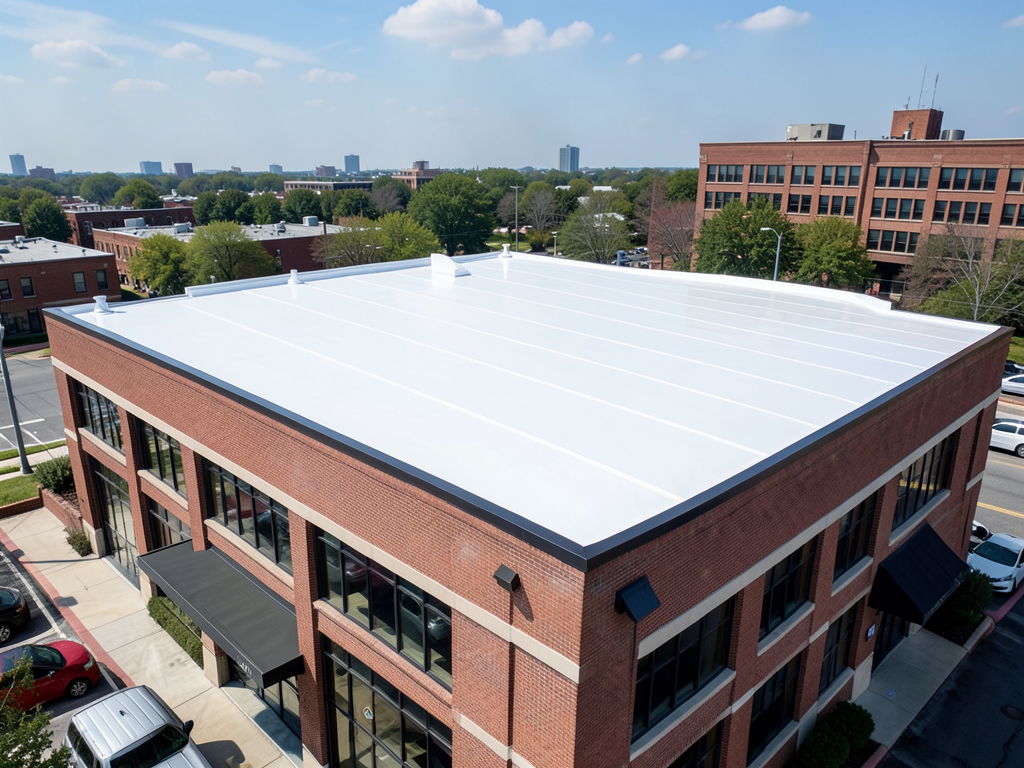
Diagram showing freeze-thaw damage to roof seams with cross-section view of TPO welded seam versus EPDM adhesive seam
Comparison chart of energy savings from TPO vs EPDM in Detroit’s climate showing annual utility cost differences
Photo of a Detroit commercial building with TPO installation in progress showing heat welding equipment and seam detail
Choosing between EPDM and TPO isn’t just about initial cost—it’s about understanding how Detroit’s unique climate will affect your roof over the next 20-30 years. TPO’s superior seam technology, energy efficiency, and durability make it the better choice for most commercial properties in Southeast Michigan.
Don’t wait until a leak forces an emergency decision. Call (313) 604-2233 now to schedule your professional inspection. Our Detroit team will evaluate your specific building needs and recommend the system that will actually hold up best in Michigan weather. For more information, visit National Roofing Contractors Association.
You may also find this helpful. Is Your Lafayette Park Roof Sturdy Enough to Support a Residential Solar Array?.
You may also find this helpful. How to Stop Ignoring Your Detached Garage Roof Before It Collapses This Winter.
{
“@context”: “https://schema.org”,
“@type”: “BlogPosting”,
“headline”: “EPDM vs TPO — Which Flat Roof System Actually Holds Up Best in Michigan Weather?”,
“description”: “Compare EPDM vs TPO flat roofing for Detroit’s harsh climate. Learn which system handles Michigan winters better and lasts longer. Get expert advice now.”,
“wordCount”: 1387,
“datePublished”: “2026-03-07T14:38:00.000Z”,
“dateModified”: “2026-03-07T14:38:00.000Z”,
“inLanguage”: “en-US”,
“mainEntityOfPage”: {
“@type”: “WebPage”,
“@id”: “https://peakroofingdetroit.com”
},
“publisher”: {
“@type”: “LocalBusiness”,
“name”: “Peak Roofing Detroit”,
“url”: “https://peakroofingdetroit.com”
},
“author”: {
“@type”: “Organization”,
“name”: “Peak Roofing Detroit”,
“url”: “https://peakroofingdetroit.com”
},
“image”: {
“@type”: “ImageObject”,
“url”: “https://peakroofingdetroit.com/wp-content/uploads/2026/03/epdm-vs-tpo-which-flat-roof-system-actually-holds-1.png”
}
}
{
“@context”: “https://schema.org”,
“@type”: “RoofingContractor”,
“name”: “Peak Roofing Detroit”,
“url”: “https://peakroofingdetroit.com”,
“address”: {
“@type”: “PostalAddress”,
“addressLocality”: “Detroit”
},
“areaServed”: {
“@type”: “City”,
“name”: “Detroit”
}
}
{
“@context”: “https://schema.org”,
“@type”: “FAQPage”,
“mainEntity”: [
{
“@type”: “Question”,
“name”: “Understanding the Basics: What are EPDM and TPO?”,
“acceptedAnswer”: {
“@type”: “Answer”,
“text”: “EPDM (Ethylene Propylene Diene Monomer) is a synthetic rubber membrane that’s been around since the 1960s. It’s known for flexibility in extreme cold and comes in black or white. TPO (Thermoplastic Polyolefin) is a newer single-ply membrane that’s heat-welded at the seams and typically white, offering better reflectivity.”
}
},
{
“@type”: “Question”,
“name”: “How long do EPDM and TPO roofs last in Detroit?”,
“acceptedAnswer”: {
“@type”: “Answer”,
“text”: “EPDM typically lasts 20-25 years in Detroit’s climate, while TPO can reach 25-30 years with proper maintenance. The difference comes from TPO’s superior UV resistance and seam durability in freeze-thaw conditions.”
}
},
{
“@type”: “Question”,
“name”: “Which material is more energy efficient for Detroit buildings?”,
“acceptedAnswer”: {
“@type”: “Answer”,
“text”: “TPO is significantly more energy efficient, especially for buildings with high cooling loads. Its reflective surface can reduce rooftop temperatures by 50-60°F compared to EPDM, cutting cooling costs by 15-25% according to DTE Energy studies.”
}
},
{
“@type”: “Question”,
“name”: “Can I install a new roof over my existing flat roof?”,
“acceptedAnswer”: {
“@type”: “Answer”,
“text”: “Sometimes yes, but it depends on the existing roof’s condition and local building codes. Detroit requires removing the old roof if there are two or more layers already. A professional inspection will determine if overlay is possible.”
}
},
{
“@type”: “Question”,
“name”: “What’s the best time of year to replace a flat roof in Detroit?”,
“acceptedAnswer”: {
“@type”: “Answer”,
“text”: “Late spring through early fall offers the best conditions. TPO requires temperatures above 40°F for proper welding, while EPDM needs dry conditions for adhesive curing. Winter installations are possible but cost more and take longer.”
}
},
{
“@type”: “Question”,
“name”: “How much does a flat roof replacement cost in Detroit?”,
“acceptedAnswer”: {
“@type”: “Answer”,
“text”: “Costs vary by size and material, but expect $5.50 to $8.00 per square foot for quality installation. A typical 5,000-square-foot commercial roof costs $27,500 to $40,000 depending on material choice and building complexity.”
}
}
]
}
{
“@context”: “https://schema.org”,
“@type”: “BreadcrumbList”,
“itemListElement”: [
{
“@type”: “ListItem”,
“position”: 1,
“name”: “Home”,
“item”: “https://peakroofingdetroit.com”
},
{
“@type”: “ListItem”,
“position”: 2,
“name”: “Blog”,
“item”: “https://peakroofingdetroit.com/blog”
},
{
“@type”: “ListItem”,
“position”: 3,
“name”: “EPDM vs TPO — Which Flat Roof System Actually Holds Up Best in Michigan Weather?”
}
]
}
{
“@context”: “https://schema.org”,
“@type”: “Service”,
“serviceType”: “Roofing”,
“provider”: {
“@type”: “LocalBusiness”,
“name”: “Peak Roofing Detroit”,
“url”: “https://peakroofingdetroit.com”
},
“areaServed”: {
“@type”: “City”,
“name”: “Detroit”
},
“description”: “Compare EPDM vs TPO flat roofing for Detroit’s harsh climate. Learn which system handles Michigan winters better and lasts longer. Get expert advice now.”
}