
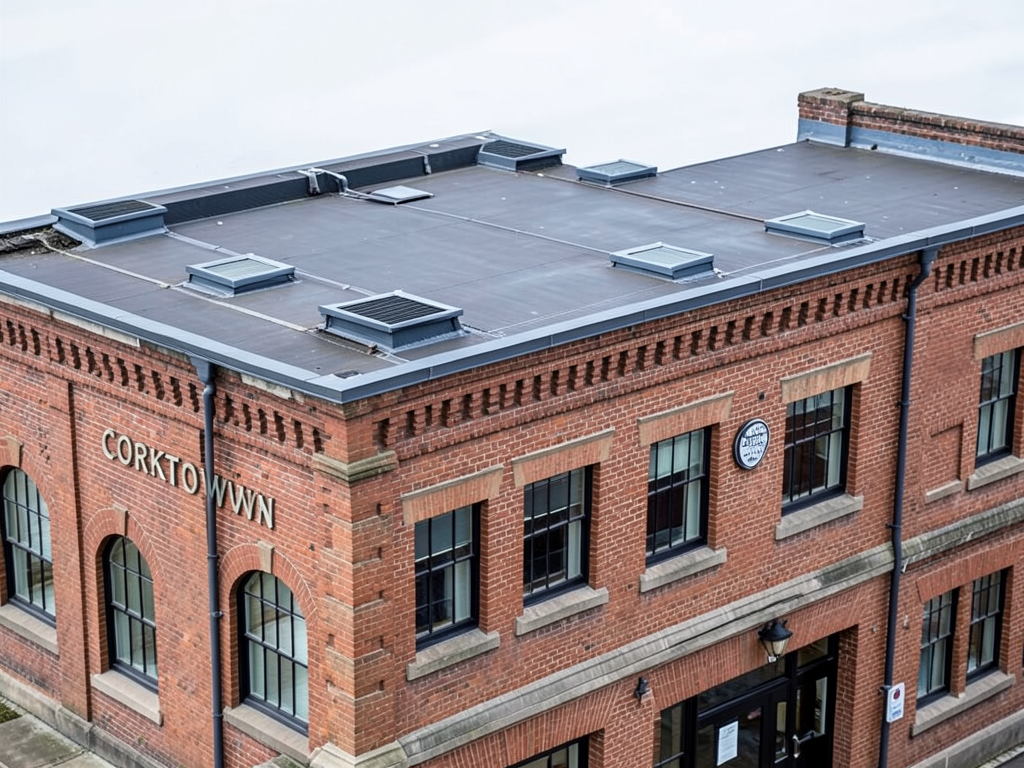
Why Flat Roofs in Corktown Require Specialized Drainage Solutions
Flat roofs in Corktown face unique challenges that demand specialized drainage solutions. The combination of Detroit’s harsh freeze-thaw cycles historic building architecture and the neighborhood’s proximity to the Detroit River creates conditions where water management becomes critical for roof longevity and building integrity. Detroit Building Safety Engineering and Environmental Department.
Corktown’s mix of late 19th and early 20th-century commercial buildings and converted lofts often feature aging flat roof systems that weren’t designed for today’s weather patterns or building codes. Without proper drainage these roofs experience ponding water membrane deterioration and structural stress that can lead to costly interior damage and premature replacement needs. Roof Cricket Drainage Issues.
Understanding why Corktown’s flat roofs require specialized attention starts with recognizing the specific environmental and architectural factors at play. The neighborhood sits in a low-lying area near the Detroit River where combined sewer systems struggle during heavy rainfall and the freeze-thaw cycles common to Detroit can cause roof materials to expand and contract dramatically throughout the year. Detroit Historic District Commission.
Common Flat Roof Issues in Historic Corktown
Historic Corktown buildings face several flat roof challenges that newer construction doesn’t encounter. The most critical issue is ponding water which occurs when drainage systems become overwhelmed or clogged allowing water to sit on the roof surface for extended periods. Getting Your Historic Roof Restored in Indian Village the Right Way.
Detroit’s Building Safety Engineering and Environmental Department requires that flat roofs maintain a minimum slope of 1/4 inch per foot to ensure proper drainage. Many Corktown buildings constructed before modern codes have insufficient slope making water management even more challenging. Detroit Water and Sewerage Department.
Membrane shrinkage represents another significant problem in Corktown’s aging flat roofs. EPDM and TPO membranes contract in cold weather and expand in heat causing stress at seams and edges. This thermal cycling is particularly severe in Detroit’s climate where temperature swings of 40-50 degrees in a single day are common during spring and fall. Roofing Detroit.
Flashing deterioration around rooftop equipment parapet walls and expansion joints creates additional vulnerability points. The freeze-thaw cycles cause these metal components to separate from the roofing membrane allowing water infiltration that can damage interior spaces and compromise structural elements. Spray Foam Roofing.
Detroit Weather and Your Flat Roof
Detroit’s climate creates conditions that flat roofs in Corktown must withstand year-round. The freeze-thaw cycle where temperatures fluctuate above and below freezing causes water to expand when it freezes and contract when it thaws. This process can create ice dams that block drainage pathways and force water under roofing materials. Roofing Grosse Pointe Park.
Heavy snow loads during Michigan winters add significant weight to flat roof structures. The Michigan Residential Code requires roofs to be designed for specific snow loads based on geographic location with Detroit typically requiring design for 25-30 pounds per square foot of snow load.. Read more about How to Handle a Leaky Roof During a Detroit Winter Storm.
Summer thunderstorms in Detroit can dump several inches of rain in a matter of hours. When this precipitation hits roofs already saturated from previous storms the drainage systems can become overwhelmed. Corktown’s combined sewer system which handles both stormwater and wastewater can back up during these events preventing proper roof drainage.
Wind patterns coming off the Detroit River can create uplift forces on flat roof edges and corners. The Michigan Building Code requires specific edge securement details for commercial flat roofs to prevent wind damage but many historic Corktown buildings lack these modern reinforcements.. Read more about Fixing Ice Dam Damage on Detroit’s Historic West Village Properties.
Specialized Drainage Solutions for Corktown Flat Roofs
Effective flat roof drainage in Corktown requires a multi-layered approach that addresses both immediate water removal and long-term system reliability. The most successful solutions combine internal drains scuppers and tapered insulation systems to create positive drainage paths.
Internal roof drains are the primary drainage method for most commercial flat roofs in Corktown. These drains connect to the building’s plumbing system and must be sized according to the International Plumbing Code which requires specific drain sizing based on roof area and rainfall intensity. Detroit typically experiences 30-35 inches of rainfall annually requiring robust drain sizing.. Read more about Commercial Roof Coating and Repair Services in Eastern Market.
Scuppers which are openings in parapet walls that allow water to drain off the roof edge provide secondary drainage when internal drains become overwhelmed. The Michigan Building Code requires scuppers to be sized to handle 50% of the roof’s maximum potential water accumulation.
Tapered insulation systems create positive drainage slopes where the existing roof structure cannot provide adequate pitch. These systems can create slopes of 1/2 inch to 2 inches per foot directing water toward drains and preventing ponding. The insulation must be properly secured to prevent wind uplift and thermal movement.
Gutter and downspout systems for flat roofs require special consideration in Corktown. The Detroit Water and Sewerage Department recommends disconnecting downspouts from the combined sewer system where possible using rain barrels or French drains to manage roof runoff and reduce system overload during storms.. Read more about Replacing Your Gutters and Downspouts in Dearborn Before the Spring Rains.
Diagnostic Testing Process for Corktown Flat Roofs
Proper drainage system performance requires systematic diagnostic testing. The testing process follows these steps:
- Visual inspection of roof surface looking for ponding areas sagging and visible damage
- Flow testing of each drain using measured water volume to verify capacity
- Moisture scanning with infrared camera to detect trapped water beneath membrane
- Structural assessment using moisture meter readings on suspect areas
- Inspection of drain connections and overflow pathways
- Evaluation of parapet wall conditions and flashing integrity
During moisture scanning a technician might hear rushing water sounds when a drain is partially blocked or feel spongy areas underfoot where water has accumulated beneath the membrane. These physical sensations provide immediate feedback about drainage system health.
The infrared camera reveals temperature differences that indicate moisture presence. Wet areas appear cooler than dry areas because water retains heat differently than roofing materials. This diagnostic tool can identify problems before they cause visible interior damage.
Historic District Requirements and Modern Solutions
Corktown’s status as a historic district adds another layer of complexity to flat roof drainage projects. The Detroit Historic District Commission requires that any visible modifications maintain the building’s historic character while meeting modern performance standards.
Roof crickets which are small raised areas that direct water around rooftop equipment or toward drains must be designed to blend with the existing roof profile. These crickets can be constructed from tapered insulation or lightweight concrete depending on the building’s structural capacity and the historic commission’s requirements.
Modern drainage solutions must also comply with Detroit’s energy code requirements. The Michigan Energy Code mandates specific insulation R-values for commercial roofs which can affect how drainage systems are integrated. Adding insulation for energy efficiency can reduce available space for drainage components requiring careful system design.
Emergency overflow drains are required by code for many flat roof installations in Detroit. These drains activate only when primary drainage systems become overwhelmed preventing catastrophic water accumulation during extreme weather events. The overflow drains must be properly located and sized to protect the building’s structural integrity.
Why Corktown Specifically is Vulnerable
Corktown’s vulnerability to flat roof drainage problems stems from several unique factors. The neighborhood’s historic buildings average 80-120 years old with original drainage systems that were never designed for current rainfall volumes or building usage patterns.
The area’s proximity to the Detroit River affects local wind patterns and humidity levels. River winds can accelerate roof edge deterioration and create pressure differentials that stress drainage components. The higher humidity near the river also promotes algae and moss growth which can clog drains and downspouts.
Corktown sits in a low-lying area where the water table is relatively high. This affects how water moves through the soil and can create hydrostatic pressure against building foundations. Poor foundation drainage can cause water to back up through floor drains affecting roof drainage system performance.
The neighborhood’s combined sewer system which serves most of Detroit cannot handle the volume of stormwater generated by modern development patterns. When heavy rains overwhelm the system water cannot drain properly from roofs creating ponding that persists for days after storms.
Comparison of Drainage System Options
| System Type | Advantages | Disadvantages | Best For |
|---|---|---|---|
| Internal Drains | Hidden from view reliable performance | Susceptible to clogging expensive to repair | Commercial buildings modern retrofits |
| Scuppers | Simple design low maintenance cost | Visible from ground may freeze in winter | Historic buildings secondary drainage |
| Tapered Insulation | Creates positive slope improves energy efficiency | Adds weight to structure higher initial cost | Buildings with insufficient slope |
| Green Roof Systems | Stormwater retention energy benefits | High cost structural requirements | New construction sustainability focus |
Choosing the Right Contractor for Corktown Flat Roofs
Flat roof drainage work in Corktown requires contractors with specific expertise in historic building restoration commercial roofing systems and Detroit’s regulatory environment. The contractor should have experience with EPDM TPO and modified bitumen systems commonly found in the area.
Proper licensing through the Michigan Department of Licensing and Regulatory Affairs is essential along with Detroit business licenses and insurance coverage. The contractor should also have experience working with the Detroit Historic District Commission when projects involve buildings in the historic district.
References from other Corktown property owners or similar historic commercial buildings in Detroit provide valuable insight into a contractor’s capabilities. Ask for examples of similar projects particularly those involving drainage system upgrades on occupied buildings where minimizing disruption was critical.
Detailed project proposals should include comprehensive drainage system designs material specifications and compliance documentation with all applicable codes and historic district requirements. The proposal should also address how the work will be sequenced to maintain building operations during the project.
Emergency Response and Temporary Solutions
When flat roof drainage systems fail in Corktown quick response becomes critical to prevent interior damage. Emergency services should include temporary patching of compromised areas clearing of blocked drains and installation of emergency tarps to prevent water infiltration.. Read more about Quick Roof Leak Patching and Maintenance for Businesses in Hamtramck.
Temporary drainage solutions might include portable pumps to remove standing water emergency patching of membrane breaches and installation of temporary overflow pathways. These solutions buy time for permanent repairs while protecting the building’s interior and contents.
Insurance considerations become important when drainage system failures cause interior damage. Most commercial property policies cover sudden and accidental water damage but may exclude damage from long-term neglect or inadequate maintenance. Documented maintenance records and prompt emergency response can support insurance claims.
Preventive measures include installing water sensors in critical areas to provide early warning of drainage system failures maintaining clear access to roof drains for emergency service and establishing relationships with qualified contractors before emergencies occur.
Future-Proofing Your Corktown Flat Roof
Modern flat roof drainage solutions in Corktown should be designed with future climate conditions in mind. Detroit’s weather patterns show increasing frequency of intense rainfall events requiring drainage systems that can handle higher volumes than historical designs anticipated.
Smart drainage monitoring systems can provide real-time data on roof conditions alerting building owners to developing problems before they cause damage. These systems can monitor water levels temperature and drainage flow rates integrating with building management systems for comprehensive facility monitoring.
Energy-efficient roofing systems that incorporate reflective surfaces and proper insulation can reduce cooling costs while improving drainage performance. The right combination of materials and design can extend roof life while meeting Detroit’s energy code requirements and historic district guidelines.
Frequently Asked Questions
How often should flat roof drains be cleaned in Corktown?
Flat roof drains in Corktown should be cleaned at least twice per year typically in spring after winter debris accumulation and in fall before winter weather begins. Buildings surrounded by trees or in areas with high debris accumulation may require quarterly cleaning.
What causes ponding water on flat roofs in Detroit?
Ponding water on flat roofs in Detroit is typically caused by inadequate roof slope clogged drains sagging roof structure or insufficient drain sizing for local rainfall patterns. The freeze-thaw cycles common to Detroit can also create ice dams that block drainage pathways.
Are there specific building codes for flat roof drainage in Corktown?
Yes Detroit’s Building Safety Engineering and Environmental Department requires flat roofs to maintain minimum slopes properly sized drainage systems and overflow protection. Historic district buildings must also comply with additional requirements from the Detroit Historic District Commission.
How much does it cost to upgrade flat roof drainage in Corktown?
Costs vary widely based on roof size existing conditions and required modifications. Simple drain cleaning and minor repairs might cost $500-1500 while comprehensive drainage system upgrades including tapered insulation and new drains can range from $10-25 per square foot.
Can I install a green roof on my Corktown flat roof?
Green roofs are possible in Corktown but require careful structural evaluation and compliance with Detroit building codes and historic district requirements. The additional weight of soil and vegetation typically requires structural reinforcement and specialized drainage components.
What’s the difference between internal drains and scuppers?
Internal drains connect to the building’s plumbing system and remove water through pipes inside the structure while scuppers are openings in parapet walls that allow water to drain off the roof edge. Both are often used together for redundant drainage protection.
How do I know if my flat roof has adequate drainage?
Signs of inadequate drainage include standing water 48 hours after rainfall water stains on interior ceilings mold growth on roof surfaces and visible sagging in the roof structure. Professional inspection using moisture scanning and drainage flow testing can provide definitive assessment.
What maintenance is required for flat roof drainage systems?
Regular maintenance includes drain cleaning inspection of flashing and seams checking for debris accumulation testing drain flow rates and inspecting overflow drains. Annual professional inspections are recommended to identify developing issues before they cause damage.
Call (313) 604-2233 Today to Schedule Your Inspection
Don’t wait for the next Detroit storm to discover your flat roof drainage system isn’t working properly. Standing water leaks and structural damage can develop quickly when drainage fails. Call (313) 604-2233 today to schedule a comprehensive inspection of your Corktown flat roof. Our experienced team understands the unique challenges of historic buildings in Detroit and can provide solutions that protect your investment while maintaining your building’s character.
Pick up the phone and call (313) 604-2233 before the next storm hits. Early intervention can prevent costly interior damage and extend the life of your roof system. We’re ready to help Corktown property owners solve their flat roof drainage challenges with solutions that work in Detroit’s demanding climate.
You may also find this helpful. Why New Construction in Brush Park Needs High Performance Roofing Systems.
{
“@context”: “https://schema.org”,
“@type”: “BlogPosting”,
“headline”: “Why Flat Roofs in Corktown Require Specialized Drainage Solutions”,
“description”: “Corktown’s historic flat roofs need specialized drainage due to Detroit’s freeze-thaw cycles, combined sewer system, and proximity to the Detroit River. Learn why.”,
“wordCount”: 2384,
“datePublished”: “2026-02-17T11:31:00.000Z”,
“dateModified”: “2026-02-17T11:31:00.000Z”,
“inLanguage”: “en-US”,
“mainEntityOfPage”: {
“@type”: “WebPage”,
“@id”: “https://peakroofingdetroit.com”
},
“publisher”: {
“@type”: “LocalBusiness”,
“name”: “Peak Roofing Detroit”,
“url”: “https://peakroofingdetroit.com”
},
“author”: {
“@type”: “Organization”,
“name”: “Peak Roofing Detroit”,
“url”: “https://peakroofingdetroit.com”
},
“image”: {
“@type”: “ImageObject”,
“url”: “https://peakroofingdetroit.com/wp-content/uploads/2026/03/why-flat-roofs-in-corktown-require-specialized-dra-1.png”
}
}
{
“@context”: “https://schema.org”,
“@type”: “RoofingContractor”,
“name”: “Peak Roofing Detroit”,
“url”: “https://peakroofingdetroit.com”,
“address”: {
“@type”: “PostalAddress”,
“addressLocality”: “Detroit”
},
“areaServed”: {
“@type”: “City”,
“name”: “Detroit”
}
}
{
“@context”: “https://schema.org”,
“@type”: “FAQPage”,
“mainEntity”: [
{
“@type”: “Question”,
“name”: “How often should flat roof drains be cleaned in Corktown?”,
“acceptedAnswer”: {
“@type”: “Answer”,
“text”: “Flat roof drains in Corktown should be cleaned at least twice per year typically in spring after winter debris accumulation and in fall before winter weather begins. Buildings surrounded by trees or in areas with high debris accumulation may require quarterly cleaning.”
}
},
{
“@type”: “Question”,
“name”: “What causes ponding water on flat roofs in Detroit?”,
“acceptedAnswer”: {
“@type”: “Answer”,
“text”: “Ponding water on flat roofs in Detroit is typically caused by inadequate roof slope clogged drains sagging roof structure or insufficient drain sizing for local rainfall patterns. The freeze-thaw cycles common to Detroit can also create ice dams that block drainage pathways.”
}
},
{
“@type”: “Question”,
“name”: “Are there specific building codes for flat roof drainage in Corktown?”,
“acceptedAnswer”: {
“@type”: “Answer”,
“text”: “Yes Detroit’s Building Safety Engineering and Environmental Department requires flat roofs to maintain minimum slopes properly sized drainage systems and overflow protection. Historic district buildings must also comply with additional requirements from the Detroit Historic District Commission.”
}
},
{
“@type”: “Question”,
“name”: “How much does it cost to upgrade flat roof drainage in Corktown?”,
“acceptedAnswer”: {
“@type”: “Answer”,
“text”: “Costs vary widely based on roof size existing conditions and required modifications. Simple drain cleaning and minor repairs might cost $500-1500 while comprehensive drainage system upgrades including tapered insulation and new drains can range from $10-25 per square foot.”
}
},
{
“@type”: “Question”,
“name”: “Can I install a green roof on my Corktown flat roof?”,
“acceptedAnswer”: {
“@type”: “Answer”,
“text”: “Green roofs are possible in Corktown but require careful structural evaluation and compliance with Detroit building codes and historic district requirements. The additional weight of soil and vegetation typically requires structural reinforcement and specialized drainage components.”
}
},
{
“@type”: “Question”,
“name”: “What’s the difference between internal drains and scuppers?”,
“acceptedAnswer”: {
“@type”: “Answer”,
“text”: “Internal drains connect to the building’s plumbing system and remove water through pipes inside the structure while scuppers are openings in parapet walls that allow water to drain off the roof edge. Both are often used together for redundant drainage protection.”
}
},
{
“@type”: “Question”,
“name”: “How do I know if my flat roof has adequate drainage?”,
“acceptedAnswer”: {
“@type”: “Answer”,
“text”: “Signs of inadequate drainage include standing water 48 hours after rainfall water stains on interior ceilings mold growth on roof surfaces and visible sagging in the roof structure. Professional inspection using moisture scanning and drainage flow testing can provide definitive assessment.”
}
},
{
“@type”: “Question”,
“name”: “What maintenance is required for flat roof drainage systems?”,
“acceptedAnswer”: {
“@type”: “Answer”,
“text”: “Regular maintenance includes drain cleaning inspection of flashing and seams checking for debris accumulation testing drain flow rates and inspecting overflow drains. Annual professional inspections are recommended to identify developing issues before they cause damage.”
}
}
]
}
{
“@context”: “https://schema.org”,
“@type”: “BreadcrumbList”,
“itemListElement”: [
{
“@type”: “ListItem”,
“position”: 1,
“name”: “Home”,
“item”: “https://peakroofingdetroit.com”
},
{
“@type”: “ListItem”,
“position”: 2,
“name”: “Blog”,
“item”: “https://peakroofingdetroit.com/blog”
},
{
“@type”: “ListItem”,
“position”: 3,
“name”: “Why Flat Roofs in Corktown Require Specialized Drainage Solutions”
}
]
}
{
“@context”: “https://schema.org”,
“@type”: “Service”,
“serviceType”: “Roofing”,
“provider”: {
“@type”: “LocalBusiness”,
“name”: “Peak Roofing Detroit”,
“url”: “https://peakroofingdetroit.com”
},
“areaServed”: {
“@type”: “City”,
“name”: “Detroit”
},
“description”: “Corktown’s historic flat roofs need specialized drainage due to Detroit’s freeze-thaw cycles, combined sewer system, and proximity to the Detroit River. Learn why.”
}