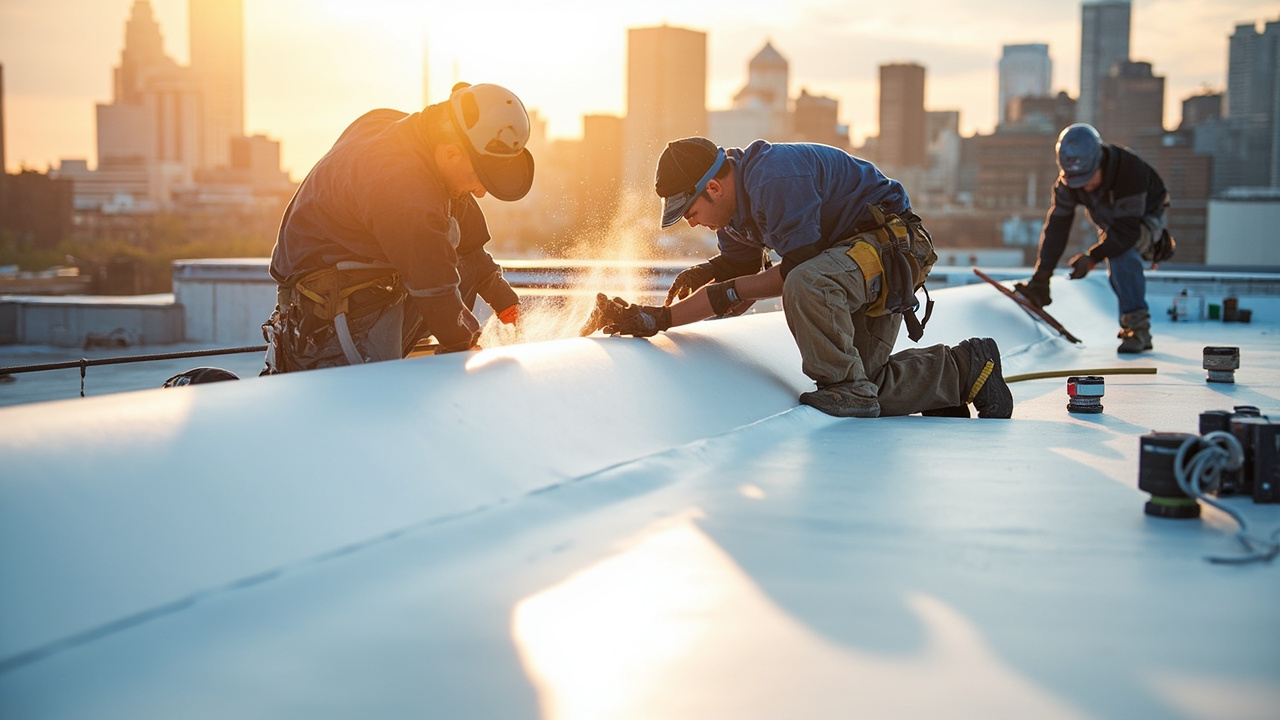
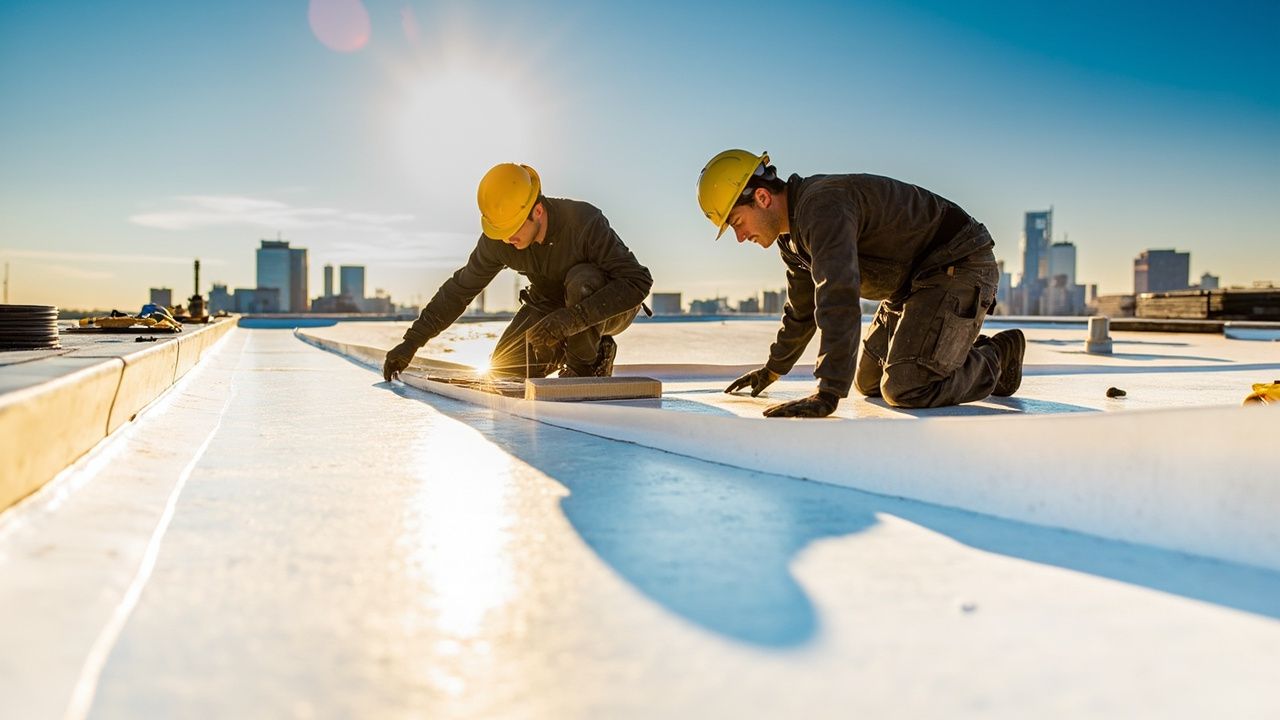
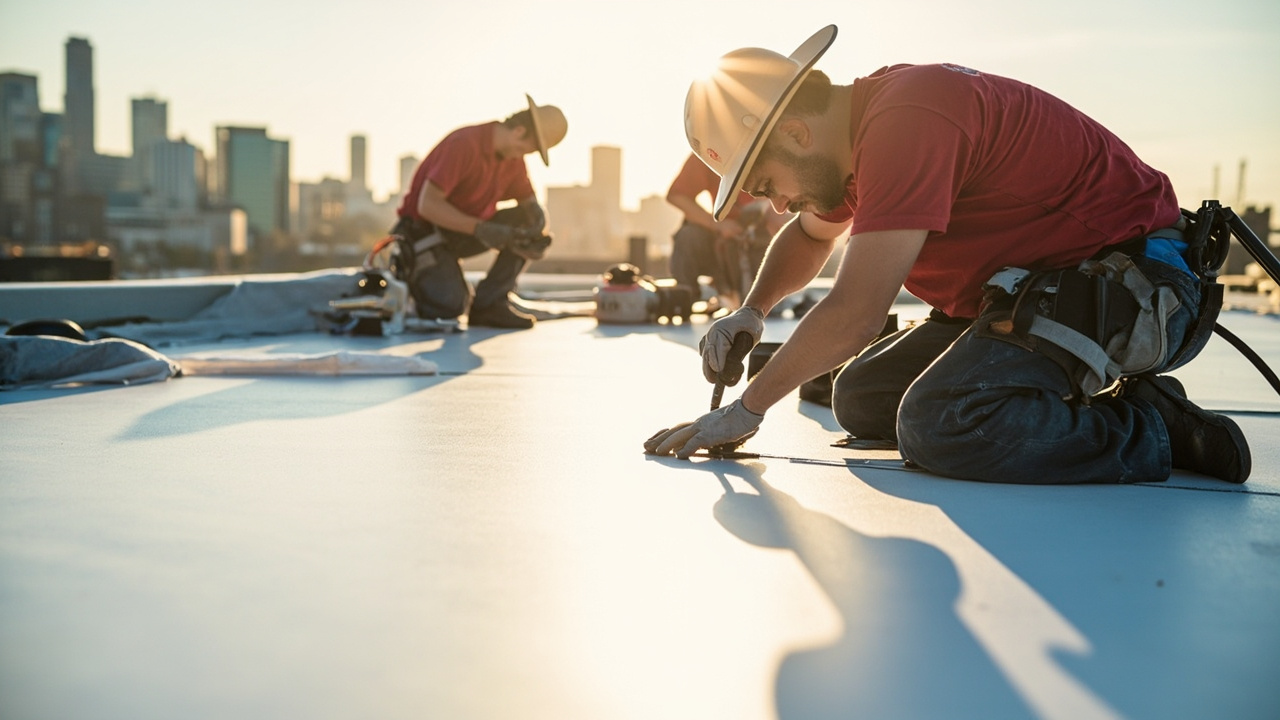
Detroit's manufacturing and logistics facilities release airborne oils, solvents, and particulates that accumulate on commercial roof surfaces. These contaminants accelerate the breakdown of asphalt-based roofing systems, creating brittleness and cracking within 10 to 15 years. Thermoplastic Polyolefin installation solves this problem. TPO's chemically resistant membrane surface repels petroleum products and industrial emissions common in areas like Southwest Detroit and the I-94 industrial corridor. The material does not absorb contaminants, maintaining its flexibility and waterproofing performance even in harsh environments. This chemical resistance extends service life and reduces lifecycle costs for facilities operating in Detroit's industrial zones.
Commercial TPO roof systems installed in Metro Detroit must comply with Michigan's commercial building code, which references the International Building Code wind load requirements for Exposure C conditions. Buildings near the Detroit River or in open industrial areas face higher wind uplift forces than sheltered urban structures. Peak Roofing Detroit calculates the fastener density and edge securement details required for your specific building location and height. We pull permits through the City of Detroit Building Department and coordinate inspections to ensure code compliance. Choosing a local contractor familiar with Detroit's permitting process prevents costly delays and rejection of substandard installations.