
Why Your New Roof Needs Better Attic Insulation to Last More Than 10 Years
Your roof and attic insulation work as one system. When insulation fails, your roof pays the price. In Detroit’s harsh freeze-thaw climate, poor attic insulation causes ice dams that destroy shingles within 8-10 years instead of the expected 20-25 year lifespan. The connection is simple: inadequate insulation lets heat escape from your living space into the attic. This melts snow on your roof, which refreezes at the eaves, creating destructive ice dams that force water under shingles and into your home.. Read more about How Reflective Shingles Can Keep Your Livonia Home Cooler During July Heatwaves.
Detroit homeowners lose thousands annually to premature roof failure caused by attic insulation problems. The Michigan Building Code requires R-49 to R-60 insulation in attics for our Climate Zone 5 conditions. Yet many homes in neighborhoods like Sherwood Forest and Palmer Woods have only R-19 or less. This creates a thermal bridge that not only wastes energy but actively damages your roofing system from the inside out. Michigan Residential Code insulation requirements.
Ice dam formation is the most visible symptom, but the damage runs deeper. Heat transfer through inadequate insulation causes asphalt shingles to age prematurely. The constant temperature cycling from day to night creates thermal shock that makes shingles brittle and prone to cracking. In Detroit’s high-humidity summers, poor insulation also allows moisture to accumulate in attic spaces, creating ideal conditions for mold growth that can compromise both your roof deck and indoor air quality.. Read more about How a Leaky Roof Can Lead to Dangerous Attic Mold in Sterling Heights Homes.
Understanding this relationship between insulation and roofing is crucial for Detroit homeowners. A new roof installation without addressing attic insulation issues is like putting a band-aid on a broken leg. You might stop the immediate leak, but the underlying problem continues to worsen. The solution requires a comprehensive approach that treats your attic as an integrated system where ventilation, insulation, and roofing materials work together to protect your home. What Royal Oak Homeowners Should Know Before Choosing a Roofing Contractor.
Call (313) 604-2233 today to schedule your attic insulation and roofing inspection before the next winter storm hits. Metal Roofing for Ferndale Homes (Is it Actually Worth the Investment?).
How Poor Attic Insulation Destroys Detroit Roofs
Ice dams form when attic heat escapes through inadequate insulation, melting snow on the roof surface. The melted water flows down to the cold eaves where it refreezes, creating a dam that traps more water behind it. This process repeats throughout winter, building thicker ice layers that can lift shingles and allow water infiltration. In Detroit’s climate, where temperatures fluctuate wildly between 20°F and 40°F during winter months, this freeze-thaw cycle accelerates damage exponentially.
The science behind ice dam formation is straightforward. Heat rises through your ceiling into the attic space. With proper R-49 to R-60 insulation, this heat transfer is minimized. With inadequate insulation, the attic temperature rises above freezing even when outdoor temperatures remain well below freezing. Snow on the heated portions of your roof melts while snow over unheated areas like soffits remains frozen. The resulting water flow creates the perfect conditions for ice dam formation.
Detroit’s specific climate conditions make this problem particularly severe. Our proximity to the Great Lakes creates high humidity levels that increase the moisture content in snow. This wet, heavy snow holds more water when it melts, creating larger volumes of water that can back up under shingles. Additionally, Detroit’s frequent freeze-thaw cycles mean ice dams have more opportunities to form and grow throughout the winter season.
The cost of ignoring this connection is substantial. Ice dams can cause thousands in interior water damage, including ruined drywall, damaged insulation, and mold remediation. The roof itself suffers premature aging, with shingles losing their protective granules and becoming brittle. Most Detroit homeowners don’t realize their 8-year-old roof needs replacement because of insulation issues rather than material failure. This misunderstanding leads to repeated roof replacements that fail for the same reasons.
Types of Attic Insulation We Install in Detroit Homes
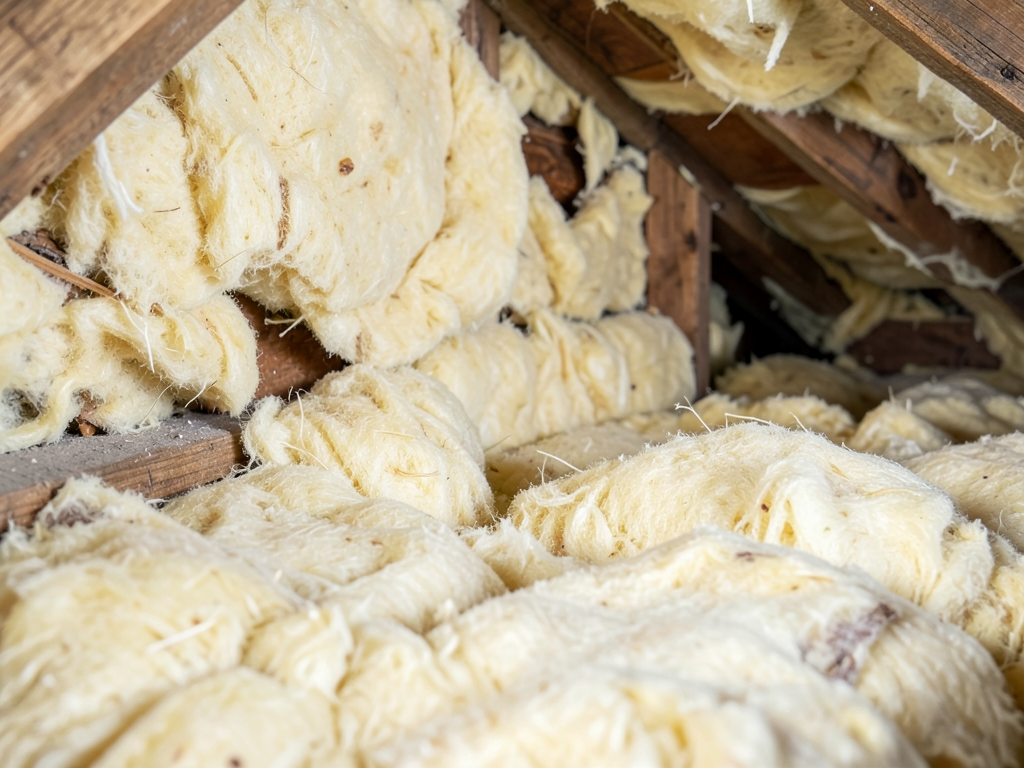
Choosing the right insulation type depends on your home’s construction, age, and specific Detroit climate challenges. Each material offers different R-values per inch and installation methods that affect both performance and cost.
| Insulation Type | R-Value per Inch | Best For | Detroit Considerations |
|---|---|---|---|
| Blown-in Cellulose | 3.2-3.8 | Existing attics, irregular spaces | Excellent for Detroit’s older homes with uneven joist spacing |
| Fiberglass Batts | 2.9-3.8 | DIY installation, standard joist spacing | Works well in newer Detroit suburbs like Royal Oak |
| Spray Foam | 3.5-6.5 | Air sealing, moisture control | Ideal for Detroit’s humid summers and ice dam prevention |
Blown-in cellulose insulation consists of recycled paper products treated with fire retardants. It’s particularly effective for Detroit’s historic homes in neighborhoods like Indian Village and Boston-Edison, where attic spaces often have irregular dimensions and numerous obstacles. The loose-fill nature allows it to conform to any space, filling gaps around pipes, wiring, and other penetrations that can create thermal bridges. Getting Your Historic Roof Restored in Indian Village the Right Way.
Fiberglass batts offer a more traditional approach with pre-cut sections that fit between standard joist spacing. While less effective at filling irregular spaces, they provide consistent R-values and are easier to install in new construction or major renovations. Many Detroit homeowners in areas like Grosse Pointe choose fiberglass for its cost-effectiveness and ease of future access to attic utilities.
Spray foam insulation represents the premium option for Detroit’s most challenging attic conditions. Closed-cell spray foam provides both insulation and air sealing in one application, creating an effective moisture barrier that prevents the condensation issues common in our humid summers. The high R-value per inch makes it ideal for homes where maximizing insulation in limited attic space is critical. Spray Foam Roofing.
Detroit’s Roofing Ventilation Requirements
Proper attic ventilation works hand-in-hand with insulation to protect your roof. The Michigan Residential Code requires balanced ventilation systems that provide 1 square foot of net free ventilation area for every 150 square feet of attic floor space. This ventilation must be split between intake vents (typically soffit vents) and exhaust vents (ridge vents, gable vents, or roof vents).
Detroit’s climate creates specific ventilation challenges that many contractors overlook. Our high humidity levels in summer mean attics need adequate airflow to prevent moisture buildup. During winter, proper ventilation helps maintain cold attic temperatures that prevent snow melt and ice dam formation. The ventilation system must work year-round to protect your roofing investment.
Soffit vents provide the intake air that drives the entire ventilation system. These vents allow cool, dry air to enter the attic at the eaves while warmer air exits through ridge or gable vents. In Detroit homes, particularly those built before 1980, soffit vents are often blocked by insulation or never installed at all. This creates a ventilation dead zone that traps heat and moisture.
Ridge vents offer the most effective exhaust solution for Detroit roofs. Installed along the peak of the roof, they allow continuous airflow across the entire attic space. Unlike individual roof vents that create hot spots, ridge vents provide uniform ventilation that maintains consistent attic temperatures. This consistency is crucial for preventing the localized melting that leads to ice dams. Why Flat Roofs in Corktown Require Specialized Drainage Solutions.
Baffles installed between rafters ensure that insulation doesn’t block soffit vents while maintaining the required air gap for proper ventilation. These simple plastic or cardboard channels direct airflow from the soffits to the ridge vent, creating the convection current that keeps your attic dry and cool. Without baffles, even the best insulation and ventilation plan fails.
Energy Efficiency and Detroit Utility Rebates
Detroit homeowners can significantly reduce the cost of attic insulation upgrades through utility rebates and energy efficiency programs. DTE Energy offers rebates up to $400 for attic insulation improvements that meet specific R-value requirements. These rebates typically cover 30-50% of the total project cost, making comprehensive attic upgrades much more affordable.
The DTE Energy Home Energy Consultation program provides free energy assessments for Detroit residents. During these assessments, certified technicians evaluate your home’s insulation levels, air leakage, and overall energy efficiency. They provide specific recommendations for improvements and information about available rebates. Many Detroit homeowners qualify for additional incentives through the Michigan Saves program, which offers low-interest financing for energy efficiency upgrades.
Beyond utility rebates, proper attic insulation provides substantial ongoing energy savings. Detroit homes with inadequate insulation lose 25-30% of their heating energy through the attic. Upgrading to R-49 or higher insulation can reduce heating costs by $300-500 annually in our climate. The payback period for insulation upgrades is typically 3-5 years, after which the savings directly benefit your household budget.
Energy efficiency improvements also increase your home’s value and marketability. In Detroit’s competitive real estate market, homes with documented energy efficiency upgrades command higher prices and sell faster. Buyers increasingly recognize the long-term cost savings and comfort benefits of proper insulation, making it a valuable investment beyond just roof protection.
Our Integrated Roofing and Insulation Inspection Process
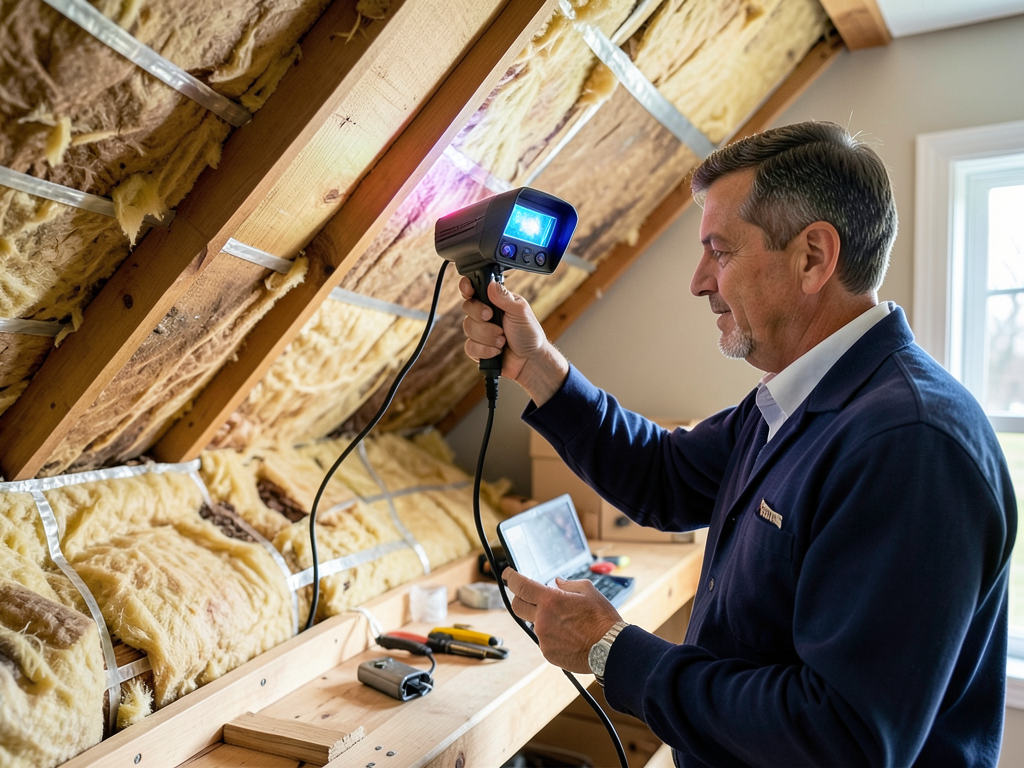
Our comprehensive inspection process evaluates your entire attic-to-roof system to identify both current problems and potential future issues. We start with a detailed attic assessment using thermal imaging cameras to detect heat loss patterns, moisture accumulation, and inadequate insulation coverage. This diagnostic approach reveals problems that traditional visual inspections miss.
The inspection includes measuring current insulation R-values using specialized depth gauges and calculating the actual thermal performance of your existing installation. We check for air leaks around penetrations, proper ventilation system function, and signs of moisture damage or mold growth. Our technicians also examine the underside of your roof deck for proper ventilation and any existing water damage.
We evaluate your roofing material’s current condition and expected remaining lifespan. Different roofing materials have varying tolerances for heat exposure and moisture. Asphalt shingles, the most common choice in Detroit, begin to deteriorate when attic temperatures consistently exceed 120°F. Our inspection identifies whether your current roof is already suffering from heat-related damage that insulation improvements could prevent.
The final inspection report includes specific recommendations prioritized by urgency and return on investment. We identify critical issues that require immediate attention, such as active moisture problems or severely inadequate insulation, as well as improvements that provide long-term benefits. Our goal is to provide you with clear, actionable information that helps you make informed decisions about your home’s protection.
Call (313) 604-2233 today to schedule your comprehensive attic and roofing inspection. Don’t wait until ice dams cause thousands in damage this winter.
Frequently Asked Questions
How much does attic insulation cost in Detroit?
Attic insulation costs in Detroit typically range from $1.50 to $3.50 per square foot, depending on the material chosen and your home’s specific requirements. Blown-in cellulose averages $1.50-2.00 per square foot, while spray foam ranges from $2.50-3.50 per square foot. Most Detroit homes require 1,000-1,500 square feet of attic coverage.
Can I add insulation over existing insulation?
Yes, you can add new insulation over existing material in most cases. However, we must first inspect the current insulation for moisture damage, mold, or pest infestations. If the existing insulation is compromised, complete removal may be necessary. We also check for proper ventilation before adding new layers.
How long does attic insulation installation take?
Most attic insulation projects in Detroit homes are completed in one day. Blown-in insulation typically takes 4-6 hours for an average home, while spray foam applications may require 6-8 hours plus additional curing time. We schedule projects to minimize disruption to your household routine.
Will new insulation help with ice dams?
Yes, proper attic insulation is one of the most effective ways to prevent ice dams. By maintaining consistent attic temperatures close to the outdoor air temperature, insulation prevents the snow melt that leads to ice dam formation. Combined with proper ventilation, it addresses the root cause rather than just the symptoms.
Do I need to remove old insulation before adding new?
Not always. If your existing insulation is dry, mold-free, and not compressed, we can often add new insulation over it. However, if there’s moisture damage, pest contamination, or the insulation has settled significantly, removal may be recommended for optimal performance.. Read more about Why Are There Tiny Stones in Your Gutters (Understanding Shingle Granule Loss).
What R-value do I need for Detroit’s climate?
The Michigan Residential Code requires R-49 to R-60 for attic insulation in our Climate Zone 5. This translates to approximately 14-20 inches of blown-in fiberglass or 11-16 inches of cellulose, depending on the material’s specific R-value per inch. We recommend R-60 for maximum energy efficiency and roof protection.
Does attic insulation affect my roof warranty?
Proper attic insulation actually helps maintain your roof warranty by preventing the heat-related damage that many manufacturers cite as warranty exclusions. However, certain ventilation requirements must be met to keep warranties valid. Our installations follow all manufacturer specifications to protect your warranty coverage.. Read more about What a Lifetime Roof Warranty Actually Covers for Detroit Property Owners.
Can attic insulation help with summer cooling costs?
Absolutely. In Detroit’s humid summers, proper attic insulation prevents heat from radiating down into your living spaces. This can reduce cooling costs by 15-25% and improve overall comfort. The same insulation that keeps heat in during winter also keeps heat out during summer.
What’s the difference between faced and unfaced insulation?
Faced insulation has a vapor barrier attached, typically kraft paper or foil. In Detroit’s mixed climate, faced insulation is generally recommended for attics to prevent moisture migration. Unfaced insulation works better for adding over existing insulation or in specific applications where vapor barriers are already present.
How do I know if my attic has enough insulation?
Signs of inadequate insulation include high energy bills, uneven room temperatures, ice dams in winter, and attic temperatures that feel significantly warmer than outdoor air in summer. A professional inspection using thermal imaging can accurately measure your current R-value and identify problem areas. For more information, visit Department of Energy insulation guide.
You may also find this helpful. Is Your Lafayette Park Roof Sturdy Enough to Support a Residential Solar Array?.
{
“@context”: “https://schema.org”,
“@type”: “BlogPosting”,
“headline”: “Why Your New Roof Needs Better Attic Insulation to Last More Than 10 Years”,
“description”: “Discover how proper attic insulation protects your Detroit roof from ice dams and extends its life beyond 10 years. Learn about Michigan R-value requirements and local rebates.”,
“wordCount”: 2275,
“datePublished”: “2026-03-14T11:30:00.000Z”,
“dateModified”: “2026-03-14T11:30:00.000Z”,
“inLanguage”: “en-US”,
“mainEntityOfPage”: {
“@type”: “WebPage”,
“@id”: “https://peakroofingdetroit.com”
},
“publisher”: {
“@type”: “LocalBusiness”,
“name”: “Peak Roofing Detroit”,
“url”: “https://peakroofingdetroit.com”
},
“author”: {
“@type”: “Organization”,
“name”: “Peak Roofing Detroit”,
“url”: “https://peakroofingdetroit.com”
},
“image”: {
“@type”: “ImageObject”,
“url”: “https://peakroofingdetroit.com/wp-content/uploads/2026/03/why-your-new-roof-needs-better-attic-insulation-to-1.png”
}
}
{
“@context”: “https://schema.org”,
“@type”: “RoofingContractor”,
“name”: “Peak Roofing Detroit”,
“url”: “https://peakroofingdetroit.com”,
“address”: {
“@type”: “PostalAddress”,
“addressLocality”: “Detroit”
},
“areaServed”: {
“@type”: “City”,
“name”: “Detroit”
}
}
{
“@context”: “https://schema.org”,
“@type”: “FAQPage”,
“mainEntity”: [
{
“@type”: “Question”,
“name”: “How much does attic insulation cost in Detroit?”,
“acceptedAnswer”: {
“@type”: “Answer”,
“text”: “Attic insulation costs in Detroit typically range from $1.50 to $3.50 per square foot, depending on the material chosen and your home’s specific requirements. Blown-in cellulose averages $1.50-2.00 per square foot, while spray foam ranges from $2.50-3.50 per square foot. Most Detroit homes require 1,000-1,500 square feet of attic coverage.”
}
},
{
“@type”: “Question”,
“name”: “Can I add insulation over existing insulation?”,
“acceptedAnswer”: {
“@type”: “Answer”,
“text”: “Yes, you can add new insulation over existing material in most cases. However, we must first inspect the current insulation for moisture damage, mold, or pest infestations. If the existing insulation is compromised, complete removal may be necessary. We also check for proper ventilation before adding new layers.”
}
},
{
“@type”: “Question”,
“name”: “How long does attic insulation installation take?”,
“acceptedAnswer”: {
“@type”: “Answer”,
“text”: “Most attic insulation projects in Detroit homes are completed in one day. Blown-in insulation typically takes 4-6 hours for an average home, while spray foam applications may require 6-8 hours plus additional curing time. We schedule projects to minimize disruption to your household routine.”
}
},
{
“@type”: “Question”,
“name”: “Will new insulation help with ice dams?”,
“acceptedAnswer”: {
“@type”: “Answer”,
“text”: “Yes, proper attic insulation is one of the most effective ways to prevent ice dams. By maintaining consistent attic temperatures close to the outdoor air temperature, insulation prevents the snow melt that leads to ice dam formation. Combined with proper ventilation, it addresses the root cause rather than just the symptoms.”
}
},
{
“@type”: “Question”,
“name”: “Do I need to remove old insulation before adding new?”,
“acceptedAnswer”: {
“@type”: “Answer”,
“text”: “Not always. If your existing insulation is dry, mold-free, and not compressed, we can often add new insulation over it. However, if there’s moisture damage, pest contamination, or the insulation has settled significantly, removal may be recommended for optimal performance.”
}
},
{
“@type”: “Question”,
“name”: “What R-value do I need for Detroit’s climate?”,
“acceptedAnswer”: {
“@type”: “Answer”,
“text”: “The Michigan Residential Code requires R-49 to R-60 for attic insulation in our Climate Zone 5. This translates to approximately 14-20 inches of blown-in fiberglass or 11-16 inches of cellulose, depending on the material’s specific R-value per inch. We recommend R-60 for maximum energy efficiency and roof protection.”
}
},
{
“@type”: “Question”,
“name”: “Can attic insulation help with summer cooling costs?”,
“acceptedAnswer”: {
“@type”: “Answer”,
“text”: “Absolutely. In Detroit’s humid summers, proper attic insulation prevents heat from radiating down into your living spaces. This can reduce cooling costs by 15-25% and improve overall comfort. The same insulation that keeps heat in during winter also keeps heat out during summer.”
}
},
{
“@type”: “Question”,
“name”: “What’s the difference between faced and unfaced insulation?”,
“acceptedAnswer”: {
“@type”: “Answer”,
“text”: “Faced insulation has a vapor barrier attached, typically kraft paper or foil. In Detroit’s mixed climate, faced insulation is generally recommended for attics to prevent moisture migration. Unfaced insulation works better for adding over existing insulation or in specific applications where vapor barriers are already present.”
}
},
{
“@type”: “Question”,
“name”: “How do I know if my attic has enough insulation?”,
“acceptedAnswer”: {
“@type”: “Answer”,
“text”: “Signs of inadequate insulation include high energy bills, uneven room temperatures, ice dams in winter, and attic temperatures that feel significantly warmer than outdoor air in summer. A professional inspection using thermal imaging can accurately measure your current R-value and identify problem areas. For more information, visit Department of Energy insulation guide.”
}
}
]
}
{
“@context”: “https://schema.org”,
“@type”: “BreadcrumbList”,
“itemListElement”: [
{
“@type”: “ListItem”,
“position”: 1,
“name”: “Home”,
“item”: “https://peakroofingdetroit.com”
},
{
“@type”: “ListItem”,
“position”: 2,
“name”: “Blog”,
“item”: “https://peakroofingdetroit.com/blog”
},
{
“@type”: “ListItem”,
“position”: 3,
“name”: “Why Your New Roof Needs Better Attic Insulation to Last More Than 10 Years”
}
]
}
{
“@context”: “https://schema.org”,
“@type”: “Service”,
“serviceType”: “Roofing”,
“provider”: {
“@type”: “LocalBusiness”,
“name”: “Peak Roofing Detroit”,
“url”: “https://peakroofingdetroit.com”
},
“areaServed”: {
“@type”: “City”,
“name”: “Detroit”
},
“description”: “Discover how proper attic insulation protects your Detroit roof from ice dams and extends its life beyond 10 years. Learn about Michigan R-value requirements and local rebates.”
}