
Why Your Detroit Attic is Sweating (And How to Stop the Ceiling Stains)
Detroit homeowners often discover dark ceiling stains and wonder if their roof is leaking. But in many cases, the culprit isn’t water coming through the shingles at all—it’s attic condensation. When warm, moist air from your living space rises into the cold attic during winter, it hits the freezing roof deck and creates frost. That frost melts during thaws, drips onto insulation, and causes those telltale ceiling stains. This problem is especially common in Detroit due to our extreme freeze-thaw cycles and high indoor humidity during winter months. What Royal Oak Homeowners Should Know Before Choosing a Roofing Contractor.
The good news? Most attic condensation problems can be solved without replacing your roof. By understanding the root causes and implementing proper ventilation and insulation strategies, you can stop the sweating and protect your home from mold, wood rot, and structural damage. Let’s diagnose your attic and show you exactly how to fix it.
Why Detroit Homes Suffer from Attic Condensation
Detroit’s climate creates the perfect storm for attic condensation. During winter, we experience temperatures that can swing from 20°F to 45°F within 48 hours. This rapid temperature change, combined with our high indoor humidity levels (often 30-50% in winter), creates ideal conditions for moisture problems in attics. Roofing Detroit.
The science is simple: warm air holds more moisture than cold air. When that warm, humid air from your living space rises through gaps around light fixtures, plumbing stacks, and attic access points, it enters the cold attic space. Once the air temperature drops below the dew point, moisture condenses on cold surfaces like roof sheathing, nails, and rafters. During extreme cold snaps, you might even see frost forming on nail heads—a classic sign of condensation problems.
Detroit’s older homes, particularly those in neighborhoods like Boston-Edison and Indian Village, often have inadequate attic ventilation due to their balloon-frame construction and lack of modern building practices. The problem compounds when homeowners add insulation without addressing air sealing first, trapping moisture inside the attic envelope.
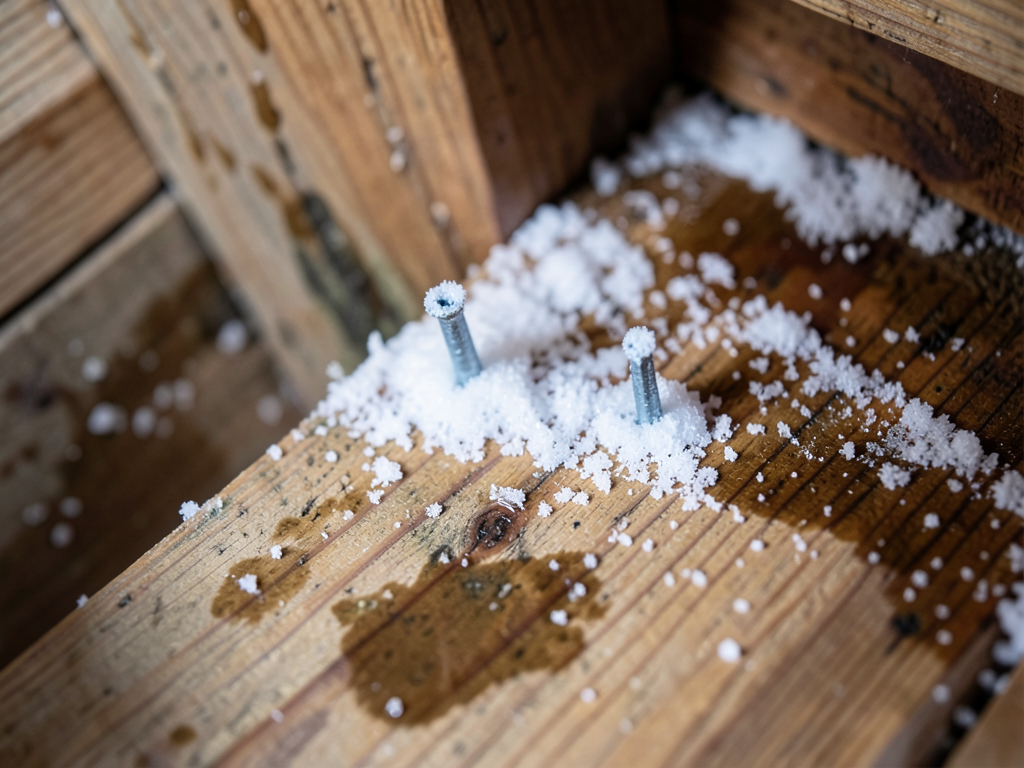
Image description: Close-up photo showing frost formation on roofing nails in a Detroit attic during winter, with visible water stains on surrounding wood.
Signs of Condensation vs. a Leaking Roof
Before you call a roofer, you need to determine whether you’re dealing with condensation or an actual roof leak. Here’s how to tell the difference:
Condensation signs:
- Stains appear after temperature swings, not necessarily after rain
- Wet insulation feels uniformly damp, not concentrated in one area
- You see frost on nails or roof sheathing during cold weather
- Stains are more common near vents, chimneys, or attic access points
- The problem worsens during humid winter months
Roof leak signs:
- Stains appear after heavy rain or snow melt
- Water damage is concentrated near roof penetrations or valleys
- You see active dripping during precipitation
- Stains have a consistent pattern following roof slopes
- The problem persists regardless of indoor humidity levels
A simple diagnostic test involves checking your attic during the next cold snap. If you see frost on nails, wet spots on the underside of the roof deck, or icicles forming in the attic, you’re dealing with condensation. If everything appears dry but stains appear after rain, you likely have a roof leak.
The Root Causes: Ventilation and Insulation
Attic condensation problems stem from two main issues: inadequate ventilation and poor insulation/air sealing. Let’s break down each component.
Ventilation Failures
Proper attic ventilation requires a balanced system of intake and exhaust. In Detroit homes, the most common setup includes soffit vents for intake and ridge vents or gable vents for exhaust. The system works on the principle that warm air rises and exits through the top while drawing in cool air from the bottom.
Problems occur when:
- Soffit vents are blocked by insulation (over 70% of Detroit attics we inspect have this issue)
- Ridge vents are covered by snow or ice dams
- The vent area doesn’t meet the minimum requirement of 1 square foot per 300 square feet of attic space
- Multiple types of vents create short-circuiting (e.g., mixing ridge and gable vents)
Detroit’s heavy snow loads can completely bury ridge vents for weeks, cutting off exhaust and trapping moisture in the attic. This is why some homes need supplemental ventilation through gable vents or powered attic fans.
Insulation and Air Sealing Issues
Even with perfect ventilation, warm, moist air will find its way into your attic if there are air leaks. Common culprits in Detroit homes include:
- Attic access hatches without weatherstripping
- Recessed light fixtures (especially older non-IC rated cans)
- Plumbing vent stacks that pass through the attic floor
- Wires and electrical penetrations
- Chimney chases without proper fire-stop sealing
The Michigan Residential Code requires R-49 to R-60 insulation in attics for Zone 5 (Detroit area). However, adding insulation without air sealing first is like putting a blanket over a hole—it won’t solve the moisture problem. Air sealing should always come before adding insulation. Michigan Residential Code requirements.
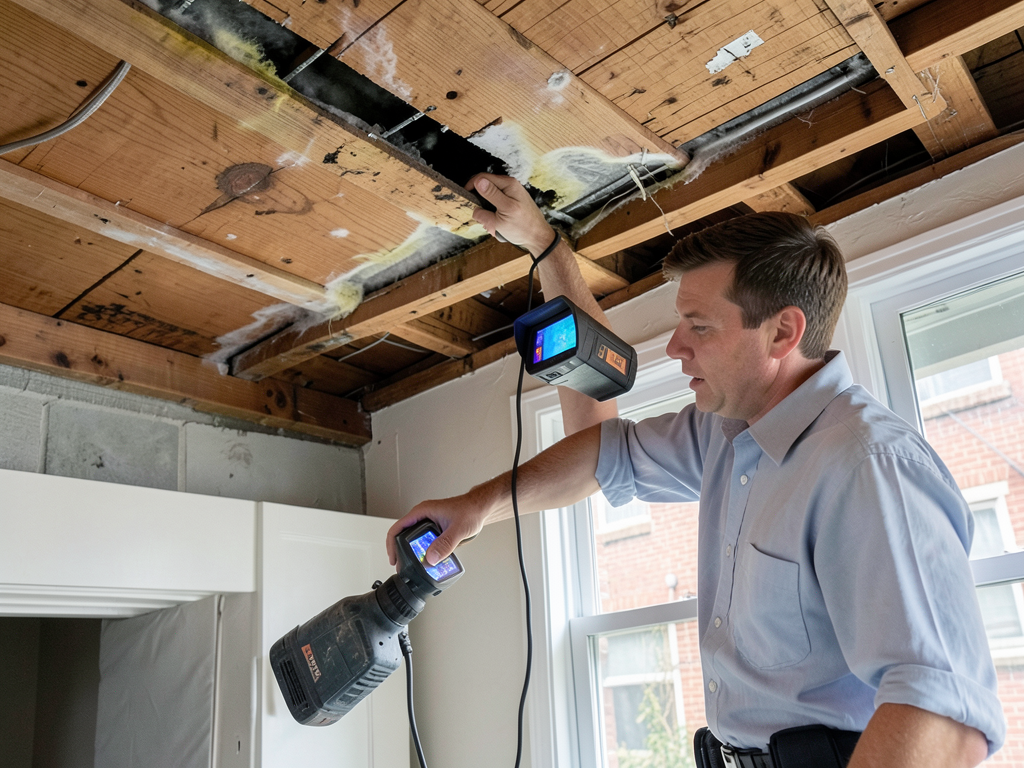
Image description: Technician using thermal imaging camera to detect air leaks around attic penetrations, showing heat loss patterns in a Detroit home.
Michigan Building Code Requirements
The Michigan Residential Code, based on the 2021 International Residential Code, sets specific requirements for attic ventilation and insulation that directly impact condensation prevention. For Zone 5 (which includes Detroit), the code mandates:
Insulation Requirements:
- R-49 minimum in attics (equivalent to about 16 inches of blown fiberglass or 13 inches of cellulose)
- R-20 minimum in wood-framed walls
- R-38 minimum in floors over unconditioned spaces
Ventilation Requirements:
- Net free vent area must equal 1/150 of the attic floor area
- If a vapor retarder is installed on the warm-in-winter side, this can be reduced to 1/300
- Vents must be distributed to provide intake at the eaves and exhaust at or near the ridge
The code also requires proper fire-blocking at the perimeter of the attic to prevent the spread of fire between stories. This blocking, typically 1/2-inch gypsum board or equivalent, also helps with air sealing when properly installed.
Detroit’s building inspectors pay particular attention to attic ventilation during roofing inspections because inadequate ventilation can void manufacturer warranties and lead to premature roof failure. Homes in historic districts like Boston-Edison must also comply with preservation guidelines when making ventilation upgrades. Getting Your Historic Roof Restored in Indian Village the Right Way.
Professional Solutions & Remediation
Solving attic condensation requires a systematic approach. Here’s how professionals diagnose and fix the problem:
Professional Diagnostic Process
A thorough attic inspection includes:
- Visual examination for frost, moisture stains, and mold growth
- Moisture meter readings to determine if the roof deck is wet
- Infrared scanning to identify thermal bypasses and air leaks
- Ventilation assessment to calculate net free vent area
- Insulation depth measurements and identification of blocking issues
Professional inspectors also check for proper bathroom exhaust fan termination. Many Detroit homes have fans that vent directly into the attic rather than through the roof, creating a major source of moisture.
Remediation Steps
The remediation process typically follows this sequence:
- Air Sealing: Using spray foam or caulk to seal all penetrations, gaps around chimneys, and the attic access hatch. This stops warm, moist air from entering the attic.
- Baffle Installation: Installing cardboard or plastic baffles along the eaves to maintain a clear path for air from soffit vents to the attic space. This prevents insulation from blocking ventilation.
- Ventilation Upgrades: Adding or repairing soffit vents, installing ridge vents, or adding gable vents to meet code requirements. In some cases, powered attic fans may be recommended.
- Insulation Installation: Blowing in additional insulation to meet R-49 to R-60 requirements, ensuring baffles prevent coverage of soffit vents.
- Exhaust Fan Correction: Rerouting bathroom and kitchen exhaust fans to vent through the roof rather than into the attic.
The entire process typically takes 1-2 days for an average Detroit home and costs between $2,500 and $5,000, depending on the extent of work needed. However, this investment prevents much costlier problems like mold remediation ($3,000-$6,000) or premature roof replacement ($8,000-$15,000).
Prevention Strategies for Detroit Homeowners
Once you’ve solved your condensation problem, you’ll want to prevent it from returning. Here are key prevention strategies:
Humidity Control: Keep indoor humidity between 30-40% during winter months. Use bathroom exhaust fans during showers and run them for 30 minutes afterward. Consider a whole-house dehumidifier if humidity remains high.
Regular Maintenance: Check your attic monthly during winter for signs of frost or moisture. Clear snow from ridge vents after heavy storms. Ensure soffit vents remain unblocked by new insulation settling.
Professional Inspections: Schedule annual attic inspections before winter to catch ventilation problems early. Many Detroit roofing companies offer free attic assessments with roof inspections.
Smart Upgrades: Consider installing smart humidity monitors that alert you when attic moisture levels rise above 70%. Some systems can even automatically activate attic fans when needed.
Detroit’s climate means attic condensation will always be a seasonal concern, but with proper prevention, you can avoid the ceiling stains, mold growth, and structural damage that come with unmanaged moisture.
Frequently Asked Questions
Can I fix attic condensation myself?
Minor issues like adding insulation or installing baffles can be DIY projects if you’re comfortable in attics. However, air sealing around chimneys requires fire-rated materials and proper techniques. For comprehensive solutions, professional assessment ensures all problems are addressed correctly.
How long does it take to fix attic condensation?
Professional remediation typically takes 1-2 days. Air sealing and baffle installation can be completed in one day, while adding insulation might require a second day. The attic needs 24-48 hours to dry out before insulation is added if moisture was present.
Will fixing attic condensation lower my energy bills?
Yes. Proper air sealing and insulation can reduce heating costs by 15-30%. You’ll stop losing heated air through attic bypasses, and your HVAC system won’t work as hard to maintain consistent temperatures. Most homeowners see ROI within 2-3 years through energy savings alone.
Is attic condensation covered by homeowners insurance?
Generally no. Condensation is considered a maintenance issue rather than sudden damage. However, if condensation leads to mold growth that causes structural damage, some policies may cover the resulting damage. Always check with your insurance provider about specific coverage.
Take Action Before the Next Freeze
Attic condensation isn’t just an aesthetic problem—it’s a warning sign of moisture damage that can compromise your home’s structure and your family’s health. The longer you wait, the more expensive the repairs become. Detroit’s next cold snap is coming, and with it, the perfect conditions for attic sweating. EPA guidelines on attic moisture in cold climates.
Don’t let another season of freeze-thaw cycles damage your home. Our certified attic specialists can diagnose your specific problem and provide a comprehensive solution that addresses both ventilation and insulation issues. We’ve helped hundreds of Detroit homeowners in neighborhoods from Midtown to Grosse Pointe stop ceiling stains and prevent costly mold remediation.
Call (313) 604-2233 today to schedule your attic inspection. Our team will assess your ventilation, check for air leaks, and provide a detailed plan to eliminate condensation for good. Don’t wait until you see water stains on your ceiling—prevent the problem before it starts.
Pick up the phone and call (313) 604-2233 before the next storm hits. Your attic—and your ceiling—will thank you.
Image description: Before and after comparison showing a Detroit attic with condensation problems (frost on nails, wet insulation) transformed after professional remediation (clean, dry, properly insulated).
{
“@context”: “https://schema.org”,
“@type”: “BlogPosting”,
“headline”: “Why Your Detroit Attic is Sweating (And How to Stop the Ceiling Stains)”,
“description”: “Detroit’s freeze-thaw cycles cause attic condensation that looks like roof leaks. Learn to diagnose frost on nails, wet insulation, and stop ceiling stains before mold grows.”,
“wordCount”: 1902,
“datePublished”: “2026-05-15T12:55:00.000Z”,
“dateModified”: “2026-05-15T12:55:00.000Z”,
“inLanguage”: “en-US”,
“mainEntityOfPage”: {
“@type”: “WebPage”,
“@id”: “https://peakroofingdetroit.com”
},
“publisher”: {
“@type”: “LocalBusiness”,
“name”: “Peak Roofing Detroit”,
“url”: “https://peakroofingdetroit.com”
},
“author”: {
“@type”: “Organization”,
“name”: “Peak Roofing Detroit”,
“url”: “https://peakroofingdetroit.com”
},
“image”: {
“@type”: “ImageObject”,
“url”: “https://peakroofingdetroit.com/wp-content/uploads/2026/03/why-your-detroit-attic-is-sweating-and-how-to-stop-1.png”
}
}
{
“@context”: “https://schema.org”,
“@type”: “RoofingContractor”,
“name”: “Peak Roofing Detroit”,
“url”: “https://peakroofingdetroit.com”,
“address”: {
“@type”: “PostalAddress”,
“addressLocality”: “Detroit”
},
“areaServed”: {
“@type”: “City”,
“name”: “Detroit”
}
}
{
“@context”: “https://schema.org”,
“@type”: “FAQPage”,
“mainEntity”: [
{
“@type”: “Question”,
“name”: “Can I fix attic condensation myself?”,
“acceptedAnswer”: {
“@type”: “Answer”,
“text”: “Minor issues like adding insulation or installing baffles can be DIY projects if you’re comfortable in attics. However, air sealing around chimneys requires fire-rated materials and proper techniques. For comprehensive solutions, professional assessment ensures all problems are addressed correctly.”
}
},
{
“@type”: “Question”,
“name”: “How long does it take to fix attic condensation?”,
“acceptedAnswer”: {
“@type”: “Answer”,
“text”: “Professional remediation typically takes 1-2 days. Air sealing and baffle installation can be completed in one day, while adding insulation might require a second day. The attic needs 24-48 hours to dry out before insulation is added if moisture was present.”
}
},
{
“@type”: “Question”,
“name”: “Will fixing attic condensation lower my energy bills?”,
“acceptedAnswer”: {
“@type”: “Answer”,
“text”: “Yes. Proper air sealing and insulation can reduce heating costs by 15-30%. You’ll stop losing heated air through attic bypasses, and your HVAC system won’t work as hard to maintain consistent temperatures. Most homeowners see ROI within 2-3 years through energy savings alone.”
}
},
{
“@type”: “Question”,
“name”: “Is attic condensation covered by homeowners insurance?”,
“acceptedAnswer”: {
“@type”: “Answer”,
“text”: “Generally no. Condensation is considered a maintenance issue rather than sudden damage. However, if condensation leads to mold growth that causes structural damage, some policies may cover the resulting damage. Always check with your insurance provider about specific coverage.”
}
}
]
}
{
“@context”: “https://schema.org”,
“@type”: “BreadcrumbList”,
“itemListElement”: [
{
“@type”: “ListItem”,
“position”: 1,
“name”: “Home”,
“item”: “https://peakroofingdetroit.com”
},
{
“@type”: “ListItem”,
“position”: 2,
“name”: “Blog”,
“item”: “https://peakroofingdetroit.com/blog”
},
{
“@type”: “ListItem”,
“position”: 3,
“name”: “Why Your Detroit Attic is Sweating (And How to Stop the Ceiling Stains)”
}
]
}
{
“@context”: “https://schema.org”,
“@type”: “Service”,
“serviceType”: “Roofing”,
“provider”: {
“@type”: “LocalBusiness”,
“name”: “Peak Roofing Detroit”,
“url”: “https://peakroofingdetroit.com”
},
“areaServed”: {
“@type”: “City”,
“name”: “Detroit”
},
“description”: “Detroit’s freeze-thaw cycles cause attic condensation that looks like roof leaks. Learn to diagnose frost on nails, wet insulation, and stop ceiling stains before mold grows.”
}