
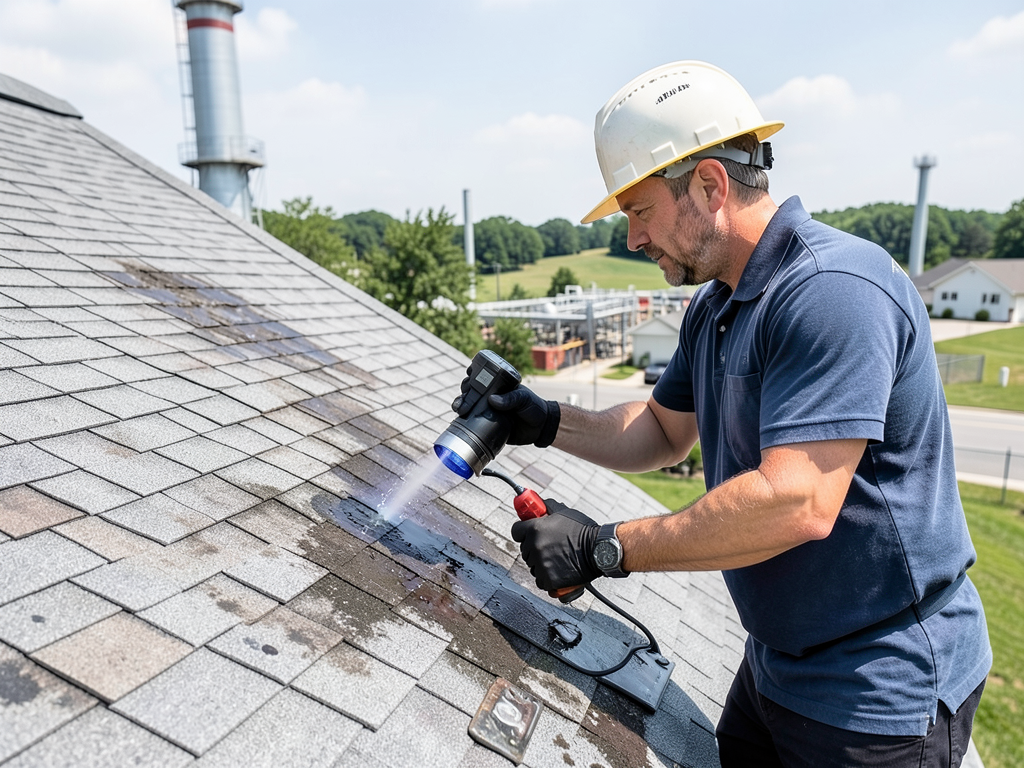
Understanding the Impact of the Marathon Refinery on Melvindale Roofs
The Marathon Petroleum Refinery in southwest Detroit creates a unique environmental challenge for Melvindale homeowners. Industrial emissions from the refinery release microscopic metallic particles and chemical compounds that settle on rooftops throughout the Downriver area. These particles embed themselves in asphalt shingles where they trigger chemical reactions that accelerate deterioration far beyond normal weathering patterns. What Royal Oak Homeowners Should Know Before Choosing a Roofing Contractor.
Homeowners in Melvindale notice orange-brown staining on their roofs that does not wash away with rain. This staining represents iron oxide particles from refinery emissions bonding with the asphalt composition of modern shingles. The chemical reaction creates a rust-like appearance that spreads across affected surfaces within months of initial exposure. Why Flat Roofs in Corktown Require Specialized Drainage Solutions.
The refinery’s proximity to residential neighborhoods means Melvindale roofs experience accelerated granule loss compared to homes in cleaner areas. Shingles that should last 20-25 years may show significant wear after only 10-12 years when exposed to concentrated industrial fallout. This shortened lifespan creates unexpected replacement costs for local families already managing tight household budgets.
Melvindale’s geographic position directly downwind of the Marathon facility during prevailing southwest winds means certain neighborhoods face higher exposure levels. Homes near Oakwood Boulevard and west of Interstate 75 typically show more severe staining patterns than properties in the northeastern sections of the city. The industrial corridor along the Rouge River creates a pollution pathway that affects roof integrity across multiple Downriver communities.
Understanding these impacts helps homeowners make informed decisions about roof maintenance and replacement timing. The chemical composition of refinery emissions interacts differently with various roofing materials, making some options more resistant to industrial fallout than others. Metal Roofing for Ferndale Homes (Is it Actually Worth the Investment?).
Industrial Fallout: What Melvindale Homeowners Need to Know
Industrial fallout consists of microscopic particles released during petroleum refining processes. These particles include iron oxides, sulfur compounds, and various hydrocarbons that become airborne during normal refinery operations. When these particles settle on rooftops, they create conditions for accelerated material degradation.
The science behind fallout damage involves electrochemical reactions between metallic particles and the petroleum-based materials in asphalt shingles. Iron oxide particles embed in the shingle surface where moisture triggers oxidation. This process creates expanding rust-like compounds that physically separate the protective granules from the underlying asphalt mat. EPA Air Quality Information.
Melvindale residents often observe a gritty texture developing on their roof surfaces within months of installation. This texture results from metallic particles becoming lodged in the shingle material. Walking on affected roofs produces a crunching sound as particles break free from their embedded positions.
Temperature fluctuations common to Michigan’s climate accelerate fallout damage in Melvindale. The freeze-thaw cycles cause embedded particles to expand and contract at different rates than the surrounding materials. This differential movement creates micro-fractures in the shingle surface that allow moisture infiltration. Michigan Department of Environment, Great Lakes, and Energy.
Moisture retention represents another critical factor in fallout damage progression. Metallic particles create small depressions in the shingle surface where water collects rather than running off. These water pockets remain in contact with the roofing material longer than normal, promoting algae growth and material breakdown. Spray Foam Roofing.
The Michigan Department of Environment, Great Lakes, and Energy monitors air quality in the Downriver area, but residential roofing receives limited protection under current regulations. Homeowners bear the responsibility of identifying and addressing fallout damage before it compromises their roof’s structural integrity.
Identifying Refinery Fallout Damage on Your Melvindale Roof
Recognizing fallout damage requires understanding the visual and physical indicators that distinguish it from normal weathering. Refinery fallout creates specific patterns that trained professionals can identify during routine inspections.
Orange-brown staining represents the most obvious sign of fallout exposure. These stains appear as irregular patches across the roof surface, often concentrated on the windward side of the structure. The coloration results from iron oxide particles oxidizing within the shingle material.
Granule loss accelerates dramatically on roofs exposed to industrial fallout. Homeowners notice bare spots appearing on shingles where protective granules have detached. These areas feel smoother to the touch than unaffected sections and often show the black asphalt base material underneath.
Texture changes indicate fallout particle accumulation. Affected shingles develop a sandpaper-like feel when touched. This rough texture results from metallic particles becoming embedded in the shingle surface during deposition from refinery emissions.
Algae growth patterns differ on fallout-affected roofs. The metallic particles create micro-environments where certain algae species thrive. Homeowners observe darker green or black streaks forming in patterns that follow prevailing wind directions from the refinery.
Shingle curling and buckling occur more frequently on fallout-damaged roofs. The chemical reactions between metallic particles and asphalt materials cause localized expansion that warps individual shingles. This warping creates channels where water can penetrate beneath the roofing layers.
Early detection through regular roof inspections helps Melvindale homeowners address fallout damage before it requires complete replacement. Professional inspections using moisture meters and infrared scanning can identify problem areas that are not visible from ground level.
Melvindale Neighborhoods Most Affected by Refinery Emissions
Geographic proximity to the Marathon Refinery creates varying exposure levels across Melvindale’s neighborhoods. Understanding these exposure patterns helps homeowners anticipate potential roof damage and plan appropriate maintenance schedules.
West Melvindale experiences the highest fallout exposure levels. Neighborhoods near Oakwood Boulevard and west of Oakwood Boulevard show the most severe staining patterns. These areas lie directly in the path of prevailing southwest winds that carry refinery emissions across residential zones.
The area south of Allen Road demonstrates moderate to high fallout impact. Homes in this zone experience periodic exposure depending on wind conditions and atmospheric stability. Staining patterns here show more variation than in the western sections of the city.
Eastern Melvindale near the Detroit border shows lower but still measurable fallout effects. While distance provides some protection, emissions can travel several miles under certain atmospheric conditions. These neighborhoods typically show lighter staining but may still experience accelerated granule loss.
Proximity to major roadways affects exposure levels. Homes near Interstate 75 experience additional particulate deposition from vehicle traffic combined with refinery emissions. This dual exposure creates more complex damage patterns that require specialized assessment techniques.
Topography influences fallout distribution across Melvindale. Lower-lying areas near the Rouge River valley can experience higher concentrations of settled particles due to limited air circulation. These pockets of concentrated fallout create hot spots of accelerated roof damage.
Understanding your neighborhood’s exposure level helps determine appropriate roof maintenance schedules. Homes in high-exposure areas may require professional cleaning every 2-3 years rather than the standard 5-year intervals recommended for unaffected roofs.
Protecting Your Roof from Marathon Refinery Fallout
Proactive protection strategies can minimize the impact of industrial fallout on Melvindale roofs. These approaches range from regular maintenance to specialized coating applications designed to resist chemical deposition.
Professional roof cleaning removes accumulated fallout particles before they cause permanent damage. This process uses low-pressure washing techniques combined with specialized cleaning solutions that dissolve metallic deposits without damaging shingle materials. Cleaning should occur every 2-3 years for homes in high-exposure areas.
Protective coatings create barriers between roofing materials and airborne pollutants. Silicone-based coatings resist particulate adhesion and provide UV protection that extends shingle lifespan. These coatings require professional application and typically last 5-7 years before needing reapplication.
Zinc or copper strips installed along roof ridges release metal ions that inhibit algae growth. While these strips do not prevent fallout deposition, they reduce biological growth that often accompanies industrial particle accumulation. This biological control helps maintain roof appearance between professional cleanings.
Strategic landscaping can reduce fallout exposure for certain sections of a roof. Dense evergreen trees planted on the windward side of a home can filter some airborne particles before they reach roof surfaces. This approach works best for protecting less visible roof sections while maintaining architectural aesthetics.
Material selection during roof replacement affects long-term fallout resistance. Some manufacturers produce shingles with enhanced granule adhesion and chemical resistance specifically for industrial areas. These premium materials cost more initially but provide better protection against fallout damage.
Regular gutter maintenance prevents fallout particles from accumulating in drainage systems where they can cause corrosion. Clean gutters ensure proper water flow and prevent backup that could force contaminated water under roofing materials during heavy rainfall.
Monitoring local air quality reports helps homeowners anticipate periods of elevated fallout risk. The EPA’s AirNow website provides real-time data for the Detroit area, allowing proactive measures during high-risk conditions.
Insurance Considerations for Refinery-Related Roof Damage
Navigating insurance coverage for refinery fallout damage requires understanding policy limitations and documentation requirements. Most standard homeowners insurance policies exclude damage from pollution or industrial emissions.
Act of God clauses in insurance policies typically cover damage from natural events like wind, hail, and lightning. Industrial fallout generally falls outside these provisions since it results from human activity rather than natural phenomena. This distinction often leaves homeowners responsible for fallout-related repairs.
Documenting damage progression strengthens insurance claims for refinery-related issues. Homeowners should photograph roof conditions annually, noting any new staining or material degradation. This documentation establishes a timeline that demonstrates progressive damage rather than sudden failure.
Professional inspection reports carry significant weight with insurance adjusters. Certified roofing inspectors can differentiate between normal weathering and fallout-related damage, providing the technical evidence needed to support coverage claims. These reports should detail the specific chemical and physical indicators of industrial exposure.
Some insurance companies offer specialized endorsements for homes in industrial areas. These riders provide coverage for pollution-related damage at additional premium costs. Melvindale homeowners should discuss these options with their insurance agents to determine cost-effectiveness based on their specific exposure levels.
Legal action against industrial facilities remains rare but possible in extreme cases. Michigan environmental laws require refineries to control emissions within specified limits. When facilities exceed these limits and cause documented property damage, affected homeowners may have grounds for compensation claims.
Preventive maintenance often satisfies insurance requirements for maintaining coverage eligibility. Regular professional inspections and documented cleaning schedules demonstrate responsible property ownership that insurers view favorably during claim evaluations.
Understanding policy exclusions prevents surprises when filing claims. Many homeowners discover too late that their standard policies do not cover industrial fallout damage. Reviewing coverage details with an insurance professional helps identify potential gaps before problems arise.
Professional Roof Inspection and Assessment Services
Professional roof inspections provide the detailed analysis needed to assess fallout damage accurately. These assessments go beyond visual examination to include diagnostic testing that identifies hidden problems before they cause structural failures.
Moisture scanning technology detects water infiltration that may result from fallout-damaged areas. Infrared cameras identify temperature variations that indicate moisture presence beneath shingle surfaces. This technology reveals problems that visual inspection cannot detect, allowing for targeted repairs rather than complete replacement.
Core sampling provides physical evidence of material degradation. Roofing professionals extract small sections of roofing material to examine the depth of fallout penetration and assess the remaining structural integrity. This analysis determines whether cleaning can restore functionality or replacement becomes necessary.
Chemical analysis of collected particles identifies the specific pollutants affecting your roof. Laboratory testing can determine whether emissions match the chemical signature of nearby industrial sources. This evidence proves valuable when dealing with insurance companies or regulatory agencies.
Wind pattern analysis helps predict future exposure levels based on your home’s orientation and surrounding structures. Professionals use this information to recommend targeted protection strategies for the most vulnerable roof sections. This analysis considers seasonal wind pattern changes throughout the year.
Material compatibility testing ensures that cleaning solutions and protective coatings will not damage your specific roofing materials. Different shingle manufacturers use varying compositions that may react differently to cleaning chemicals. Professional testing prevents accidental damage during maintenance procedures.
Documentation provided during professional inspections creates a baseline for future comparisons. Detailed reports with photographs and test results establish the current condition of your roof, making it easier to identify new damage as it develops over time.
Professional assessments typically include recommendations for immediate repairs and long-term maintenance strategies. These customized plans consider your home’s specific exposure levels, roofing materials, and budget constraints to provide practical solutions for extending roof lifespan.
Melvindale’s Industrial Legacy and Future Roofing Challenges
Melvindale’s relationship with industrial activity dates back over a century, creating a complex environmental landscape that continues to affect residential properties. Understanding this historical context helps homeowners appreciate the long-term nature of industrial fallout challenges. Getting Your Historic Roof Restored in Indian Village the Right Way.
The Marathon Refinery’s presence since the early 1900s established Melvindale as part of the larger industrial corridor along the Rouge River. This historical development pattern placed residential neighborhoods in close proximity to major industrial facilities, creating the exposure patterns we see today.
Environmental regulations have evolved significantly since the refinery’s establishment. Modern emission controls reduce but do not eliminate particulate release. The legacy of earlier industrial practices continues to affect air quality and deposition patterns in the Downriver area.
Climate change introduces new variables into the fallout equation. Increasing temperature extremes and changing precipitation patterns affect how industrial particles interact with roofing materials. More frequent freeze-thaw cycles may accelerate the damage caused by embedded metallic particles.
Urban development within Melvindale affects local air circulation patterns. New construction and changing land use can alter wind patterns that distribute industrial emissions, potentially shifting exposure zones over time. Homeowners should monitor these changes as they affect their specific properties.
Technological advancements in roofing materials offer improved resistance to industrial fallout. Newer shingle compositions and protective coatings provide better chemical resistance than traditional materials. These innovations may reduce long-term maintenance costs despite higher initial investments.
Community advocacy for stricter emission controls continues to shape the industrial landscape. Melvindale residents participate in environmental monitoring programs and work with regulatory agencies to ensure compliance with air quality standards. These efforts may gradually reduce the severity of fallout impacts.
Economic factors influence roofing decisions for many Melvindale homeowners. The cost of specialized materials and frequent maintenance creates financial challenges for families already managing tight budgets. Understanding available financing options and warranty programs helps make protection strategies more accessible.
Future industrial development in the Downriver area may introduce new emission sources. Proposed projects and facility expansions could alter existing fallout patterns, requiring homeowners to adapt their protection strategies accordingly.
Melvindale’s industrial heritage creates both challenges and opportunities for roofing professionals. The experience gained from working in this unique environment develops specialized expertise that benefits local homeowners facing fallout-related issues.
Taking Action to Protect Your Melvindale Home
Addressing refinery fallout damage requires a systematic approach that combines immediate action with long-term planning. Homeowners who take proactive steps can significantly extend their roof’s functional lifespan despite industrial exposure.
Scheduling a professional inspection represents the critical first step in addressing fallout damage. Certified roofing inspectors can identify problem areas and recommend appropriate solutions based on your specific situation. Early intervention prevents minor issues from developing into major structural problems.
Documenting current roof conditions provides valuable baseline information for future comparisons. Take clear photographs of all roof surfaces, noting any existing staining or material degradation. This documentation helps track damage progression and supports insurance claims if needed.
Researching roofing material options prepares you for eventual replacement decisions. Some manufacturers offer products specifically designed for industrial areas, featuring enhanced chemical resistance and granule adhesion. Understanding these options helps you make informed choices when replacement becomes necessary.
Establishing a maintenance schedule prevents minor fallout accumulation from causing permanent damage. Regular cleaning and inspection every 2-3 years for high-exposure homes can extend roof lifespan by 5-8 years compared to reactive maintenance approaches.
Connecting with neighbors creates community awareness about industrial fallout issues. Shared experiences and information about effective solutions benefit everyone in affected neighborhoods. Community advocacy can also influence local environmental policies and enforcement actions.
Understanding your insurance coverage prevents financial surprises when damage occurs. Review your policy details with an insurance professional to identify coverage gaps and explore available endorsements for industrial area homes.
Professional consultation helps navigate the complex decisions involved in protecting your roof. Roofing experts familiar with Melvindale’s specific challenges can recommend solutions that balance effectiveness with your budget constraints.
Taking action now prevents more expensive problems later. The cost of preventive maintenance typically represents a fraction of replacement expenses, making it a wise investment for protecting your home’s value and your family’s comfort.
Call (313) 604-2233 today to schedule your professional roof inspection. Our Melvindale roofing specialists understand the unique challenges posed by refinery fallout and can recommend solutions tailored to your specific situation. Don’t wait until minor staining becomes major structural damage.
Frequently Asked Questions
How can I tell if my Melvindale roof has refinery fallout damage?
Look for orange-brown staining that does not wash away with rain, accelerated granule loss creating bare spots on shingles, and a gritty texture when touching the roof surface. These signs indicate metallic particle accumulation from industrial emissions.
Does homeowners insurance cover refinery fallout damage in Melvindale?
Most standard policies exclude pollution-related damage from industrial emissions. However, some insurers offer specialized endorsements for homes in industrial areas. Professional documentation of damage progression strengthens any coverage claims you pursue.
How often should I have my Melvindale roof inspected for fallout damage?
Homes in high-exposure areas near the Marathon Refinery should receive professional inspections every 1-2 years. These inspections should include moisture scanning and chemical analysis to identify problems before they cause structural damage.
Can I clean refinery fallout from my roof myself?
DIY cleaning risks damaging shingles through improper pressure washing or chemical use. Professional cleaning uses specialized techniques that remove particles without harming roofing materials. Incorrect cleaning can void manufacturer warranties and create new problems.
What roofing materials resist refinery fallout best?
Premium shingles with enhanced granule adhesion and chemical-resistant asphalt compositions perform better in industrial areas. Some manufacturers offer products specifically designed for high-pollution environments, though they cost more initially than standard materials.
How much does professional fallout damage assessment cost?
Professional inspections typically range from $150-$400 depending on roof size and inspection complexity. This cost often pays for itself by identifying problems early when repairs cost less than emergency replacements.
Will fallout damage void my roof warranty?
Most manufacturer warranties exclude damage from pollution or industrial emissions. However, proper maintenance and documentation can support claims for manufacturing defects unrelated to environmental factors.
How long does protective coating last on fallout-exposed roofs?
Silicone-based protective coatings typically last 5-7 years in industrial areas before requiring reapplication. These coatings provide UV protection and resist particulate adhesion, extending the functional lifespan of underlying roofing materials.
{
“@context”: “https://schema.org”,
“@type”: “BlogPosting”,
“headline”: “Understanding the Impact of the Marathon Refinery on Melvindale Roofs”,
“description”: “Melvindale roofs near the Marathon Refinery face unique industrial fallout challenges. Learn how chemical emissions affect shingle lifespan and what homeowners can do.”,
“wordCount”: 3086,
“datePublished”: “2026-05-21T13:03:00.000Z”,
“dateModified”: “2026-05-21T13:03:00.000Z”,
“inLanguage”: “en-US”,
“mainEntityOfPage”: {
“@type”: “WebPage”,
“@id”: “https://peakroofingdetroit.com”
},
“publisher”: {
“@type”: “LocalBusiness”,
“name”: “Peak Roofing Detroit”,
“url”: “https://peakroofingdetroit.com”
},
“author”: {
“@type”: “Organization”,
“name”: “Peak Roofing Detroit”,
“url”: “https://peakroofingdetroit.com”
},
“image”: {
“@type”: “ImageObject”,
“url”: “https://peakroofingdetroit.com/wp-content/uploads/2026/03/understanding-the-impact-of-the-marathon-refinery-1.png”
}
}
{
“@context”: “https://schema.org”,
“@type”: “RoofingContractor”,
“name”: “Peak Roofing Detroit”,
“url”: “https://peakroofingdetroit.com”,
“address”: {
“@type”: “PostalAddress”,
“addressLocality”: “Detroit”
},
“areaServed”: {
“@type”: “City”,
“name”: “Detroit”
}
}
{
“@context”: “https://schema.org”,
“@type”: “FAQPage”,
“mainEntity”: [
{
“@type”: “Question”,
“name”: “How can I tell if my Melvindale roof has refinery fallout damage?”,
“acceptedAnswer”: {
“@type”: “Answer”,
“text”: “Look for orange-brown staining that does not wash away with rain, accelerated granule loss creating bare spots on shingles, and a gritty texture when touching the roof surface. These signs indicate metallic particle accumulation from industrial emissions.”
}
},
{
“@type”: “Question”,
“name”: “Does homeowners insurance cover refinery fallout damage in Melvindale?”,
“acceptedAnswer”: {
“@type”: “Answer”,
“text”: “Most standard policies exclude pollution-related damage from industrial emissions. However, some insurers offer specialized endorsements for homes in industrial areas. Professional documentation of damage progression strengthens any coverage claims you pursue.”
}
},
{
“@type”: “Question”,
“name”: “How often should I have my Melvindale roof inspected for fallout damage?”,
“acceptedAnswer”: {
“@type”: “Answer”,
“text”: “Homes in high-exposure areas near the Marathon Refinery should receive professional inspections every 1-2 years. These inspections should include moisture scanning and chemical analysis to identify problems before they cause structural damage.”
}
},
{
“@type”: “Question”,
“name”: “Can I clean refinery fallout from my roof myself?”,
“acceptedAnswer”: {
“@type”: “Answer”,
“text”: “DIY cleaning risks damaging shingles through improper pressure washing or chemical use. Professional cleaning uses specialized techniques that remove particles without harming roofing materials. Incorrect cleaning can void manufacturer warranties and create new problems.”
}
},
{
“@type”: “Question”,
“name”: “What roofing materials resist refinery fallout best?”,
“acceptedAnswer”: {
“@type”: “Answer”,
“text”: “Premium shingles with enhanced granule adhesion and chemical-resistant asphalt compositions perform better in industrial areas. Some manufacturers offer products specifically designed for high-pollution environments, though they cost more initially than standard materials.”
}
},
{
“@type”: “Question”,
“name”: “How much does professional fallout damage assessment cost?”,
“acceptedAnswer”: {
“@type”: “Answer”,
“text”: “Professional inspections typically range from $150-$400 depending on roof size and inspection complexity. This cost often pays for itself by identifying problems early when repairs cost less than emergency replacements.”
}
},
{
“@type”: “Question”,
“name”: “Will fallout damage void my roof warranty?”,
“acceptedAnswer”: {
“@type”: “Answer”,
“text”: “Most manufacturer warranties exclude damage from pollution or industrial emissions. However, proper maintenance and documentation can support claims for manufacturing defects unrelated to environmental factors.”
}
},
{
“@type”: “Question”,
“name”: “How long does protective coating last on fallout-exposed roofs?”,
“acceptedAnswer”: {
“@type”: “Answer”,
“text”: “Silicone-based protective coatings typically last 5-7 years in industrial areas before requiring reapplication. These coatings provide UV protection and resist particulate adhesion, extending the functional lifespan of underlying roofing materials.”
}
}
]
}
{
“@context”: “https://schema.org”,
“@type”: “BreadcrumbList”,
“itemListElement”: [
{
“@type”: “ListItem”,
“position”: 1,
“name”: “Home”,
“item”: “https://peakroofingdetroit.com”
},
{
“@type”: “ListItem”,
“position”: 2,
“name”: “Blog”,
“item”: “https://peakroofingdetroit.com/blog”
},
{
“@type”: “ListItem”,
“position”: 3,
“name”: “Understanding the Impact of the Marathon Refinery on Melvindale Roofs”
}
]
}
{
“@context”: “https://schema.org”,
“@type”: “Service”,
“serviceType”: “Roofing”,
“provider”: {
“@type”: “LocalBusiness”,
“name”: “Peak Roofing Detroit”,
“url”: “https://peakroofingdetroit.com”
},
“areaServed”: {
“@type”: “City”,
“name”: “Detroit”
},
“description”: “Melvindale roofs near the Marathon Refinery face unique industrial fallout challenges. Learn how chemical emissions affect shingle lifespan and what homeowners can do.”
}