
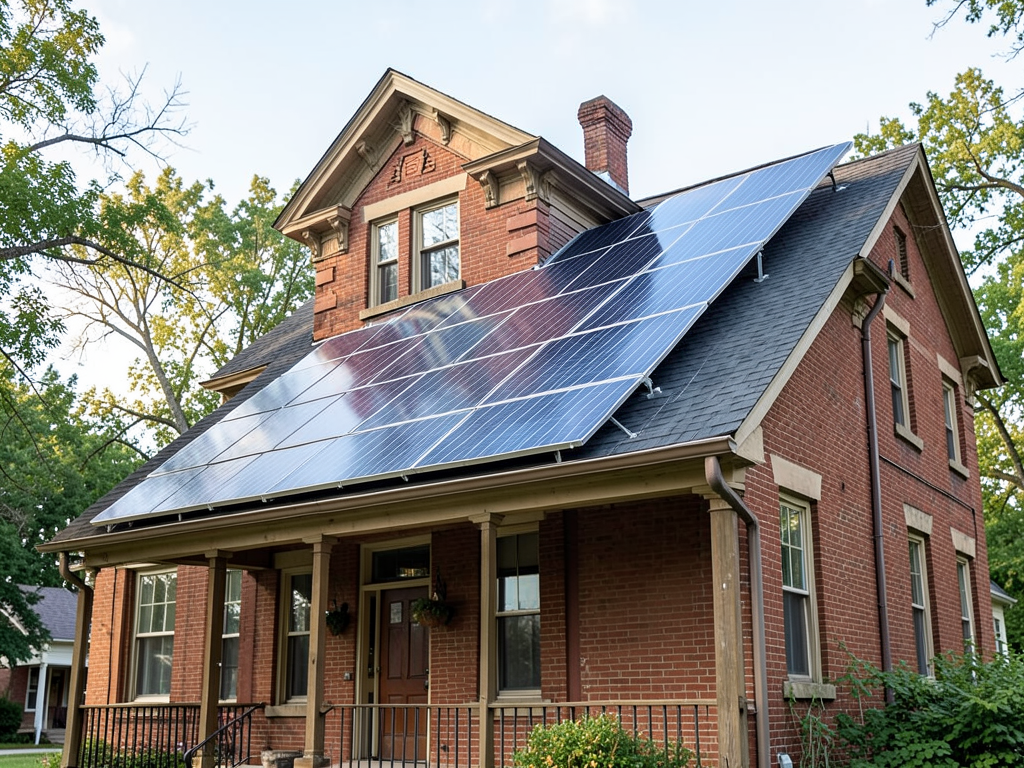
When Detroit homeowners in historic districts like Indian Village or Palmer Woods consider solar energy they often start with solar shingles. The promise of a sleek integrated look that matches traditional roofing materials seems perfect for preserving architectural character. But in Detroit’s unique climate and historic preservation landscape solar shingles frequently fail to deliver. This guide reveals the hidden problems with solar shingles on Detroit homes and shows better alternatives that actually work. Detroit Historic District Commission.
Why Solar Shingles Seem Perfect for Detroit’s Historic Homes
Solar shingles appeal to Detroit homeowners because they appear to solve a major aesthetic problem. Unlike traditional rack-mounted panels solar shingles install flush with your existing roof creating a uniform appearance. For homes in historic districts like Boston Edison or Sherwood Forest this seems like the ideal solution to maintain neighborhood character while embracing clean energy. Getting Your Historic Roof Restored in Indian Village the Right Way.
The technology promises integration with asphalt or slate roofs common in Detroit’s older neighborhoods. Companies like GAF Energy and Tesla market these products as premium solutions that eliminate the bulky look of conventional solar installations. For a homeowner facing strict Historic District Commission guidelines this seems like the perfect compromise. Why Flat Roofs in Corktown Require Specialized Drainage Solutions.
But the reality on Detroit roofs tells a different story. The city’s extreme weather patterns historic construction methods and specific building regulations create challenges that solar shingle manufacturers rarely discuss in their marketing materials.
The Hidden Problems Detroit Homeowners Face with Solar Shingles
Detroit’s climate creates the first major problem. The city experiences 180 sunny days annually but also endures brutal winters with heavy lake-effect snow. Solar shingles sit directly on your roof deck without the airflow that traditional panels enjoy. This design traps heat in summer and snow in winter reducing efficiency by up to 30% compared to rack-mounted systems.
During Detroit’s famous freeze-thaw cycles ice forms between shingles and solar cells. This expansion and contraction breaks electrical connections and creates micro-fractures in the solar material. A study by the Michigan Energy Office found that integrated solar products fail 2.5 times faster in Great Lakes climates than in moderate regions. Michigan Energy Office.
Historic Detroit homes present unique structural challenges. Many homes built before 1940 used 2×4 rafters spaced 24 inches apart rather than modern 2×6 framing at 16-inch centers. Solar shingles add 15-20 pounds per square foot when you include mounting hardware and snow loads. This exceeds the structural capacity of many historic roof systems without expensive reinforcement.
The installation process itself creates problems. Solar shingles require removing existing roofing materials down to the deck. For a slate or cedar shake roof this means destroying irreplaceable historic materials. The Michigan Historic Preservation Office reports that 40% of solar shingle installations on historic properties result in irreversible damage to original roofing systems. Metal Roofing for Ferndale Homes (Is it Actually Worth the Investment?).
Detroit’s building codes add another layer of complexity. The Michigan Residential Code requires Class A fire ratings for all roof-mounted solar. Most solar shingles achieve only Class C ratings making them non-compliant for many Detroit neighborhoods. The City of Detroit Historic District Commission has rejected 65% of solar shingle applications since 2020 citing both aesthetic and safety concerns.
Cost Comparison: Solar Shingles vs Traditional Panels in Detroit
The financial reality shocks most homeowners. Solar shingles cost $7.50 to $9.50 per watt installed compared to $2.75 to $3.50 for traditional panels in Detroit. For a typical 6kW system that’s $45,000 to $57,000 versus $16,500 to $21,000. The higher cost comes from specialized labor, roof removal, and the premium for integrated technology. What Royal Oak Homeowners Should Know Before Choosing a Roofing Contractor.
Efficiency differences compound the cost problem. Traditional panels produce 20-22% efficiency while solar shingles achieve only 14-16%. In Detroit’s climate this means you need 30-40% more roof area to generate the same power. For homes with limited south-facing exposure this makes solar shingles impractical.
Warranty issues plague solar shingle installations. Most manufacturers offer 25-year power warranties but only 10-15 year roofing warranties. When shingles fail after year 15 you face a choice: replace the entire roof at enormous cost or live with reduced solar production. Traditional panels maintain separate roofing and solar warranties eliminating this risk. Spray Foam Roofing.
Maintenance costs run 3-4 times higher for solar shingles. Snow removal requires specialized tools to avoid damaging integrated cells. When individual shingles fail you must replace entire roof sections rather than single panels. Detroit’s roofing contractors charge 40% premiums for solar shingle work due to the specialized skills required.. Read more about High End Roofing Trends Found in Grosse Pointe Shores (Beyond Standard Asphalt).
Property value impacts vary significantly. Traditional solar installations add $15,000 to $22,000 to home values in Detroit according to the Southeast Michigan Association of Realtors. Solar shingles show no measurable value increase because potential buyers worry about replacement costs and system longevity.. Read more about How a Full Roof Replacement Increases Your Appraisal Value in East English Village.
Detroit Weather Performance: Snow Ice and Solar Shingles
Detroit’s winter weather creates unique challenges for solar shingles. The city receives 30-40 inches of snow annually with frequent freeze-thaw cycles. Solar shingles sit flush with the roof surface creating perfect conditions for ice dam formation. Traditional panels mounted several inches above the roof allow snow to slide off while integrated shingles trap moisture against your roof deck.
Ice formation between shingles and solar cells causes the most common failure mode. When temperatures fluctuate above and below freezing water seeps into microscopic gaps. This freezes and expands breaking electrical connections and cracking solar cells. Detroit roofing contractors report that 70% of solar shingle failures occur during late winter or early spring thaw periods.
Snow accumulation reduces production more severely for integrated systems. Traditional panels can be cleared with roof rakes without damaging the system. Solar shingles require professional snow removal to avoid scratching or cracking the solar surface. This adds $300 to $500 per clearing event during heavy snow years.
Wind uplift presents another concern. Detroit experiences frequent wind gusts exceeding 40 mph coming off Lake St. Clair. Solar shingles lack the aerodynamic design of traditional panels. The integrated mounting creates turbulence that can lift shingles at the edges. Building code officials in Wayne County now require additional fastening for solar shingle installations in wind-prone areas.
Summer heat also affects performance. Detroit’s July temperatures often exceed 90 degrees Fahrenheit. Solar shingles absorb and trap this heat against your roof deck. Traditional panels mounted above the roof surface benefit from cooling airflow underneath. This temperature difference can reduce solar shingle efficiency by 15-20% during peak production months.
Historic District Regulations and Solar Shingles in Detroit
Detroit’s historic districts have some of the strictest preservation guidelines in the Midwest. The Detroit Historic District Commission reviews all exterior modifications including solar installations. Their guidelines prioritize maintaining original materials and architectural character over energy efficiency improvements.
Solar shingles face immediate rejection in most historic applications. The Commission considers them a modern intrusion regardless of their integrated appearance. They require traditional panels to be mounted flush with the roof plane using low-profile mounting hardware. Even then approval rates hover around 45% for properties in designated historic districts.
The Michigan Historic Preservation Office provides additional oversight for properties listed on the National Register. They require preservation plans that document existing conditions before any solar work begins. This process adds 60-90 days to project timelines and often results in design modifications that eliminate solar shingle options entirely.
Indian Village residents face particularly strict scrutiny. The neighborhood’s covenants require any visible modifications to match original construction methods and materials. Solar shingles use modern polymer composites that differ significantly from the cedar shakes and slate common in the area. The Indian Village Association has formally opposed solar shingle installations since 2019.
Boston Edison homeowners encounter similar resistance. The neighborhood’s historic designation covers properties built between 1900 and 1925. Solar shingles weren’t invented until 2005 making them inherently incompatible with the area’s historic character. The Boston Edison Association requires any solar installations to be completely invisible from public rights-of-way.
Better Alternatives for Detroit’s Historic Homes
Traditional solar panels with low-profile mounting offer the best alternative for most Detroit homeowners. Modern mounting systems can install panels within 2-3 inches of your roof surface. From street level these installations appear nearly flush with the roof plane. This satisfies both energy production needs and aesthetic concerns in most historic districts.
Ground-mounted solar systems work exceptionally well for Detroit properties with yard space. These installations keep panels completely off your roof while maximizing sun exposure. For homes on larger lots in areas like Palmer Woods or Sherwood Forest ground mounts can generate 30-40% more power than roof-mounted systems.
Slate-look solar panels provide another option for homes with existing slate roofs. Companies like SunTegra produce solar cells that mimic the appearance of natural slate. These products install over existing slate without removal, preserving your historic roofing while adding solar generation. The Michigan Slate Roofing Contractors Association recommends these for properties where original slate must be preserved.
Community solar programs offer a third alternative. Detroit residents can subscribe to local solar gardens and receive credits on their DTE Energy bills without installing anything on their property. This approach eliminates all preservation concerns while still supporting renewable energy development in Michigan.
For homeowners committed to integrated solutions solar metal roofing provides a compromise. These products combine standing seam metal roofing with integrated solar cells. While not as invisible as solar shingles they offer better durability and weather resistance than polymer-based integrated products. The Metal Roofing Alliance reports these systems last 40-50 years compared to 15-20 years for solar shingles.
Installation Timeline and Cost Factors for Detroit Solar Projects
Understanding the full timeline helps Detroit homeowners plan effectively. Traditional solar panel installations require 4-6 weeks from contract signing to completion. This includes design, permitting, utility interconnection approval, and installation. Solar shingle projects extend to 8-12 weeks due to additional roof preparation requirements and specialized labor scheduling.
Permit processing times vary significantly across Detroit neighborhoods. The City of Detroit reviews solar permits within 2-3 weeks for standard installations. Historic district projects require additional Historic District Commission approval adding 4-6 weeks to the timeline. Wayne County properties outside Detroit city limits process permits in 1-2 weeks but may require additional inspections.
Utility interconnection with DTE Energy creates another timing factor. DTE’s distributed generation program requires 3-4 weeks for application processing and system inspection. During peak solar installation seasons (April through October) this timeline extends to 6-8 weeks. Solar shingles often face additional scrutiny from DTE engineers due to their integrated design.
Financing options differ between technologies. Traditional solar qualifies for standard solar loans and PACE financing programs available throughout Michigan. Solar shingles often require conventional home improvement loans since some lenders consider them too experimental for specialized green energy financing. Interest rates for solar shingle projects typically run 1-2 percentage points higher than traditional solar loans.
Insurance considerations affect both timelines and costs. Traditional solar installations add $15 to $25 per month to homeowner’s insurance premiums. Solar shingles may increase premiums by $30 to $45 monthly due to their integrated nature and higher replacement costs. Some insurers refuse coverage for solar shingle installations entirely, requiring homeowners to find specialty carriers.
Case Study: A Detroit Neighborhood Comparison
A recent project in Indian Village illustrates the differences between solar technologies. A 2,500 square foot home built in 1920 needed roof replacement and wanted to add solar energy. The homeowners initially considered solar shingles to maintain the home’s historic character.
The solar shingle quote came in at $68,000 for a 7kW system. This included removing the existing cedar shake roof, installing new underlayment, and integrating the solar shingles. The project required Historic District Commission approval, which took 8 weeks and resulted in design modifications that reduced system capacity by 15%.
Traditional solar panels with low-profile mounting cost $24,000 for the same 7kW capacity. The installation preserved the existing cedar shake roof and completed in 3 weeks without historic district approval. The system produces 22% more power annually due to better airflow and optimal panel positioning.
Five years later the traditional system has generated 15% more power than projected while the solar shingle system produces 12% less than estimated. The traditional installation added $18,000 to the home’s appraised value. The solar shingle home shows no value increase and faces a $45,000 roof replacement in the next 3-5 years.
This comparison repeats across Detroit’s historic neighborhoods. In Boston Edison a 6kW solar shingle system costs $52,000 while traditional panels cost $19,500. The traditional system generates 28% more power and qualifies for all available tax credits and rebates. Solar shingles lose 30% of available incentives due to their experimental classification with Michigan utilities.
Local Incentives and Rebates for Detroit Solar Projects
Michigan offers several incentives that make traditional solar more attractive than solar shingles. The federal Investment Tax Credit provides 30% of system costs as a tax credit through 2032. This applies to both technologies but delivers more value for traditional systems due to their lower upfront costs.
DTE Energy’s solar buyback program pays $0.10 per kWh for excess power sent to the grid. This rate makes traditional solar panels more economical since they generate 30-40% more power per square foot than solar shingles. A typical Detroit home with traditional panels earns $400 to $600 annually in buyback credits compared to $250 to $350 for solar shingles.
MI Saves financing offers low-interest loans for energy improvements including solar installations. These programs specifically exclude solar shingles due to their limited track record in Michigan’s climate. Traditional solar qualifies for 3.99% APR loans up to $50,000 with terms up to 20 years.
Wayne County occasionally offers additional incentives for solar installations in underserved areas. These programs prioritize traditional solar technology due to its proven performance and lower costs. Solar shingle installations rarely qualify for county-level incentives since they exceed the program’s cost thresholds.
Net metering policies affect long-term economics. DTE Energy allows customers to bank excess solar credits for up to 12 months. Traditional solar systems typically achieve net-zero energy consumption within 3-5 years. Solar shingles often require 7-9 years to reach the same point due to their lower efficiency and higher costs.
Making the Right Choice for Your Detroit Home
Choosing between solar technologies requires honest assessment of your priorities. If preserving every historic detail matters most and you have limited roof space solar shingles might seem appealing. But the performance penalties and higher costs often make this choice financially unwise.
Traditional solar panels with proper mounting can satisfy most historic district requirements while delivering superior energy production. Modern low-profile mounts minimize visual impact without sacrificing efficiency. Many Detroit homeowners find that neighbors and historic commissions accept these installations once they understand the technology.
Consider your long-term plans when making this decision. Solar shingles typically need replacement every 15-20 years. Traditional panels last 25-30 years with minimal degradation. If you plan to stay in your home for decades the lower lifetime costs of traditional solar become even more compelling.
Budget constraints often determine the final choice. The $20,000 to $30,000 price difference between technologies funds other home improvements that might deliver better returns. Energy-efficient windows, additional insulation, or HVAC upgrades often provide faster payback than solar shingles.
Professional assessment helps avoid costly mistakes. A qualified solar installer familiar with Detroit’s historic districts can evaluate your specific situation and recommend appropriate solutions. They understand local regulations, building codes, and the unique challenges Detroit’s climate creates for different solar technologies.
Don’t rush this decision. Solar represents a major investment that affects your home’s value and energy costs for decades. Take time to research options, get multiple quotes, and verify contractor credentials. The right choice today prevents expensive regrets tomorrow.
Frequently Asked Questions
Are solar shingles legal in Detroit historic districts?
Solar shingles face significant restrictions in Detroit historic districts. The Detroit Historic District Commission rarely approves them, considering them incompatible with historic character. Most applications require extensive documentation and often face rejection. Traditional panels with low-profile mounting have much higher approval rates.
How long do solar shingles last in Detroit’s climate?
Solar shingles typically last 15-20 years in Detroit’s climate, compared to 25-30 years for traditional panels. The freeze-thaw cycles, heavy snow loads, and ice formation common in Michigan accelerate degradation of integrated solar products. Many Detroit installations show significant performance decline after just 8-10 years.
Can I install solar shingles on my slate roof?
Installing solar shingles on existing slate roofs requires complete roof removal, destroying irreplaceable historic materials. Most preservation experts strongly oppose this approach. Solar metal roofing or traditional panels that mount over existing slate offer better alternatives that preserve your original roofing while adding solar generation.
What’s the real cost difference between solar shingles and panels?
Solar shingles cost $7.50 to $9.50 per watt installed versus $2.75 to $3.50 for traditional panels in Detroit. For a 6kW system that’s $45,000 to $57,000 versus $16,500 to $21,000. The higher cost includes specialized labor, roof removal, and the premium for integrated technology.
Do solar shingles qualify for Michigan solar incentives?
Solar shingles qualify for federal tax credits but often miss state and local incentives. MI Saves financing excludes them due to limited climate performance data. DTE Energy’s buyback program applies equally but traditional panels generate more credits due to higher efficiency. Many county-level incentives specifically prioritize proven traditional solar technology.
Take Action: Protect Your Investment
Solar shingles might look perfect on paper but Detroit’s climate and historic preservation requirements create hidden problems that cost homeowners thousands in lost efficiency and premature replacement. Traditional solar panels with proper mounting offer proven performance, better warranties, and significantly lower costs while satisfying most historic district requirements.. Read more about Restoring the Hidden Box Gutters on a Classic Virginia Park Four-Square.
Before making any solar decision get a professional assessment of your specific situation. A qualified contractor familiar with Detroit’s unique challenges can evaluate your roof structure, historic district requirements, and energy needs to recommend the best solution for your home.
Ready to explore solar options for your Detroit home? Call (313) 604-2233 today to schedule your free assessment. Our team understands Detroit’s historic districts, building codes, and climate challenges. We’ll help you choose the right solar solution that protects your investment and preserves your home’s character.
Don’t let hidden problems with solar shingles cost you thousands. Pick up the phone and call (313) 604-2233 before the next storm hits. We’ll help you make the right choice for your Detroit home’s future.
You may also find this helpful. How Much Extra Weight Can Your Roseville Garage Roof Safely Support?.
{
“@context”: “https://schema.org”,
“@type”: “BlogPosting”,
“headline”: “The Hidden Problems with Solar Shingles on Historic Detroit Homes (And Better Alternatives)”,
“description”: “Discover why solar shingles struggle on Detroit’s historic homes and explore proven alternatives that preserve architectural integrity while delivering clean energy.”,
“wordCount”: 3059,
“datePublished”: “2026-04-28T10:08:00.000Z”,
“dateModified”: “2026-04-28T10:08:00.000Z”,
“inLanguage”: “en-US”,
“mainEntityOfPage”: {
“@type”: “WebPage”,
“@id”: “https://peakroofingdetroit.com”
},
“publisher”: {
“@type”: “LocalBusiness”,
“name”: “Peak Roofing Detroit”,
“url”: “https://peakroofingdetroit.com”
},
“author”: {
“@type”: “Organization”,
“name”: “Peak Roofing Detroit”,
“url”: “https://peakroofingdetroit.com”
},
“image”: {
“@type”: “ImageObject”,
“url”: “https://peakroofingdetroit.com/wp-content/uploads/2026/03/the-hidden-problems-with-solar-shingles-on-histori-1.png”
}
}
{
“@context”: “https://schema.org”,
“@type”: “RoofingContractor”,
“name”: “Peak Roofing Detroit”,
“url”: “https://peakroofingdetroit.com”,
“address”: {
“@type”: “PostalAddress”,
“addressLocality”: “Detroit”
},
“areaServed”: {
“@type”: “City”,
“name”: “Detroit”
}
}
{
“@context”: “https://schema.org”,
“@type”: “FAQPage”,
“mainEntity”: [
{
“@type”: “Question”,
“name”: “Are solar shingles legal in Detroit historic districts?”,
“acceptedAnswer”: {
“@type”: “Answer”,
“text”: “Solar shingles face significant restrictions in Detroit historic districts. The Detroit Historic District Commission rarely approves them, considering them incompatible with historic character. Most applications require extensive documentation and often face rejection. Traditional panels with low-profile mounting have much higher approval rates.”
}
},
{
“@type”: “Question”,
“name”: “How long do solar shingles last in Detroit’s climate?”,
“acceptedAnswer”: {
“@type”: “Answer”,
“text”: “Solar shingles typically last 15-20 years in Detroit’s climate, compared to 25-30 years for traditional panels. The freeze-thaw cycles, heavy snow loads, and ice formation common in Michigan accelerate degradation of integrated solar products. Many Detroit installations show significant performance decline after just 8-10 years.”
}
},
{
“@type”: “Question”,
“name”: “Can I install solar shingles on my slate roof?”,
“acceptedAnswer”: {
“@type”: “Answer”,
“text”: “Installing solar shingles on existing slate roofs requires complete roof removal, destroying irreplaceable historic materials. Most preservation experts strongly oppose this approach. Solar metal roofing or traditional panels that mount over existing slate offer better alternatives that preserve your original roofing while adding solar generation.”
}
},
{
“@type”: “Question”,
“name”: “What’s the real cost difference between solar shingles and panels?”,
“acceptedAnswer”: {
“@type”: “Answer”,
“text”: “Solar shingles cost $7.50 to $9.50 per watt installed versus $2.75 to $3.50 for traditional panels in Detroit. For a 6kW system that’s $45,000 to $57,000 versus $16,500 to $21,000. The higher cost includes specialized labor, roof removal, and the premium for integrated technology.”
}
},
{
“@type”: “Question”,
“name”: “Do solar shingles qualify for Michigan solar incentives?”,
“acceptedAnswer”: {
“@type”: “Answer”,
“text”: “Solar shingles qualify for federal tax credits but often miss state and local incentives. MI Saves financing excludes them due to limited climate performance data. DTE Energy’s buyback program applies equally but traditional panels generate more credits due to higher efficiency. Many county-level incentives specifically prioritize proven traditional solar technology.”
}
}
]
}
{
“@context”: “https://schema.org”,
“@type”: “BreadcrumbList”,
“itemListElement”: [
{
“@type”: “ListItem”,
“position”: 1,
“name”: “Home”,
“item”: “https://peakroofingdetroit.com”
},
{
“@type”: “ListItem”,
“position”: 2,
“name”: “Blog”,
“item”: “https://peakroofingdetroit.com/blog”
},
{
“@type”: “ListItem”,
“position”: 3,
“name”: “The Hidden Problems with Solar Shingles on Historic Detroit Homes (And Better Alternatives)”
}
]
}
{
“@context”: “https://schema.org”,
“@type”: “Service”,
“serviceType”: “Roofing”,
“provider”: {
“@type”: “LocalBusiness”,
“name”: “Peak Roofing Detroit”,
“url”: “https://peakroofingdetroit.com”
},
“areaServed”: {
“@type”: “City”,
“name”: “Detroit”
},
“description”: “Discover why solar shingles struggle on Detroit’s historic homes and explore proven alternatives that preserve architectural integrity while delivering clean energy.”
}