
Why You Should Replace Your Plywood Decking if it Feels Spongy Underfoot
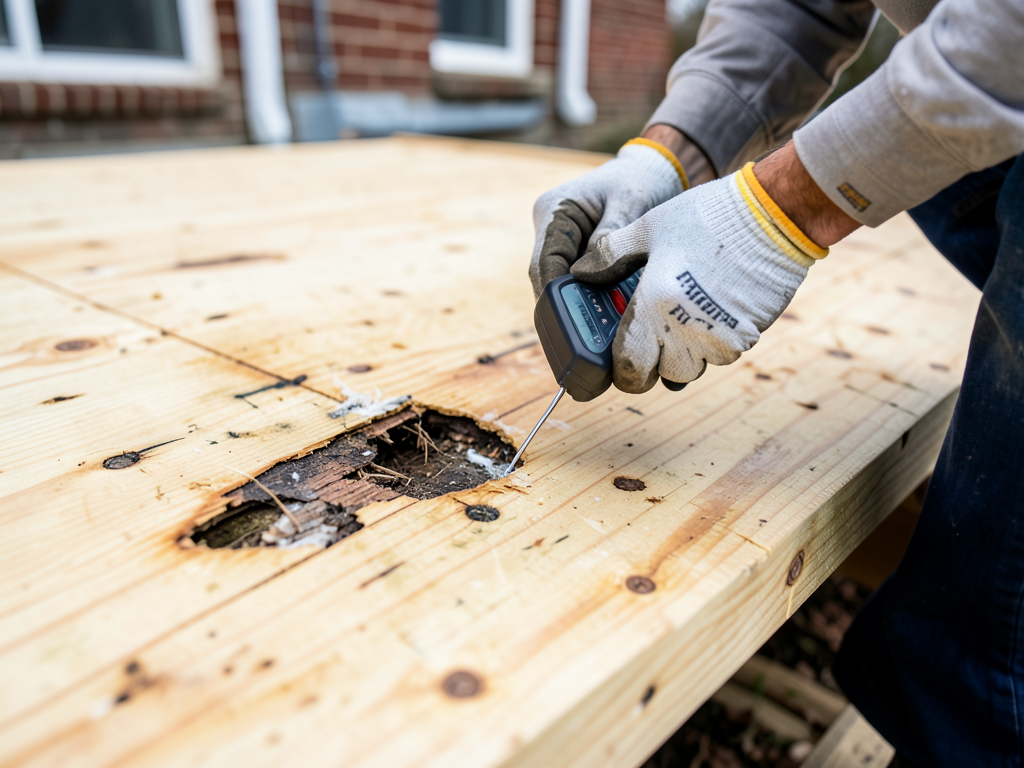
If you step on your roof and feel a soft, bouncy sensation underfoot, you are likely dealing with rotted plywood decking. This is not a minor issue. In Detroit’s climate, where freeze-thaw cycles and heavy snow loads are common, spongy decking signals serious structural problems that can lead to costly interior damage if left unaddressed. Roofing Detroit.
The problem often starts with moisture intrusion. Poor attic ventilation, ice dams, or a failed underlayment allows water to seep into the wood. Over time, this causes delamination, where the layers of plywood separate and lose their structural integrity. Once the deck feels spongy, it has already lost much of its strength and needs immediate attention. EPA Roofing Resources.
Walking on compromised decking is dangerous. The wood can break through under your weight, leading to falls or further damage. In Michigan, building codes require specific sheathing thickness—typically 7/16″ for rafters spaced 16″ on center—so any deterioration below that standard is a code violation and a safety hazard. Michigan Residential Code.
Replacing the decking involves removing the old shingles, inspecting the underlying structure, and installing new CDX plywood or OSB panels. The process also includes checking for and repairing any damaged rafters, upgrading underlayment, and ensuring proper attic ventilation to prevent future rot. In Detroit, this work must comply with the Michigan Residential Code and local inspection requirements.
Ignoring spongy decking can lead to mold growth, interior leaks, and even roof collapse under heavy snow. The cost of replacement varies by home size and material choice, but addressing it early prevents exponentially higher repair bills later. If your roof feels soft, call a licensed Detroit roofing contractor to inspect and recommend the right solution. Metal Roofing for Ferndale Homes (Is it Actually Worth the Investment?).
Call (313) 604-2233 today to schedule your inspection before the next storm hits.
What Causes That ‘Bouncy’ Feeling on Your Roof?
The spongy sensation comes from wood that has lost its rigidity due to moisture damage. In Detroit, the most common culprit is ice damming. When snow melts on a warm roof and refreezes at the eaves, it creates a barrier that traps water. This water can back up under shingles and saturate the decking.
Another major cause is poor attic ventilation. Without proper airflow, warm, moist air from your home condenses on the underside of the roof deck. Over years, this creates a damp environment perfect for rot. Michigan’s high humidity in summer and heavy snow in winter make ventilation even more critical.
Sometimes the issue starts with the original installation. Using low-quality or improperly treated plywood can lead to premature failure. In older Detroit homes, especially those built before modern building codes, the sheathing may not meet current standards for thickness or fastener spacing.
Even a single severe weather event can trigger the problem. High winds can lift shingles, allowing rain to penetrate. If the underlayment is old or damaged, the water reaches the wood quickly. Once rot begins, it spreads fast because the damaged wood holds moisture like a sponge.
Identifying the cause is key to preventing recurrence. A professional inspection will check for signs of ice damming, measure attic humidity, and assess the condition of your underlayment. Without fixing the root cause, replacing the decking alone will only delay the next failure.
Call (313) 604-2233 to have your roof inspected by a Detroit expert who understands local climate challenges.
The Dangers of Walking on Spongy Decking (Safety Warning)
Stepping on a roof that feels soft is not just risky—it’s hazardous. Spongy decking has lost its structural integrity, meaning the wood can break through under your weight. This can lead to falls, serious injuries, and even death. In Detroit, where many homes have steep pitches, the danger is amplified.
Beyond personal injury, walking on compromised decking can cause further damage. A broken section can shift or collapse, damaging the interior ceiling below. If the rot is extensive, the entire roof plane may sag, creating a tripping hazard and accelerating the failure of the entire system.
Professionals use safety equipment like harnesses and roof jacks when working on damaged decks. They also assess the load-bearing capacity before stepping on the surface. For homeowners, the safest approach is to stay off the roof entirely and call a licensed contractor for an inspection. What Royal Oak Homeowners Should Know Before Choosing a Roofing Contractor.
In Michigan, building codes require that roof sheathing meet specific strength standards. Once the deck feels spongy, it likely no longer complies with these codes. This can affect your home’s insurability and resale value. Insurance companies may deny claims if they determine the damage was due to neglect.
If you suspect your decking is compromised, do not attempt a DIY inspection. The risk of falling through is too high. Instead, schedule a professional evaluation to determine the extent of the damage and the safest path forward.
Call (313) 604-2233 to connect with a Detroit roofing expert who can assess your roof safely. Spray Foam Roofing.
Plywood vs. OSB: Which Decking is Best for Michigan Weather?
When replacing rotted decking, you’ll need to choose between CDX plywood and OSB (Oriented Strand Board). Both are common in Michigan, but they perform differently under local conditions. CDX plywood is made of thin wood veneers layered and glued together. It handles moisture better than OSB because it dries out more quickly and resists delamination.
OSB is made of compressed wood strands bonded with resin. It’s often cheaper and provides a smoother surface for roofing. However, OSB swells when wet and takes longer to dry. In Detroit’s freeze-thaw climate, this can be a disadvantage. If water gets trapped, OSB can remain swollen and weakened for months.
CDX plywood, while slightly more expensive, offers better long-term durability in high-moisture environments. It’s also more forgiving if ventilation issues persist temporarily. For homes in areas like Grosse Pointe or Royal Oak, where historic architecture may have less-than-perfect airflow, plywood is often the safer choice. Getting Your Historic Roof Restored in Indian Village the Right Way.
Another factor is fastener holding power. Plywood grips nails and screws more securely, which is important in high-wind areas near Lake St. Clair. OSB can allow fasteners to loosen over time, especially if the wood swells and contracts repeatedly.
Both materials must meet Michigan Residential Code requirements for thickness and span ratings. A professional contractor will ensure your new deck complies with local codes and is suited to your home’s specific exposure. In some cases, a hybrid approach—plywood in high-risk areas and OSB elsewhere—can balance cost and performance.
Call (313) 604-2233 to discuss the best decking material for your Detroit home.
Step-by-Step Roof Decking Replacement Process
Replac
Replacing rotted roof decking is a multi-step process that requires precision and safety. Here’s what to expect when you hire a professional in Detroit:
- Initial Inspection and Assessment
The contractor inspects the roof, attic, and interior for signs of water damage. They check for spongy areas, measure moisture levels, and assess the condition of rafters and trusses. - Permit Acquisition
In Detroit, replacing roof decking typically requires a building permit. The contractor handles this, ensuring compliance with the Michigan Residential Code and local inspection requirements. - Shingle and Underlayment Removal
All existing shingles and underlayment are removed to expose the damaged decking. This allows for a full assessment of the wood’s condition. - Decking Removal
Dry, rotted, or delaminated sections are cut out and removed. The contractor checks adjacent areas for hidden damage that may not be visible from above. - Structural Repairs
If rafters or trusses are damaged, they are repaired or reinforced before new decking is installed. This step is critical for maintaining the roof’s load-bearing capacity. - New Decking Installation
New CDX plywood or OSB panels are installed according to code. Fasteners are placed at the correct spacing, and H-clips are used between panels for added stability. - Underlayment and Waterproofing
A high-quality synthetic underlayment is installed, along with ice and water shield in valleys and along eaves. This protects against future moisture intrusion. - Shingle Replacement
New shingles are installed, matching the existing style or upgrading to a more durable option if desired. - Final Inspection
The local building inspector reviews the work to ensure it meets code. The contractor also performs a final walkthrough to confirm quality and cleanup.
The entire process typically takes 2-5 days, depending on the size of the roof and weather conditions. In Detroit, scheduling during dry seasons is ideal to avoid delays.
Call (313) 604-2233 to schedule your roof decking replacement with a trusted Detroit contractor.
Cost Factors for Decking Replacement in Metro Detroit
The cost of replacing roof decking in Detroit varies based on several factors. On average, homeowners can expect to pay between $3 and $7 per square foot for materials and labor. This range depends on the type of decking, the extent of damage, and the complexity of the roof.
CDX plywood typically costs more than OSB but offers better moisture resistance. If your home is in an area prone to ice dams, such as near the Detroit River or in historic neighborhoods with poor attic ventilation, the added durability may be worth the investment.
Roof size and pitch also affect pricing. A larger roof requires more materials and labor. A steep pitch increases labor time and safety requirements, which can raise costs. Homes with multiple valleys, dormers, or skylights require more detailed work and may incur additional charges.
Permit fees in Detroit range from $50 to $200, depending on the scope of work. If structural repairs are needed, such as replacing damaged rafters, this will add to the total cost. Some contractors bundle these repairs into the overall quote, while others itemize them separately.
Timing can also impact price. Scheduling work during peak seasons (late spring through early fall) may cost more due to higher demand. Off-season work might offer discounts, but weather delays can extend the project timeline.
Insurance may cover decking replacement if the damage is due to a covered peril, such as a storm or sudden leak. However, gradual rot from poor maintenance is usually not covered. Always check with your provider before proceeding.
Call (313) 604-2233 for a detailed estimate tailored to your Detroit home.
How Proper Attic Ventilation Prevents Future Rot
Attic ventilation is the first line of defense against roof deck rot. In Detroit’s climate, where humidity and temperature swings are extreme, proper airflow is critical. Without it, warm, moist air from your home rises into the attic and condenses on the underside of the roof deck.
Condensation creates a damp environment that promotes mold growth and wood rot. Over time, this weakens the decking and can lead to the spongy feeling that signals serious damage. In winter, poor ventilation also contributes to ice damming by allowing heat to build up under the shingles.
The most effective ventilation systems use a combination of soffit vents (intake) and ridge vents or gable vents (exhaust). This creates continuous airflow that keeps the attic close to outdoor temperature, reducing condensation. In some cases, powered attic fans or turbine vents may be needed for optimal performance.
Building codes in Michigan require a minimum of 1 square foot of net free ventilation area for every 150 square feet of attic floor space. In some cases, this ratio can be reduced to 1:300 if a vapor barrier is installed. A professional contractor will ensure your system meets these requirements.
Ventilation also helps extend the life of your shingles. Excessive heat buildup can cause premature aging, curling, and granule loss. By keeping the attic cool, you protect both the decking and the roofing material above it.
If your home is over 20 years old, it may not have adequate ventilation by today’s standards. Upgrading your system during a roof replacement is a cost-effective way to prevent future problems and improve energy efficiency.
Call (313) 604-2233 to schedule a ventilation assessment with a Detroit roofing expert.
Frequently Asked Questions
How can I tell if my roof decking is rotted?
The most obvious sign is a spongy or bouncy feeling when walking on the roof. Other signs include visible sagging, water stains on ceilings, or mold growth in the attic. A professional inspection can confirm the extent of the damage.
Is it safe to walk on a roof that feels soft?
No. Spongy decking has lost its structural integrity and can break through under your weight. This poses a serious fall risk and can cause further damage to your home. Always call a professional for an inspection.
How long does it take to replace roof decking?
Most deck replacement projects take 2-5 days, depending on the size of the roof, weather conditions, and whether structural repairs are needed. Your contractor will provide a timeline after the initial inspection.
Will my insurance cover the cost of decking replacement?
Insurance may cover decking replacement if the damage is due to a covered peril, such as a storm or sudden leak. Gradual rot from poor maintenance is usually not covered. Check with your provider for details.
What’s the difference between plywood and OSB for roof decking?
Plywood handles moisture better and resists delamination, making it ideal for Detroit’s climate. OSB is cheaper but can swell and weaken when wet. A professional can help you choose the best option for your home.
Do I need a permit to replace roof decking in Detroit?
Yes. Most decking replacements require a building permit to ensure compliance with the Michigan Residential Code. Your contractor will handle the permitting process as part of the project.
Can I replace only the damaged sections of decking?
In some cases, spot repairs are possible. However, if the damage is widespread or the deck is nearing the end of its life, a full replacement is often more cost-effective and ensures long-term durability.
How can I prevent my new decking from rotting?
Proper attic ventilation, high-quality underlayment, and regular roof maintenance are key. Address ice damming issues, keep gutters clean, and schedule annual inspections to catch problems early.
Call (313) 604-2233 to speak with a Detroit roofing expert about your decking concerns.
{
“@context”: “https://schema.org”,
“@type”: “BlogPosting”,
“headline”: “Why You Should Replace Your Plywood Decking if it Feels Spongy Underfoot”,
“description”: “If your roof feels spongy when you walk on it in Detroit, you may have rotted decking. Learn the causes, risks, and replacement process for Michigan homes.”,
“wordCount”: 2360,
“datePublished”: “2026-05-04T08:27:00.000Z”,
“dateModified”: “2026-05-04T08:27:00.000Z”,
“inLanguage”: “en-US”,
“mainEntityOfPage”: {
“@type”: “WebPage”,
“@id”: “https://peakroofingdetroit.com”
},
“publisher”: {
“@type”: “LocalBusiness”,
“name”: “Peak Roofing Detroit”,
“url”: “https://peakroofingdetroit.com”
},
“author”: {
“@type”: “Organization”,
“name”: “Peak Roofing Detroit”,
“url”: “https://peakroofingdetroit.com”
},
“image”: {
“@type”: “ImageObject”,
“url”: “https://peakroofingdetroit.com/wp-content/uploads/2026/03/why-you-should-replace-your-plywood-decking-if-it-1.png”
}
}
{
“@context”: “https://schema.org”,
“@type”: “RoofingContractor”,
“name”: “Peak Roofing Detroit”,
“url”: “https://peakroofingdetroit.com”,
“address”: {
“@type”: “PostalAddress”,
“addressLocality”: “Detroit”
},
“areaServed”: {
“@type”: “City”,
“name”: “Detroit”
}
}
{
“@context”: “https://schema.org”,
“@type”: “FAQPage”,
“mainEntity”: [
{
“@type”: “Question”,
“name”: “What Causes That ‘Bouncy’ Feeling on Your Roof?”,
“acceptedAnswer”: {
“@type”: “Answer”,
“text”: “The spongy sensation comes from wood that has lost its rigidity due to moisture damage. In Detroit, the most common culprit is ice damming. When snow melts on a warm roof and refreezes at the eaves, it creates a barrier that traps water. This water can back up under shingles and saturate the decking.”
}
},
{
“@type”: “Question”,
“name”: “Plywood vs. OSB: Which Decking is Best for Michigan Weather?”,
“acceptedAnswer”: {
“@type”: “Answer”,
“text”: “When replacing rotted decking, you’ll need to choose between CDX plywood and OSB (Oriented Strand Board). Both are common in Michigan, but they perform differently under local conditions. CDX plywood is made of thin wood veneers layered and glued together. It handles moisture better than OSB because it dries out more quickly and resists delamination.”
}
},
{
“@type”: “Question”,
“name”: “How can I tell if my roof decking is rotted?”,
“acceptedAnswer”: {
“@type”: “Answer”,
“text”: “The most obvious sign is a spongy or bouncy feeling when walking on the roof. Other signs include visible sagging, water stains on ceilings, or mold growth in the attic. A professional inspection can confirm the extent of the damage.”
}
},
{
“@type”: “Question”,
“name”: “Is it safe to walk on a roof that feels soft?”,
“acceptedAnswer”: {
“@type”: “Answer”,
“text”: “No. Spongy decking has lost its structural integrity and can break through under your weight. This poses a serious fall risk and can cause further damage to your home. Always call a professional for an inspection.”
}
},
{
“@type”: “Question”,
“name”: “How long does it take to replace roof decking?”,
“acceptedAnswer”: {
“@type”: “Answer”,
“text”: “Most deck replacement projects take 2-5 days, depending on the size of the roof, weather conditions, and whether structural repairs are needed. Your contractor will provide a timeline after the initial inspection.”
}
},
{
“@type”: “Question”,
“name”: “Will my insurance cover the cost of decking replacement?”,
“acceptedAnswer”: {
“@type”: “Answer”,
“text”: “Insurance may cover decking replacement if the damage is due to a covered peril, such as a storm or sudden leak. Gradual rot from poor maintenance is usually not covered. Check with your provider for details.”
}
},
{
“@type”: “Question”,
“name”: “What’s the difference between plywood and OSB for roof decking?”,
“acceptedAnswer”: {
“@type”: “Answer”,
“text”: “Plywood handles moisture better and resists delamination, making it ideal for Detroit’s climate. OSB is cheaper but can swell and weaken when wet. A professional can help you choose the best option for your home.”
}
},
{
“@type”: “Question”,
“name”: “Do I need a permit to replace roof decking in Detroit?”,
“acceptedAnswer”: {
“@type”: “Answer”,
“text”: “Yes. Most decking replacements require a building permit to ensure compliance with the Michigan Residential Code. Your contractor will handle the permitting process as part of the project.”
}
},
{
“@type”: “Question”,
“name”: “Can I replace only the damaged sections of decking?”,
“acceptedAnswer”: {
“@type”: “Answer”,
“text”: “In some cases, spot repairs are possible. However, if the damage is widespread or the deck is nearing the end of its life, a full replacement is often more cost-effective and ensures long-term durability.”
}
},
{
“@type”: “Question”,
“name”: “How can I prevent my new decking from rotting?”,
“acceptedAnswer”: {
“@type”: “Answer”,
“text”: “Proper attic ventilation, high-quality underlayment, and regular roof maintenance are key. Address ice damming issues, keep gutters clean, and schedule annual inspections to catch problems early.”
}
}
]
}
{
“@context”: “https://schema.org”,
“@type”: “BreadcrumbList”,
“itemListElement”: [
{
“@type”: “ListItem”,
“position”: 1,
“name”: “Home”,
“item”: “https://peakroofingdetroit.com”
},
{
“@type”: “ListItem”,
“position”: 2,
“name”: “Blog”,
“item”: “https://peakroofingdetroit.com/blog”
},
{
“@type”: “ListItem”,
“position”: 3,
“name”: “Why You Should Replace Your Plywood Decking if it Feels Spongy Underfoot”
}
]
}
{
“@context”: “https://schema.org”,
“@type”: “Service”,
“serviceType”: “Roofing”,
“provider”: {
“@type”: “LocalBusiness”,
“name”: “Peak Roofing Detroit”,
“url”: “https://peakroofingdetroit.com”
},
“areaServed”: {
“@type”: “City”,
“name”: “Detroit”
},
“description”: “If your roof feels spongy when you walk on it in Detroit, you may have rotted decking. Learn the causes, risks, and replacement process for Michigan homes.”
}